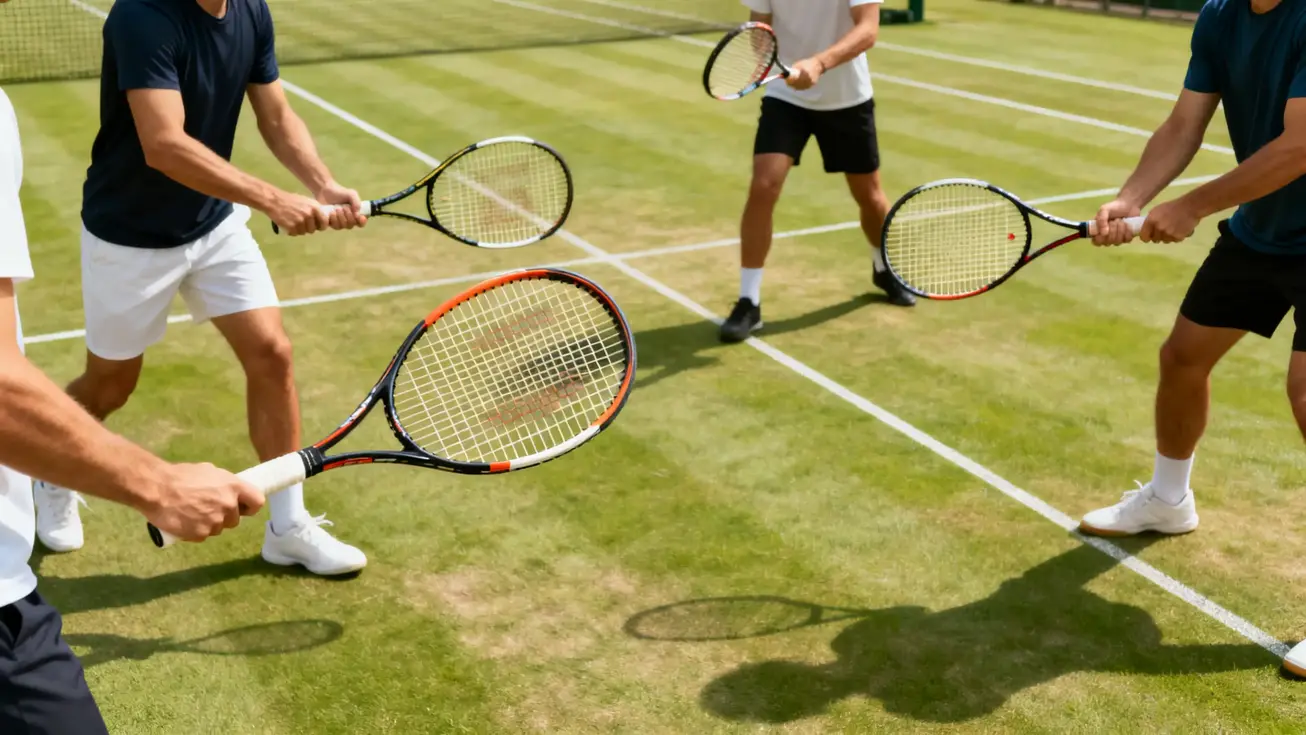
You have six people, two courts, and a two-hour slot on a Sunday morning. Half of them have never played together before. If you just wing it, you will spend forty minutes figuring out who plays who, someone will stand around for too long, and the whole thing quietly falls apart before anyone agrees to do it again. A round-robin, run with even a small amount of structure, fixes all of that.
This matters because finding regular court time is genuinely hard. Clubs have waitlists, leagues require commitment, and booking a court with the same three people every week only works until one of them goes on holiday. A rotating format with a loose group of eight to twelve players solves the availability problem: you only need enough people to fill the courts, and the rotation means it does not collapse if two people drop out. Done well, it also turns strangers into regular hitting partners, which is how most adult players actually build a social game.
Choosing a format that works for mixed ability#
The single biggest mistake in casual round-robins is using a format designed for competitive play. King-of-the-court and strict ladder systems punish weaker players with long spells off court and tend to concentrate the best players together. For a mixed group, you want rotation to be time-based or game-based, not result-based.
The two formats I come back to are:
Timed rotation (best for padel). Each pairing plays for a fixed period, say eight or ten minutes, then everyone rotates regardless of the score. On a padel court this works particularly well because rallies are longer and the score often does not reflect the quality of the play. Nobody gets thrashed 6-0 and sent to sit down.
Games-to-four rotation (best for tennis). Each doubles pair plays first to four games (no-ad scoring, so each game is quick). Winners stay, losers rotate off and the waiting pair comes on. This keeps competitive players engaged without stranding weaker players for too long, because four games is rarely more than fifteen minutes.
For a mixed-ability group I lean toward games-to-four for tennis and timed rotation for padel. Pick one format before anyone arrives and write it on your phone so you can show it to people rather than explain it three times.
Handling odd numbers without ruining the flow#
Odd numbers are the most common logistical headache, and they are completely solvable. Here are the three approaches that actually work in practice.
The ghost player works for tennis. One "team" has a ghost partner: they serve and receive alone, and the ghost's shots are played by whoever is on the other side. It sounds strange but players adapt within two games. The person playing singles gets a decent workout and nobody sits out.
The floater works for padel. One player rotates in as a permanent third on whichever side just lost a point. They swap in at each side change. It keeps everyone moving and the floater role often goes to the most experienced player, which quietly balances ability.
The bye with a task is a last resort but it is better than leaving someone standing awkwardly. The person sitting out keeps score on the other court, or handles the rotation schedule. Give them something specific and they will not feel excluded.
Decide your odd-number solution before the session, not when you are standing on court counting heads.
Scoring systems that keep everyone moving#
Scoring is where casual sessions quietly die. If you use full sets with deuce and advantage, two evenly matched pairs will still be playing when everyone else has rotated three times. Compress everything.
| Format | Scoring | Typical duration per match |
|---|---|---|
| Tennis doubles, games-to-four | No-ad, first to 4 games | 12 to 18 minutes |
| Tennis doubles, short set | First to 6, tiebreak at 5-5 | 20 to 30 minutes |
| Padel doubles, timed | 8 or 10 minute blocks | Fixed |
| Padel doubles, points race | First to 21 points, rally scoring | 15 to 20 minutes |
Rally scoring (every rally scores a point regardless of who served) is worth considering for padel with beginners. It removes the complexity of service rotation and keeps the scoreboard moving, which helps people who are still learning the rules. For tennis I would not use rally scoring because it changes the tactical shape of the game in ways that experienced players find frustrating.
One practical note: appoint one person as the score-keeper for the session, not a different person each game. Disputes about the score are almost always about nobody being sure who was keeping it.
Free tools for sorting the logistics#
Group chats work up to about eight people. Beyond that, threads become unreadable and you end up with three separate conversations about the same Sunday slot. These are the tools I have seen work well for casual groups.
Doodle (doodle.com) is still the fastest way to find a time that works for ten people. Create a poll with four or five candidate slots, share the link, and close it once you have enough responses. No account required for respondents.
WhatsApp with pinned messages is fine for communication but use the pinned message for the confirmed time, location, and format. If that information lives in the chat scroll, nobody will find it.
Padel Mates and Tennis Runabout are both apps built for exactly this kind of session. They handle rotation schedules and some of them generate the match order automatically. Worth ten minutes of setup if you plan to run sessions regularly.
For the rotation schedule itself, I keep a simple spreadsheet with players listed down the side and rounds across the top. Fill in the pairings before the session, print it or screenshot it, and show it to people when they arrive. It takes twenty minutes to make and saves an equal amount of confusion on the day.
One thing that genuinely helps with a new group: send a short message the evening before confirming the format, the address, and what to bring. It sounds obvious but it removes the four "where are we playing again?" messages on the morning.
What to do before your first session#
If you are pulling together a group for the first time, the selling-used-rackets-tips post is worth reading if you want to help newer players in the group get decent gear without spending full retail. A round-robin is often the moment someone decides they want to play more regularly, and pointing them toward the pre-owned market early saves them money and keeps good gear in use.
For players who are new to padel specifically, the first padel racket guide covers what to look for in a frame without overcomplicating it.
If anyone in your group needs gear to get started, the padel rackets and tennis rackets sections of the marketplace have pre-owned frames listed by real players. It is a reasonable first stop before anyone buys new, particularly if they are not yet sure how often they will play.
The format, the tools, the scoring system: none of it needs to be perfect for the first session. It just needs to be decided in advance. Get that right and the social side takes care of itself.