You have talked your friend into coming to padel. They are excited, slightly nervous, and have already asked you whether they need to buy anything. The honest answer is: not much, but a couple of things genuinely matter, and getting them wrong will make the session worse than it needs to be.
This is not about gearing someone up for a season. It is about the minimum sensible kit for a first-time player, so they can focus on the game rather than fighting borrowed gear that does not fit or sliding around in the wrong shoes. Get this right and the chance of them wanting to come back goes up considerably.
What is strictly necessary#
Three things. That is the whole list for a first session.
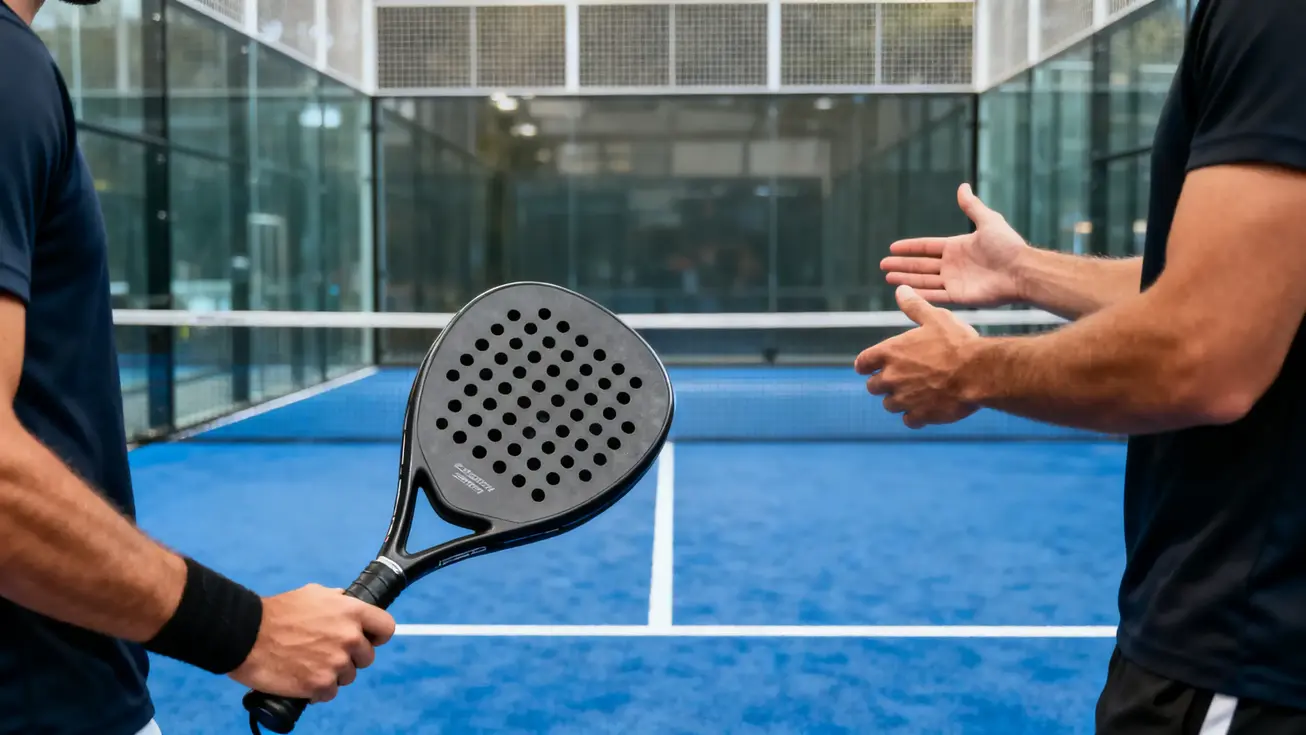
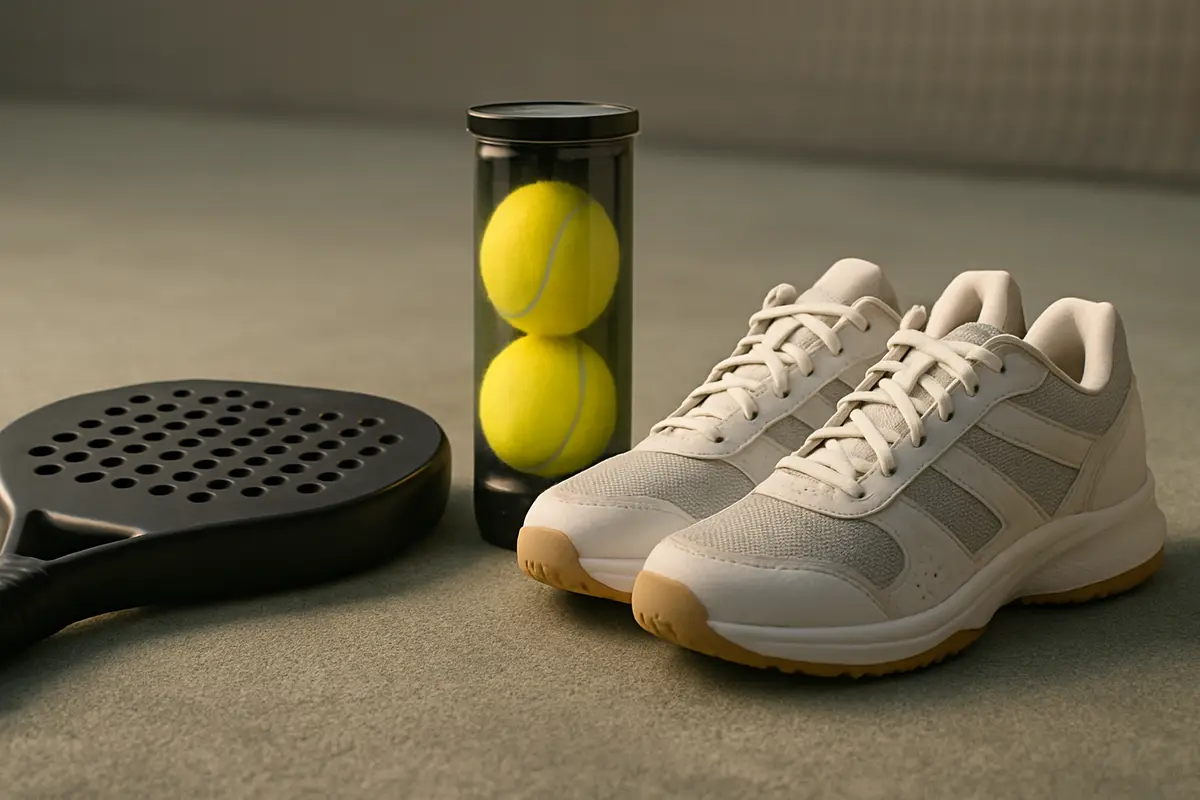
A padel racket. Padel rackets have a perforated EVA foam core and a solid carbon or fibreglass face. There are no strings and no string tension to worry about. For a complete beginner, the shape and weight matter more than the brand. A round or teardrop shape gives a larger sweet spot and more forgiveness, which is exactly what someone learning the game needs. A mid-weight frame in the 360-375g range is easier to control than anything heavier. I would not spend more than £40-60 on a first racket, and I would look at pre-owned before anything new. A well-maintained pre-owned racket at that price point will outperform a cheap new one every time, and if your friend decides padel is not for them after two sessions, they have not lost much. You can browse padel rackets on the marketplace and filter by condition to find something in good shape without paying new prices.
Padel balls. These are not tennis balls. Padel balls are slightly depressurised compared to tennis balls and have a lower internal pressure, which affects the bounce off the walls and the floor. Using tennis balls will make the game feel wrong, and your friend will not understand why the ball is behaving oddly. A single tin of three balls is enough for a session. They are not expensive, and most clubs sell them at reception.
Court shoes with a herringbone or omni sole. This is the one people get wrong most often. Padel is played on artificial grass or sand-dressed artificial turf. Running shoes and gym trainers do not grip that surface properly, and sliding on the first lateral movement is a fast way to put someone off. Padel-specific shoes exist, but for a first session, any shoe with a herringbone outsole designed for artificial grass will do the job. Tennis shoes on hard court rubber soles are not the right choice here. If your friend already plays five-a-side football on 3G, their astroturf boots are actually closer to correct than their running shoes.
What can wait#
Everything else.
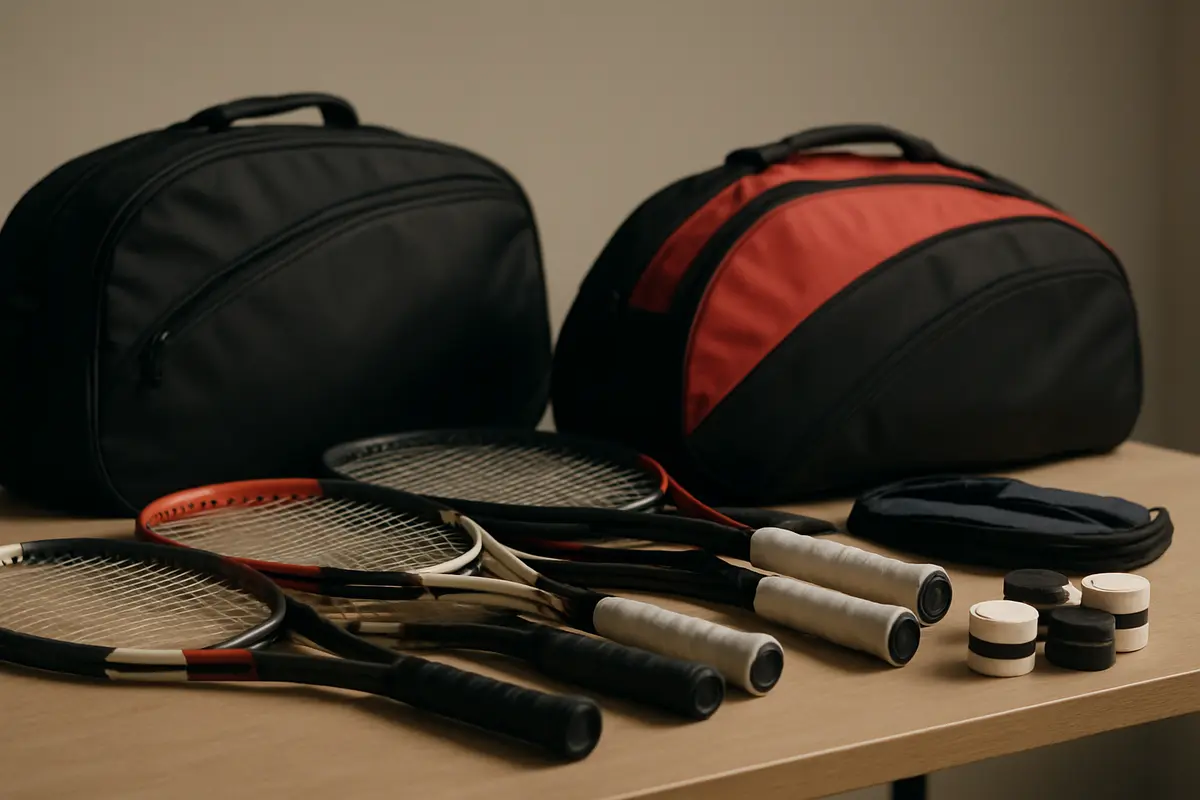
Padel gloves, overgrips, dampeners (which do not apply to padel anyway), specialist bags, performance eyewear, and padel-specific clothing are all things that make sense once someone is playing regularly. For a first session, they add cost and decision fatigue without meaningfully improving the experience.
Grip size is worth mentioning briefly. European padel grips are typically sized L1 to L2 for most adults. If a pre-owned racket has a grip that feels slightly thin, a single overgrip layer fixes it for about £2. That is a problem to solve after the session if it comes up, not before.
Borrow or buy for a one-off session#
If there is any genuine chance this is a one-off, borrowing is the right call. Most padel clubs hire out rackets at the desk, usually £3-5 per session. The quality varies but it is perfectly adequate for a taster. Padel balls you will still need to buy or include in the court hire, depending on the club.
The moment it tips towards buying is when your friend says they want to come back. At that point, a pre-owned racket is the sensible move rather than a hire racket every time. Three or four sessions of hire fees and you have paid for a decent pre-owned frame outright, and they will play better with something consistent in their hand. I wrote more about the logic of buying pre-owned in the post on second-hand gear and sustainability, which covers why pre-owned is the smarter choice beyond just the cost saving.
The short kit list at a glance#
| Item | Buy for first session? | Notes |
|---|---|---|
| Padel racket | Yes, if coming back | Pre-owned round/teardrop, 360-375g. Hire if one-off |
| Padel balls | Yes | One tin of three. Not tennis balls |
| Court shoes (herringbone/omni sole) | Yes | Artificial grass grip. Running shoes are not adequate |
| Overgrip | Optional | Fixes a thin grip for £2 after the session |
| Padel bag | No | Any bag works to start |
| Specialist clothing | No | Comfortable sportswear is fine |
| Gloves | No | Personal preference, not necessary |
What to do next#
If your friend has decided they are in, the next step is finding a racket that suits them without spending new prices on something they might outgrow in six months. The padel rackets section of the marketplace has pre-owned frames listed by players who have moved up in level, which means the gear is real, has been used properly, and is priced accordingly. If you are not sure what shape or weight to look for, the post on choosing a first padel racket goes into more detail on what the specs actually mean for someone learning the game.
The goal is a good first session, not a perfect kit. Get the racket, the balls, and the shoes right, and the rest will follow.