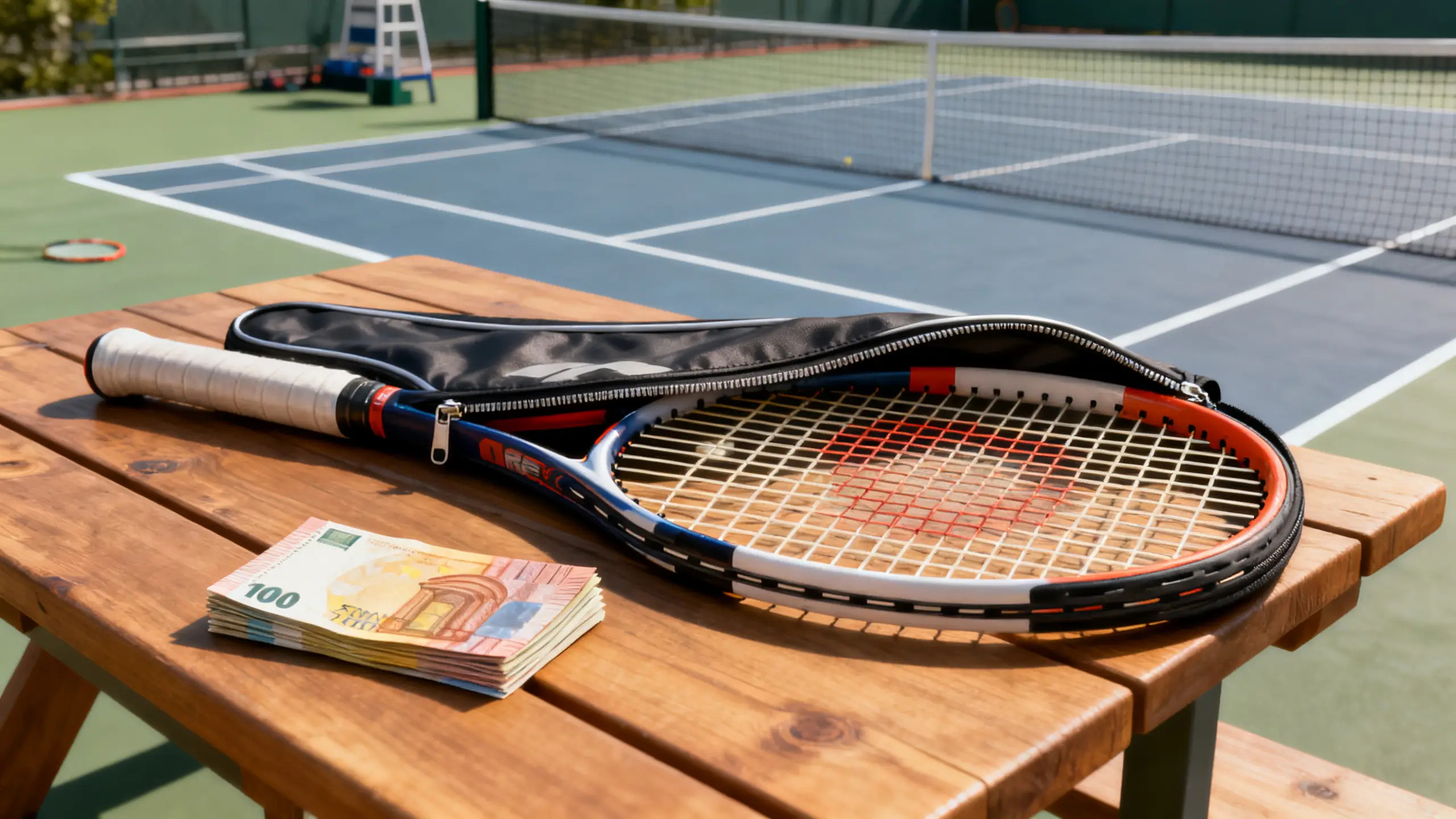
Se tem uma raquete de ténis guardada numa mala que não abre há três meses, tem duas opções principais: vender por dinheiro ou trocar por crédito de loja. A maioria dos jogadores opta pela primeira opção que encontra, o que geralmente significa deixar dinheiro em cima da mesa. Este guia explora ambas as rotas com honestidade, diz-lhe quanto valem realmente os diferentes estados de conservação e indica onde ir - quer esteja à procura de um programa de troca perto de si ou apenas queira o melhor retorno.
Dinheiro versus crédito de loja: a diferença real#
Os programas de crédito de loja em retalhistas especializados - o tipo que encontra em cadeias como a Tennis Point ou em lojas independentes de clubes - oferecem-lhe normalmente 20-40% do valor actual de mercado de segunda mão da raquete, pagos em crédito para futuras compras. A vantagem é a velocidade e a simplicidade: entrega a raquete, recebe um vale, pronto. A desvantagem é óbvia. Esse crédito fica preso a uma única loja e só tem valor se estava mesmo a planear comprar algo lá.
O dinheiro, seja através de uma venda entre pares ou um mercado especializado de artigos de segunda mão, quase sempre retorna mais - frequentemente 50-70% do valor de mercado para uma raquete em bom estado - porque está a eliminar a margem do intermediário. A contrapartida é um pouco mais de esforço: tirar fotos, escrever uma descrição, publicar a raquete.
O conselho honesto: se realmente precisa de uma raquete nova agora e a loja que tem o que quer oferece um programa de troca, o crédito pode fazer sentido. Se não tem pressa ou está a fazer upgrade através de outro canal, o dinheiro vence sempre.
O que afecta o valor de troca da sua raquete#
Antes de se aproximar de qualquer comprador ou loja, ajuda compreender o que estão realmente a avaliar.
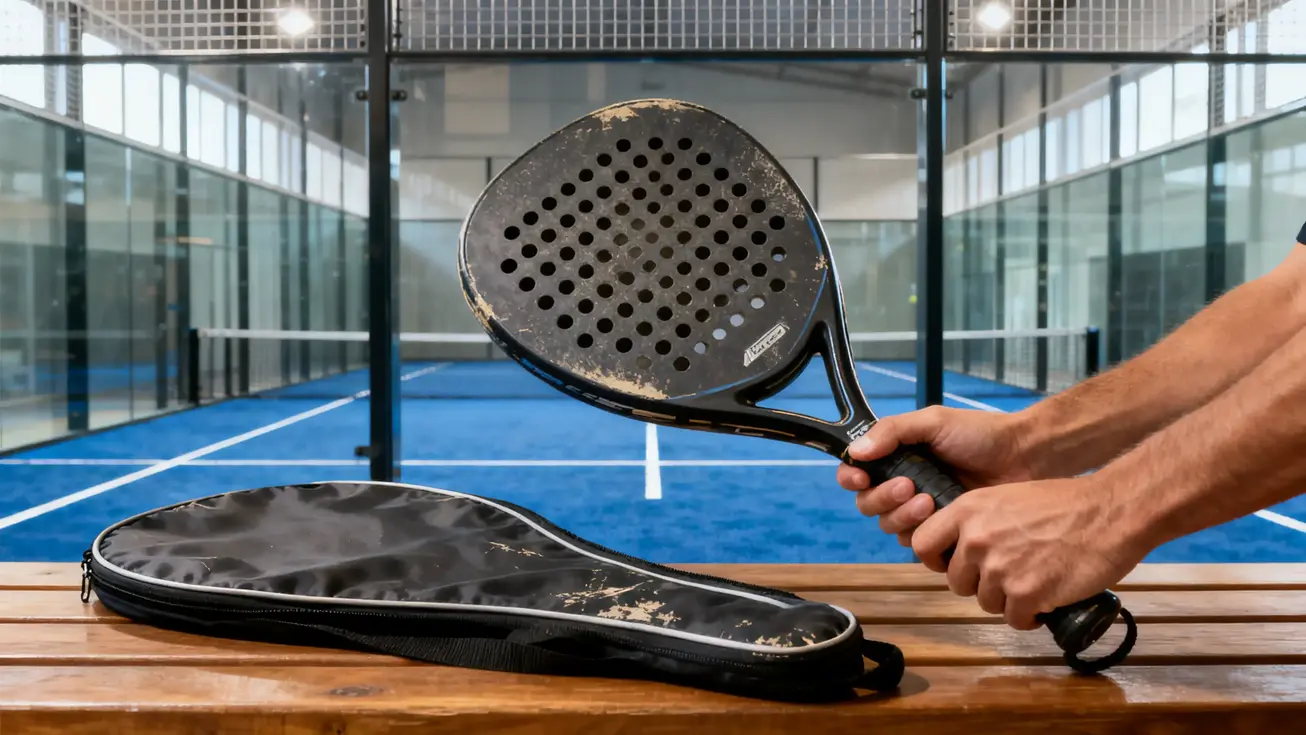
O estado do quadro é o factor mais importante. Arranhões na garganta e nos ombros são esperados e perdoados; rachas, lascas no topo da cabeça ou um quadro torcido reduzem drasticamente o valor. Uma raquete que foi usada em terra batida terá frequentemente mais desgaste cosmético do que o mesmo quadro usado numa corte dura coberta.
O leito de cordas importa menos do que as pessoas assumem para revenda, porque a maioria dos compradores reencordará de qualquer forma. Um leito de cordas morto não mata o preço, mas uma corda rebentada ou um leito mal alinhado sinaliza manuseamento agressivo.
A popularidade da marca e do modelo faz uma diferença real. Wilson, Babolat, Head e Yonex mantêm o valor bem porque há procura consistente. Uma raquete de uma marca menos conhecida - ou um modelo de assinatura mais antigo de um jogador que se retirou há anos - atrairá uma audiência mais restrita e um preço mais baixo.
A idade conta contra si após cerca de três a quatro anos, mesmo para um quadro mal usado. A tecnologia de raquetes avança e os compradores sabem disto.
Escalas de condição e o que esperar#
| Condição | Descrição | % típico do PVP recuperado (venda de dinheiro) |
|---|---|---|
| Como novo | Sem encordoamento ou encordoado uma vez, sem desgaste visível, embalagem original | 55-70% |
| Excelente | Uso leve, apenas pequenas marcas cosméticas, cordas utilizáveis | 40-55% |
| Bom | Uso regular, desgaste de tinta visível nos ombros, funcional | 25-40% |
| Razoável | Desgaste pesado, possível desgaste de pegas, cordas mortas ou rebentadas | 10-25% |
| Fraco | Dano no quadro, problemas estruturais | Improvável vender; apenas peças ou exposição |
Estas figuras aplicam-se a vendas de dinheiro através de um mercado. Um programa de troca de loja oferecerá normalmente 40-60% do que a tabela acima mostra - em crédito, não dinheiro.
Onde trocar a sua raquete de ténis#
Mercados especializados de artigos de segunda mão são a opção de maior retorno para a maioria dos jogadores. O EpicRackets permite-lhe listar a sua raquete para venda rapidamente, com compradores já à procura de equipamento de ténis usado em todo o Reino Unido e Europa. Define o preço, recebe dinheiro e a audiência já compreende o que está a ver.
Retalhistas de ténis de rua e online com programas de troca (Tennis Point, alguns locais da Decathlon, lojas independentes de clubes) são convenientes mas de baixo retorno. Funcionam melhor se está a comprar uma substituição do mesmo retalhista ao mesmo tempo, e a troca funciona efectivamente como um desconto instantâneo.
Plataformas gerais de segunda mão como eBay ou Vinted têm audiências, mas terá de lidar com compradores que não sabem quanto vale uma raquete, questões sobre se é "o tamanho certo" e ocasionais ofertas muito baixas. As comissões também se somam - eBay cobra cerca de 12-13% na maioria das vendas de equipamento desportivo.
Aplicações de venda local (Facebook Marketplace, Gumtree) podem funcionar para uma entrega local rápida, mas os compradores de raquetes são geograficamente escassos a menos que esteja numa cidade com clubes de ténis activos. Provavelmente esperará mais tempo por uma venda.
Se quer verificar o que o seu quadro específico pode valer antes de se comprometer com algo, use a nossa ferramenta de avaliação de raquetes para obter um ponto de partida realista baseado no modelo, idade e condição.
Lista de verificação prática antes de listar ou trocar#
- Limpar o quadro com um pano húmido - as primeiras impressões importam mesmo em fotos
- Verificar a pega para desgaste e substitui-la se está em mau estado (uma sobregrip de 3€ pode melhorar significativamente a condição percepcionada)
- Fotografar todo o quadro, o leito de cordas e quaisquer dings ou danos - fotos honestas atraem compradores sérios e evitam disputas
- Encontrar o nome do modelo original e o ano para que possa preço-la com precisão
- Decidir antecipadamente: dinheiro ou crédito? Se não tem uma compra específica planeada, opte por dinheiro
Para onde ir a partir daqui#
A maioria dos jogadores subavaliam as suas raquetes antigas e ou as deixam num armário ou aceitam a primeira oferta de troca que veem. Um quadro em bom estado da Wilson, Babolat ou Head pode facilmente obter 60-120€ de um comprador motivado - dinheiro que vai directo para a sua próxima compra em vez de ficar como crédito de loja que pode nunca usar.
O movimento mais simples: liste-o no EpicRackets, defina um preço justo baseado na tabela de condição acima e deixe os compradores virem até si. Leva cerca de dez minutos e consistentemente retorna mais do que qualquer programa de troca perto de si oferecerá.