Pick up two rackets that weigh the same, have the same head size, and are strung at the same tension. Hit a ball with each and they will feel noticeably different. A lot of that difference comes from a part of the frame most players never consciously look at: the throat, the section between the handle and the head where the two sides of the frame either meet or stay open.
It sounds like a minor detail. It is not. The throat is load-bearing in a mechanical sense, and its shape changes how stiffness is distributed across the whole frame, where the sweet spot sits, and how much vibration reaches your hand. If you are shopping for pre-owned gear and you cannot find a full spec sheet, the throat shape is one of the fastest visual filters you have. Understanding it takes about five minutes and will change how you read every listing you browse.
The structural mechanics, without the engineering degree#
When a ball hits the string bed, the frame flexes. The force travels from the hitting surface down through the hoop and into the throat, then into the handle. The throat is the narrowest structural point in that chain, which makes it the section most responsible for controlling how much the frame bends and how quickly it returns to shape.
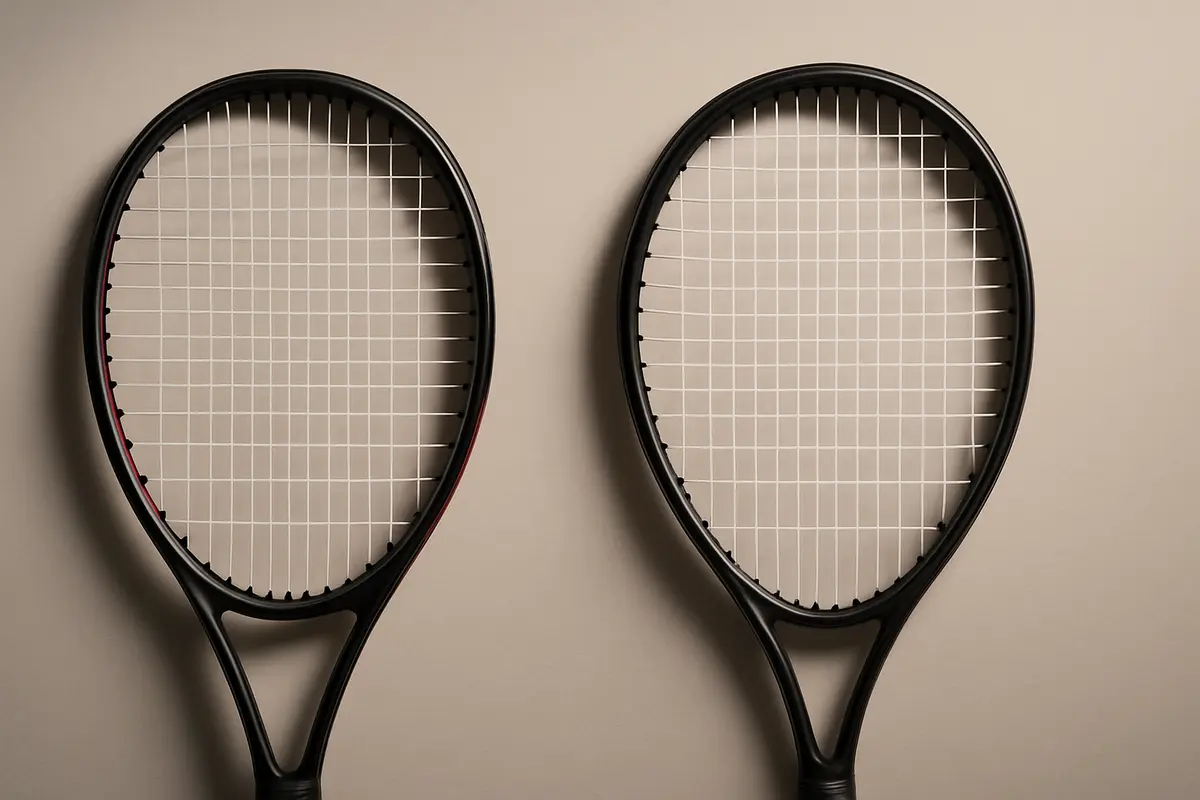
An open-throat frame has a gap at the throat, typically a triangular or Y-shaped void with a separate centre shaft running down to the handle. That gap allows the two sides of the hoop to flex slightly independently before the force is channelled into the single shaft. The result is a frame that tends to feel more flexible at the top of the hoop, absorbs more shock before it reaches the handle, and produces a larger, more forgiving sweet spot. The trade-off is that the frame gives a little more, which can soften the feedback you get on off-centre hits. Players who rely on feel to locate the ball on the strings often find open-throat frames slightly harder to read.
A closed-throat frame, sometimes called a teardrop or oval frame, has no gap. The two sides of the hoop meet at the throat and continue as a single piece into the handle. This creates a stiffer, more unified structure. Force transmits more directly from the string bed through the frame and into your arm. The sweet spot is typically smaller and positioned lower in the head, the response to off-centre hits is sharper, and the overall feel is more precise. The flip side is that vibration has fewer places to dissipate, so players with arm sensitivity sometimes find closed-throat frames less comfortable over a long session.
Open throat favours forgiveness and comfort. Closed throat favours precision and direct feedback. Neither is better in absolute terms. They suit different playing styles.
How throat shape maps to player types#
The open-throat design has dominated performance tennis for decades for a reason. Most players, including club players hitting three times a week and tournament juniors, benefit from a larger sweet spot and better shock absorption. If your technique is still developing, if you play long sessions, or if you have a history of elbow or shoulder issues, an open-throat frame is almost certainly the right starting point.
Closed-throat frames are less common in modern tennis but they persist, particularly in frames aimed at players with very compact, technically consistent swings who want maximum feedback. I have hit with a few and the sensation is distinctive: you feel exactly where on the string bed the ball made contact, which is useful if your technique is reliable enough to act on that information. If it is not, you just feel every mishit more acutely.
There is also a middle ground. Some manufacturers use a partially closed throat or a very narrow open throat that sits somewhere between the two extremes. These frames are worth treating as open-throat for buying purposes, since the structural gap still exists and the mechanical behaviour is closer to the open-throat end of the spectrum.
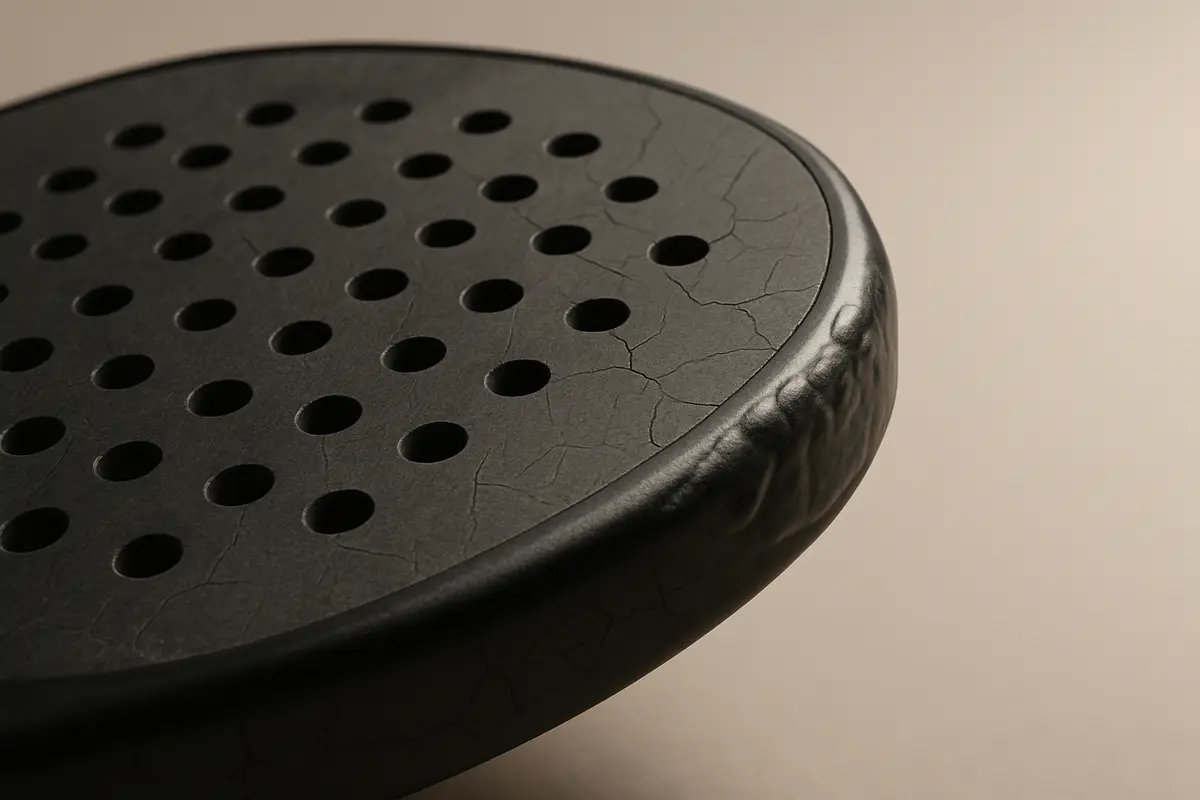
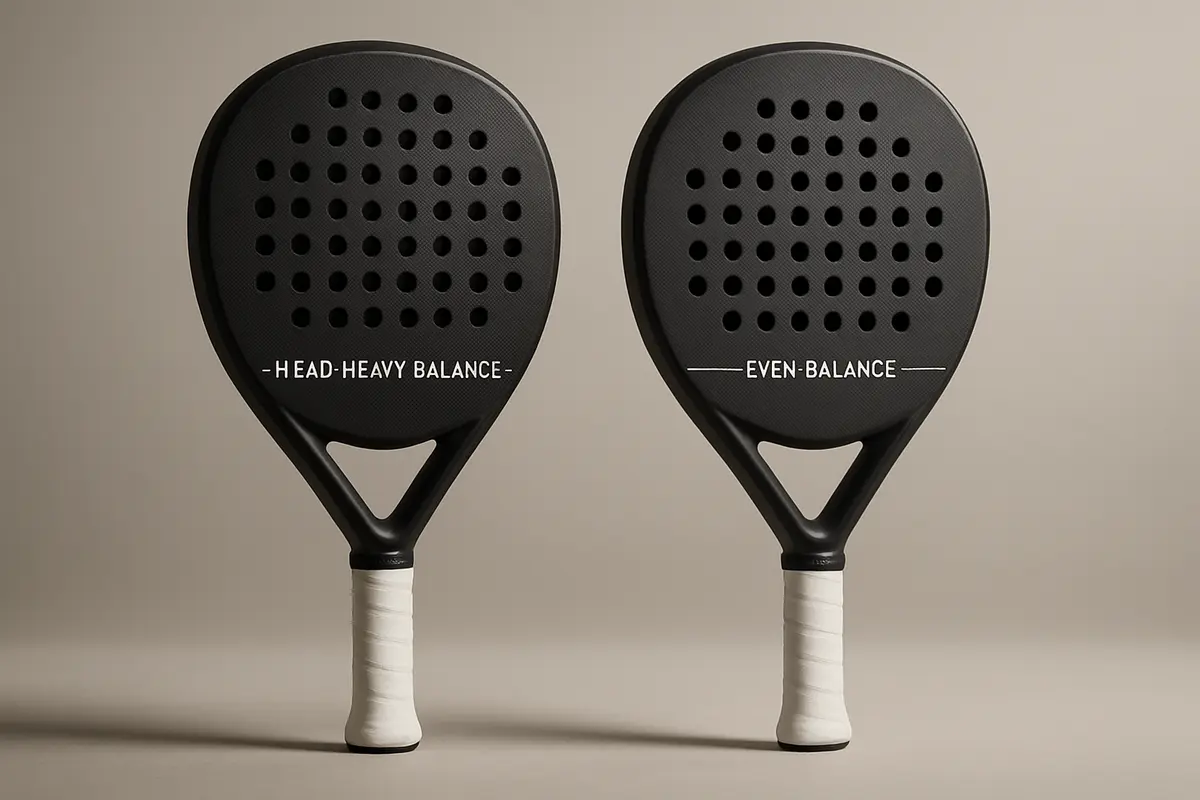
For padel, the throat question does not apply in the same way. Padel rackets have a solid perforated hitting surface rather than a string bed, and the structural logic of the frame is entirely different. If you are shopping for padel gear specifically, the relevant geometry is the head shape (round versus diamond versus teardrop) and the core density rather than the throat. The two sports reward different things from their frames.
Using throat shape as a visual filter when buying pre-owned#
This is where the practical value of understanding throat shape becomes clear. When you are browsing tennis rackets on a marketplace and a listing has one decent photo and minimal specs, you can still extract useful information from the frame geometry visible in the image.
Look at the area between the bottom of the string bed and the top of the grip. If you can see a clear gap or void, it is open-throat. If the frame is continuous and solid from hoop to handle with no gap, it is closed-throat. That single observation tells you roughly where on the forgiveness-to-precision spectrum the frame sits, before you know the brand, the model year, or the beam width.
Combine it with head size (visible from the overall shape of the hoop) and you have a quick two-variable filter:
| Throat type | Head size | Likely profile |
|---|---|---|
| Open | 100 sq in or larger | Maximum forgiveness, suits developing technique or arm sensitivity |
| Open | 95 to 100 sq in | Balanced feel, suits intermediate to advanced all-court players |
| Open | Under 95 sq in | Control-oriented, suits advanced players with consistent technique |
| Closed | Any size | Direct feedback, smaller sweet spot, suits compact technically sound swings |
This table will not replace a full spec sheet, but it is a fast first filter when the listing is light on detail. If the throat shape and head size point to a frame that suits your game, it is worth asking the seller for beam width, weight, and balance point before committing. If you want a refresher on what to check before buying pre-owned gear, the post on how to spot a fake tennis racket covers the visual inspection process in detail and is worth reading alongside this one.
What this means for selling, too#
If you are listing a frame, the throat shape is worth mentioning explicitly in your description, even if it seems obvious from the photos. A lot of buyers do not know the terminology yet, and writing "open-throat design with a larger sweet spot, suits players looking for forgiveness" takes ten seconds and immediately makes your listing more useful than the majority of what is out there. Clear descriptions attract serious buyers and reduce back-and-forth. If you want more on writing listings that convert, the post on selling pre-owned rackets goes into the specifics.
The throat is one of those frame details that rewards knowing about it. Once you start noticing it, you see it in every racket you pick up, and you have a faster, more grounded way of predicting whether a frame is likely to suit you before you ever hit a ball with it. That is the kind of knowledge that makes pre-owned shopping genuinely efficient rather than a gamble.