
The first court booking is easy. You find a club, you pay, you play with whoever you dragged along. The hard part is the second month, when you want a game three times a week and you do not know a single person who plays.
Most padel advice stops at "join a club." That is necessary but not sufficient. A membership card does not get you into a WhatsApp group, does not tell you which morning sessions run at your level, and does not explain why showing up to a social game with a brand-new premium frame and zero etiquette will get you quietly uninvited. This post is about the gap between having a club membership and actually having a regular game.
Start at the club, but ask the right question#
Walk into any padel club and the reception desk will sell you court time. That is not what you want yet. What you want is whoever runs the social programme, the group lessons, or the internal ladder. At most clubs this is one person, and they are not always on the front desk.
Ask specifically: "Do you run any social sessions for new members, or is there an internal league I can join?" Social sessions are usually mixed-ability, low-stakes, and the fastest way to meet players at your level. Internal ladders are better once you have a rough sense of where you sit, because you will be matched against people who care about the result in a healthy way.
If the club has a notice board (physical or a Facebook group), read it before you speak to anyone. You will learn the level language the club uses, whether they run American tournaments (rotating partners, everyone plays everyone), and whether there is an open session on Tuesday mornings that nobody advertised to you at sign-up.
A club membership is a door, not a game. Spend ten minutes finding the person who actually organises the social calendar.
Apps and platforms that actually have players in them#
The app market for finding padel games has improved considerably in the last three years. The ones worth your time depend on where you are.
Playtomic is the most widely used booking and matchmaking app across Europe. Beyond court reservations, it has an "open match" feature where you post a game and other players at your stated level request to join. I have used this in three different cities and it works, with the caveat that stated levels are self-reported and optimistic. Expect the first few games to involve some recalibration.
Padel Manager and Smashapp have traction in specific markets (Spain and France respectively) and are worth downloading if you are in those countries. Neither has the same network density as Playtomic in most other European cities, but in their home markets they are genuinely better for finding competitive games.
WhatsApp remains the actual infrastructure of most regular games. The problem is you cannot find a group you are not already in. The path in is usually through one of the above apps, a club social session, or a colleague. Once you are in one group, you will be added to others.
Install Playtomic first, play two or three open matches, and treat them as auditions for a regular group rather than one-off games.
Understanding social levels before you show up#
Padel uses a rough numerical level system in most European clubs, typically running from 1.0 (absolute beginner) to 5.0 or higher (national-level competitive). The labels vary by country and club, but the underlying bands are consistent enough to be useful.
The table below covers the levels you are most likely to encounter as a new-to-the-city player in a typical club social context.
| Level label | What it usually means in practice | Best entry point |
|---|---|---|
| Beginner / 1.0-1.5 | Still learning the basic shots, unfamiliar with court positioning | Group clinic or beginner social |
| Improver / 2.0-2.5 | Consistent on forehand and backhand, understands net play in theory | Social sessions, open matches |
| Intermediate / 3.0-3.5 | Plays bandeja and vibora attempts, holds a game tactically | Club ladder, intermediate social |
| Advanced / 4.0+ | Consistent overhead play, plays competitively in external leagues | Internal league, external federation league |
The error most new-in-city players make is overstating their level on apps and in conversation. The instinct is understandable: you do not want to end up in a session that is too easy. But showing up to a 3.0 session when you are a 2.5 makes the game worse for three other people, and they will not invite you back. Understating slightly and playing your way up is a much better strategy for building a regular group.
Pick the level below where you think you are for your first two sessions. You will either confirm you are right, or you will have a good game and be asked to come back.
The unwritten rules of joining a group#
Every regular padel group has norms that nobody writes down. Getting these wrong is more damaging to your chances of a regular game than playing badly.
Arrive before the court time, not at it. Most groups warm up informally for five minutes before the clock starts. Arriving exactly on time signals you are a guest, not a regular.
Rotate partners without being asked. In social play, rotating after each game is standard. If you consistently try to keep the winning pair together (especially if you are in it), you will be noticed.
Call the score out loud. This is not pedantry. It keeps the game moving and prevents the low-level friction that kills the atmosphere in social play.
Do not coach unless asked. This gets more new players quietly dropped from groups than anything else. You can offer a tip to a close friend. You cannot offer tips to someone you met forty minutes ago, regardless of how well-intentioned you are.
Bring your own water and sort your own court fees promptly. Chasing someone for two euros after the game is the kind of small irritation that accumulates.
If you are moving to Lisbon specifically, the Lisbon padel courts guide covers which clubs have the most active social programmes and which courts tend to draw the more competitive crowds. The social culture varies meaningfully between clubs there, and it is worth knowing before you commit to a membership.
The fastest way to get a regular game is to be the person who makes the game easier to organise and more enjoyable to play. Skill matters less than reliability and attitude in the first two months.
One more thing on gear#
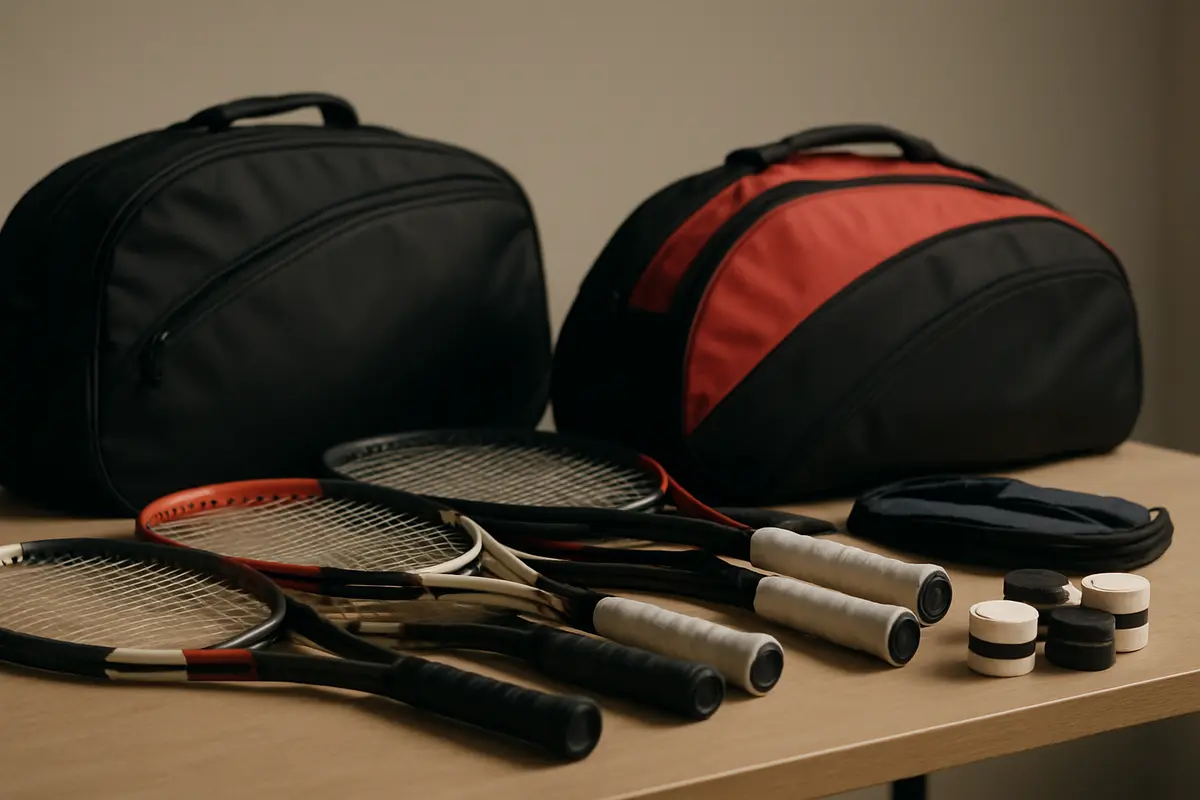
When you are joining a new group, your gear will be noticed. Experienced players read your frame and your bag as a rough signal of your level and seriousness. Showing up with a carbon fibre performance frame when you are a 2.0 player looks odd, and showing up with a cracked or delaminated frame to a competitive group looks careless.
Pre-owned gear is the sensible answer here. A well-maintained mid-range frame from two seasons ago will perform well and signal that you know what you are doing without overclaiming. If you are still working out which type of frame suits your game (round, teardrop, or diamond shape), buying pre-owned means you can try a couple of options without spending at full retail price each time. You can browse padel rackets in the marketplace and filter by condition to find something that fits where you are right now.
For more on buying smart rather than buying new, the post on buying pre-owned gear sustainably covers what to check before you commit.
The regular game you are looking for exists in your new city. It takes about six weeks of consistent effort to find it: two or three open matches on an app, one or two club social sessions, a few conversations, and the patience to let the group form around you rather than forcing it. Once you are in, you will wonder why anyone ever paid full price for a court booking when they could have a standing Tuesday game instead.