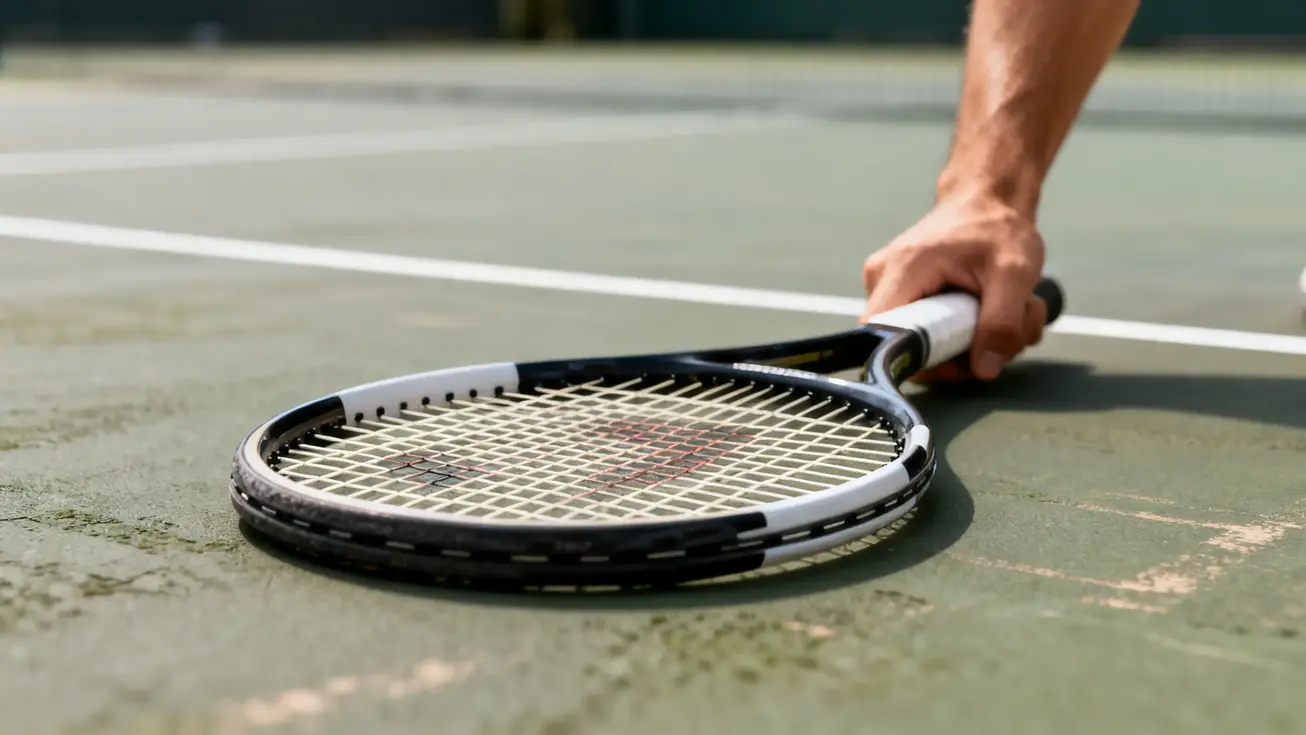
The most common story I hear from players coming into the shop goes like this: they picked up a light, stiff, cheap frame because it felt powerful, played twice a week for a few months, and then one morning they could not lift a kettle without a twinge on the outside of their elbow. The racket did not cause the injury on its own, but it almost certainly made the path to it shorter.
If you are already dealing with tennis elbow, or you have had it before and want to avoid a repeat, the spec sheet on your racket is worth reading as carefully as any physio advice. The two things work together. A good rehab programme alongside a frame that is actively fighting against your arm is a losing battle.
What is actually happening in your elbow#
Lateral epicondylitis is an overuse injury to the extensor tendons that attach at the bony point on the outside of your elbow, specifically the extensor carpi radialis brevis. Every time you hit a ball, a shock wave travels up the racket, through the handle, into your wrist and forearm. Your extensor muscles absorb some of that vibration. Do it enough times, with enough force, and the tendon attachment site becomes inflamed and begins to develop small tears.
The key word is repetition. A single off-centre hit on a stiff frame will not hurt you. Ten thousand of them over a season might. This is why racket choice matters so much for recreational players who are not professional athletes with finely tuned technique: we mishit more often, we play with less preparation time, and our muscles fatigue faster. Every variable that reduces peak shock and vibration at impact is a variable working in your favour.
How stiffness, weight, and balance change the equation#
Frame stiffness is the single biggest factor I point players to. Stiffness is measured as a Rα (RA) rating, usually between 55 and 75 for modern frames. A higher number means the frame bends less on impact, which means more of the shock is transferred directly to your arm rather than being absorbed by the frame itself. Frames rated 65 and above are generally considered stiff. Anything in the high 50s to low 60s is where arm-friendly frames tend to sit.
Weight is counterintuitive for most players. Heavier frames absorb more shock because they have more mass to dampen vibration. A 310g unstrung frame will transmit less shock than a 270g frame on the same shot, all else being equal. The catch is that a heavier frame also increases the muscular load over a long session, so there is a balance to find. I tend to suggest players aim for at least 295g unstrung if arm comfort is a concern, and build up to it gradually if they have been playing with something lighter.
Balance point affects the effective weight at contact. A head-heavy frame amplifies the shock reaching your arm on mishits. A head-light or even-balanced frame keeps the twisting force lower. For players with elbow issues, a head-light or neutral balance is almost always the right direction.
Here is how the main variables stack up:
| Variable | More arm stress | Less arm stress |
|---|---|---|
| Frame stiffness (RA) | 67 and above | 62 and below |
| Unstrung weight | Below 280g | 295g and above |
| Balance | Head-heavy | Head-light or even |
| String type | Polyester monofilament | Natural gut or multifilament |
| String tension | 55 lb and above | 45 to 50 lb |
| String bed size | Smaller head (85-95 sq in) | Larger head (98-105 sq in) |
String type and tension deserve their own mention because they are the fastest and cheapest thing to change. Polyester strings are stiff, and stiff strings transmit more vibration. Natural gut is the most arm-friendly material ever put in a racket. Multifilament synthetic strings are a good middle ground. Dropping tension by 5 lb on any string will noticeably soften the response. If you are currently playing with polyester at 55 lb on a stiff frame, that is about the worst combination you can put together for an arm that is already complaining. I have seen players recover from early-stage tennis elbow simply by restringing with a multifilament at lower tension, without changing anything else.
Why a flexible pre-owned frame can beat a cheap new stiff one#
This is the argument I make to players in the shop probably once a week. The budget end of the new racket market is dominated by stiff, light frames because they are cheap to manufacture and feel powerful in a five-minute demo. They are not designed with arm health in mind.
A quality frame from a reputable manufacturer, made five or eight years ago, with a lower RA rating and proper weight, will protect your arm far better. Brands like Wilson, Babolat, Head, and Yonex have produced genuinely arm-friendly frames across multiple generations. The Wilson Blade, the Babolat Pure Control, older Head Prestige models, the Yonex VCORE Pro line: these are frames with measured flex that were engineered to play well, not just to feel fast off the strings.
Buying one of those pre-owned, restrung with a quality multifilament, will cost you less than a new entry-level frame and do considerably less damage to your arm over a season. I have hit with enough of both to say that with confidence.
You can find a good selection of tennis rackets in the marketplace, and it is worth filtering for heavier, older performance frames rather than chasing the newest model. If you are not sure what to look for in a listing, the how to spot a fake tennis racket post is worth reading before you buy.
Your arm-friendly racket checklist#
Before you commit to a frame, work through this:
- RA rating 62 or below (check the manufacturer spec sheet or a racket database)
- Unstrung weight 295g or above
- Balance point head-light or within 5 points of even
- Head size 98 square inches or larger
- String with natural gut or a quality multifilament, not polyester
- Tension in the 45 to 52 lb range
- Grip size correctly fitted (too small a grip increases forearm muscle engagement and fatigue)
Grip size is the one players most often overlook. If you are playing with a grip that is too thin, your hand is working harder to hold the frame stable at impact. In European sizing, most adult men fall between L2 and L4. If you are between sizes, go larger rather than smaller when arm comfort is the goal.
One more thing: vibration dampeners. I know they are popular and I use one myself, but the evidence that they meaningfully reduce the vibration reaching your arm is thin. They change the sound and the feel slightly, but the frame stiffness and string type are doing the real work. Do not rely on a dampener to compensate for a frame that is fundamentally wrong for your arm.
What to do next#
If you are shopping for a more arm-friendly setup, start with the spec checklist above and browse the tennis rackets available in the marketplace. Pre-owned frames in good condition, restrung fresh, are the most sensible way to get into a quality flexible frame without paying new prices.
If you are also thinking about how your court surface affects the load on your body, the clay vs hard court gear post covers some of the differences worth knowing. Hard courts increase impact forces throughout your whole kinetic chain, which is one more reason to have the right frame under you when you are playing on them regularly.
Your arm will tell you when something is wrong. The smart move is to listen before it gets loud.