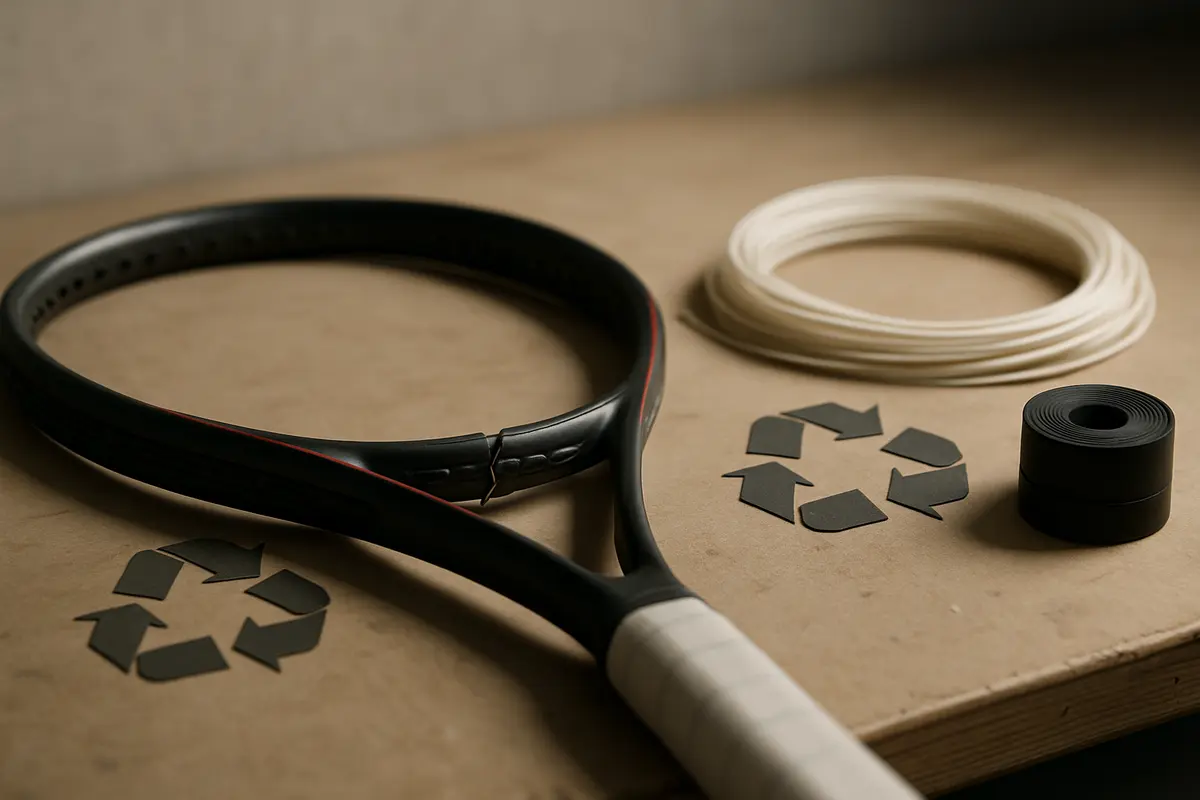
A racket left in a hot car for a summer will lose a noticeable amount of string tension and may never feel quite right again. A padel racket stored in a damp garage can delaminate along the face before you notice anything is wrong. Neither frame is broken, exactly, but both are worth significantly less than they were six months ago, and both are heading for a bin sooner than they should be.
If you play regularly and upgrade every year or two, the gear sitting in your bag between sessions is an asset. Store it well and it resells cleanly. Store it badly and you are absorbing a depreciation hit that has nothing to do with how much you actually played. That matters for your wallet, and it matters because a frame in good condition can go on to a second or third player rather than ending up in landfill. The second-hand gear sustainability case only holds if the gear actually survives long enough to be worth passing on.
Temperature is the single biggest threat#
String and synthetic materials expand and contract with heat. A tennis racket left in a car on a warm day can see internal temperatures above 60°C in under an hour. At that range, string loses tension measurably and the resin in a graphite frame begins to soften. Padel rackets are, if anything, more sensitive: the EVA foam core that gives them their feel can compress permanently under sustained heat, and the bond between the carbon or fibreglass face and the foam weakens. You will not see this damage immediately. You will feel it as a deadened response six weeks later and wonder whether you imagined it.
The practical target is storage between 10°C and 25°C, away from direct sunlight and away from radiators. A cupboard in a hallway or a dedicated shelf in a spare room is ideal. A car boot, a garage that gets summer sun on one wall, or a spot next to a boiler cupboard are all quietly destructive. If you have no choice but to leave a racket in a car, put it in the footwell rather than the boot, and get it out the same day.
Humidity and what it does to grips and frames#
Damp air is slower to cause visible damage than heat, but it is persistent. For tennis rackets, a humid environment wicks moisture into the grip, softens the overgrip adhesive, and can cause the pallet under the grip to swell slightly, which changes the feel and, in extreme cases, cracks the grip throat. For padel rackets, prolonged humidity is one of the main causes of face delamination, where the surface layer separates from the foam core in bubbles you can feel but not always see at first.
Aim for relative humidity between 40 and 60 per cent. Most indoor living spaces sit in this range naturally. The places that do not are garages, basements, and outdoor storage units. A small silica gel sachet inside a racket bag costs almost nothing and absorbs enough ambient moisture to make a real difference over a long storage period. Replace it every few months.
Grips need attention separately. If you play in humid conditions or sweat heavily, the grip is already compromised by the time the session ends. Wipe the handle down before you put the racket away. A damp grip sealed inside a bag for a week grows bacteria, degrades faster, and will put off any future buyer immediately. A fresh overgrip at the point of listing a frame for sale is a small investment that signals care.
Bag and case choices: protection versus convenience#
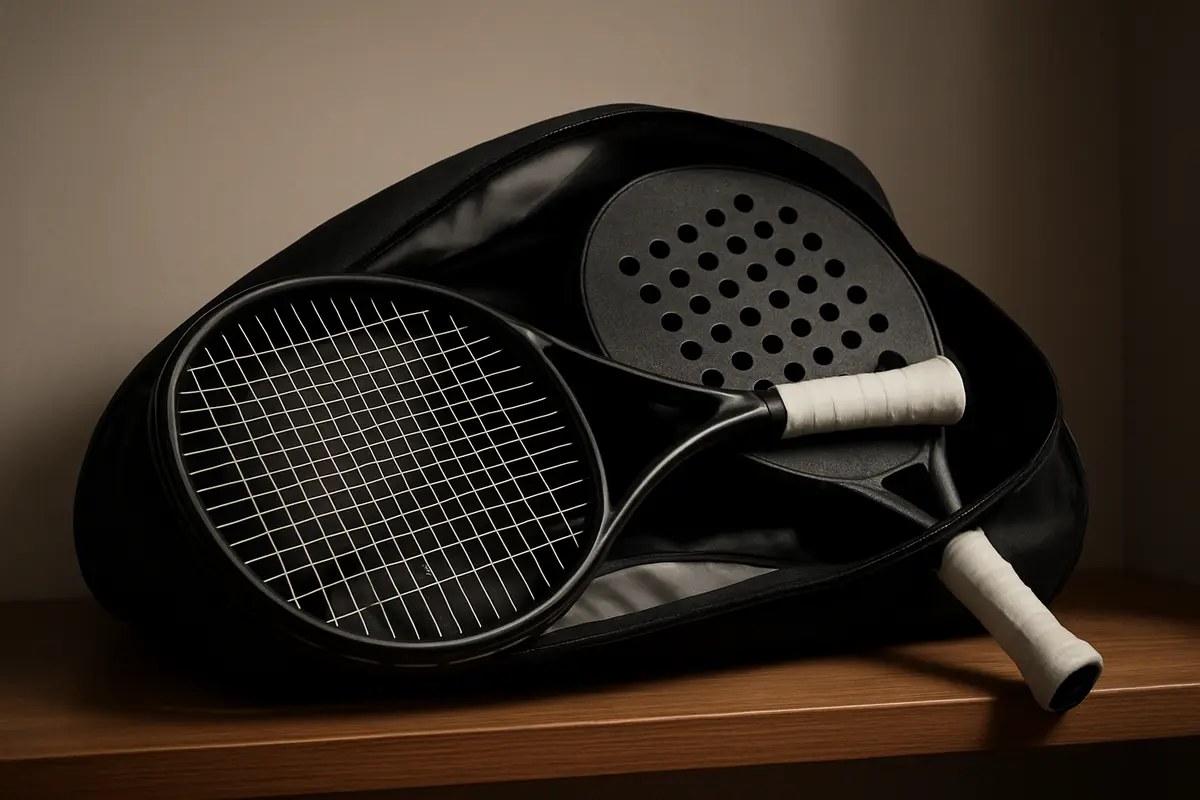
A full-length racket case with a thermal lining is the best protection available. The lining slows temperature change so the racket does not go from a cold car to a warm room in five minutes, and the rigid shell prevents pressure damage. For players who carry two or three rackets, a thermo bag with individual sleeves is worth the cost if resale value matters to you.
A basic racket cover or the thin sleeve that comes with some frames is better than nothing, but it does not insulate and does not protect against a heavier item being placed on top of the frame. Pressure points matter: a racket stored under a pile of kit bags, or with a water bottle resting on the throat, can develop hairline stress fractures in the frame that are invisible until the frame fails under play.
The comparison below covers the main storage options and what each one actually protects against.
| Storage option | Temperature buffering | Humidity protection | Impact/pressure protection | Suitable for long-term storage |
|---|---|---|---|---|
| Rigid racket case with thermal lining | Good | Moderate (add silica gel) | Excellent | Yes |
| Thermo racket bag (multi-racket) | Good | Moderate (add silica gel) | Good | Yes |
| Basic soft cover or sleeve | None | None | Poor | No |
| Open shelf, no cover | None | None | None | No |
| Car boot (any bag) | Poor | Variable | Variable | No |
String tension and what to do before a long break#
For tennis rackets, if you know a frame is going into storage for more than a month, there is a reasonable argument for cutting the strings before storing it. Strings under tension place continuous load on the frame. Over time, particularly with temperature fluctuations, this accelerates micro-stress at the grommets and along the frame hoop. A freshly strung racket at the point of use is worth more to a buyer than a racket with old strings at unknown tension. If you are not cutting them, at least note the string type and tension in any future listing: it is information a buyer will ask for anyway.
For padel rackets, this does not apply. There are no strings. The perforated hitting surface is part of the frame structure, and there is no tension to manage. What you are protecting instead is the face integrity and the foam core, which brings you back to temperature and humidity.
If you are thinking about selling a racket and want to understand what condition details actually affect price, that post covers the specifics of what buyers look for in a pre-owned listing.
What good storage actually does to resale value#
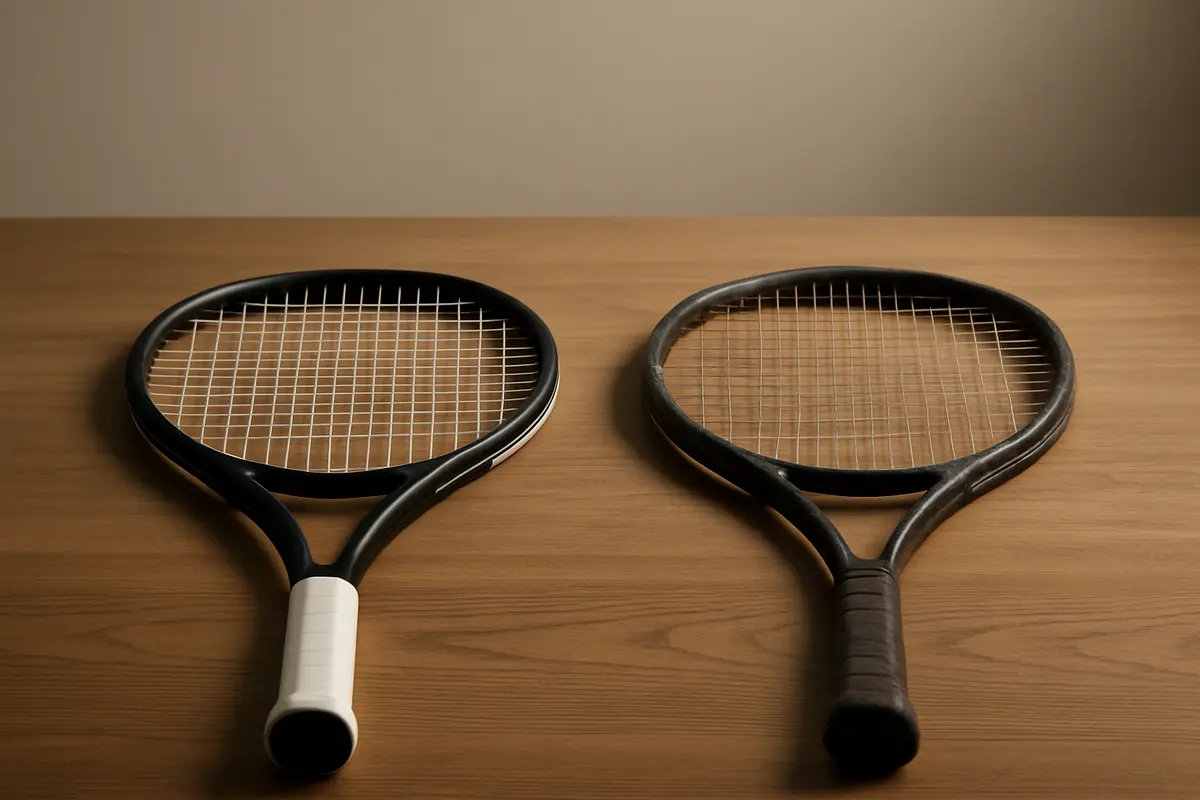
A frame stored correctly for two years looks like it has been used for two years. A frame stored badly for two years looks like it has been used for five. The difference in a pre-owned listing is not just aesthetic. Buyers on a marketplace can tell the difference between normal wear and neglect, and they price their offers accordingly.
The frames that hold value are the ones where the grip is clean, the finish is intact, the face (for padel) shows no bubbling or delamination, and the strings (for tennis) are still at a sensible tension with no visible notching at the grommets. All of that is achievable with the basics: a decent bag, a stable indoor environment, and five minutes of attention when the racket comes off court.
If you have gear that has been stored well and you are ready to move it on, you can list pre-owned tennis rackets or list pre-owned padel rackets on the marketplace. Frames in genuine good condition sell. The goal is to make sure yours qualifies.