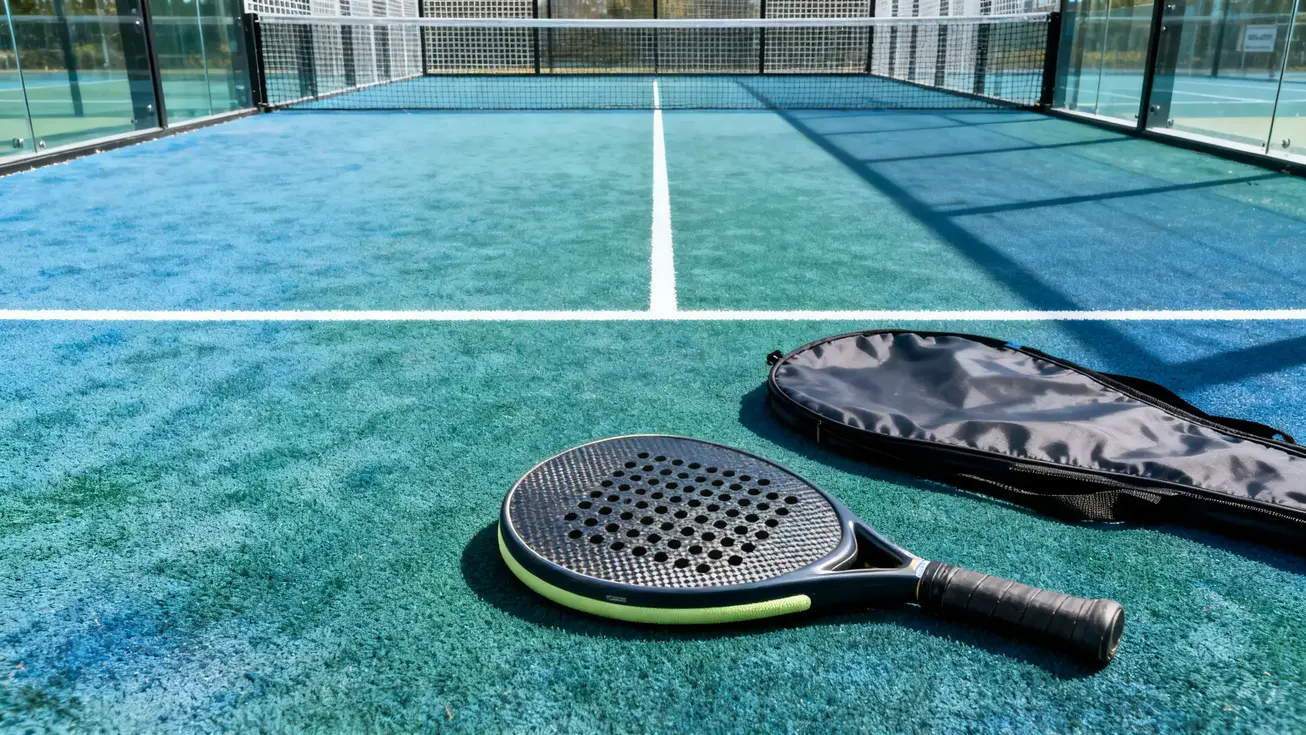
Uma raquete de padel decente custa entre £80 e £350 no retalho. Um modelo de topo de gama da Babolat, Head ou Bullpadel pode ultrapassar os £400. É muito dinheiro para algo sem cordas e com uma face do tamanho de uma tábua de corte. A resposta honesta a "porque tão caro?" reduz-se a três coisas: os materiais genuinamente custam dinheiro a produzir, o desporto cresce mais depressa do que as cadeias de abastecimento conseguem acompanhar, e as marcas sabem que os novos jogadores entusiasmados pagarão um prémio. Quando percebes o que entra na raquete, o preço de venda faz mais sentido - e também o desconto do mercado de segunda mão.
Aquilo por que realmente está a pagar#
Uma raquete de padel é um instrumento sólido. Não tem cordas para absorver o impacto; em vez disso, a face é feita de fibra de carbono ou laminado de fibra de vidro colada a um núcleo de espuma - tipicamente EVA (etileno-acetato de vinilo) ou uma espuma de polietileno mais macia. O calor danifica a resina epóxi que une a fibra de carbono e destrói permanentemente a densidade do núcleo de espuma EVA, é por isso que nunca deve deixar uma raquete dentro de um carro quente.
Para onde vai o dinheiro:
- Camadas de fibra de carbono. As raquetes de entrada usam fibra de vidro; as de gama média combinam fibra de vidro com uma camada de carbono; as raquetes avançadas usam carbono 12K, 18K ou 3K em ambas as faces. Fibra de carbono é cara de tecer, cortar e curar. Mais camadas significam uma face mais rígida e responsiva, mas o custo do material sobe rapidamente.
- Densidade e espessura do núcleo. Um núcleo EVA de alta densidade (usado em formas redondas orientadas para potência) é mais firme e durável do que a espuma mais macia das molduras de diamante ou lágrima orientadas para controlo. Manter a densidade consistente em todo o núcleo requer processos de fabrico de qualidade.
- Textura da superfície. As faces rugosas (acabamentos de carbono bruto ou lixa) geram mais efeito. Aplicar essa textura sem comprometer a integridade estrutural é um passo de precisão.
- Construção do moldura. A moldura do perímetro mantém o núcleo junto. Uma moldura moldada numa única peça é mais forte e consistente do que uma construção colada em várias peças, e custa mais.
- Marca e Investigação e Desenvolvimento. Marcas como Head, Nox, Babolat e Bullpadel investem em programas de desenvolvimento de jogadores profissionais e iterações de tecnologia. Esse custo está integrado no preço de venda, quer você se importe ou não com o que um profissional apoia.
O crescimento rápido do desporto amplifica tudo isto. Padel está em expansão por todo o Reino Unido, com courts a aparecerem em armazéns convertidos, centros comerciais e celeiros. A procura por equipamento subiu mais depressa do que o fornecimento de componentes de qualidade, por isso os preços mantiveram-se elevados mesmo quando o desporto se tornou mais popular.
Onde se situam os escalões de preço no retalho#
| Nível | Construção típica | Intervalo de preço no retalho |
|---|---|---|
| Iniciante | Face de fibra de vidro, núcleo de espuma macia | £60 - £120 |
| Intermédio | Mistura de carbono/fibra de vidro, EVA médio | £120 - £220 |
| Avançado | Face de carbono completa, EVA de alta densidade | £220 - £320 |
| Pro / edição limitada | Carbono estratificado 18K, face rugosa, moldura premium | £320 - £450+ |
Esses preços de retalho assumem uma raquete nova comprada numa loja. O mercado de segunda mão conta uma história diferente.
Quanto vale realmente uma raquete de padel usada#
O mercado de segunda mão é onde a equação de custos fica mais sensata. As raquetes de padel depreciam-se rapidamente em valor percecionado - em parte porque novos modelos saem a cada estação, em parte porque os jogadores melhoram e fazem upgrade - mas a raquete física muitas vezes ainda tem muito tempo de vida útil.
Como guia de trabalho para o mercado europeu de segunda mão:
| Condição | Descrição | Valor de revenda típico (% do PVP) |
|---|---|---|
| Impecável / praticamente não usada | Sem marcas visíveis, grip original, menos de 5 horas de jogo | 65 - 75% |
| Muito bom | Pequenos arranços na superfície, grip ligeiramente comprimido | 45 - 60% |
| Bom | Desgaste visível nas bordas, alguns riscos na face, funciona bem | 30 - 45% |
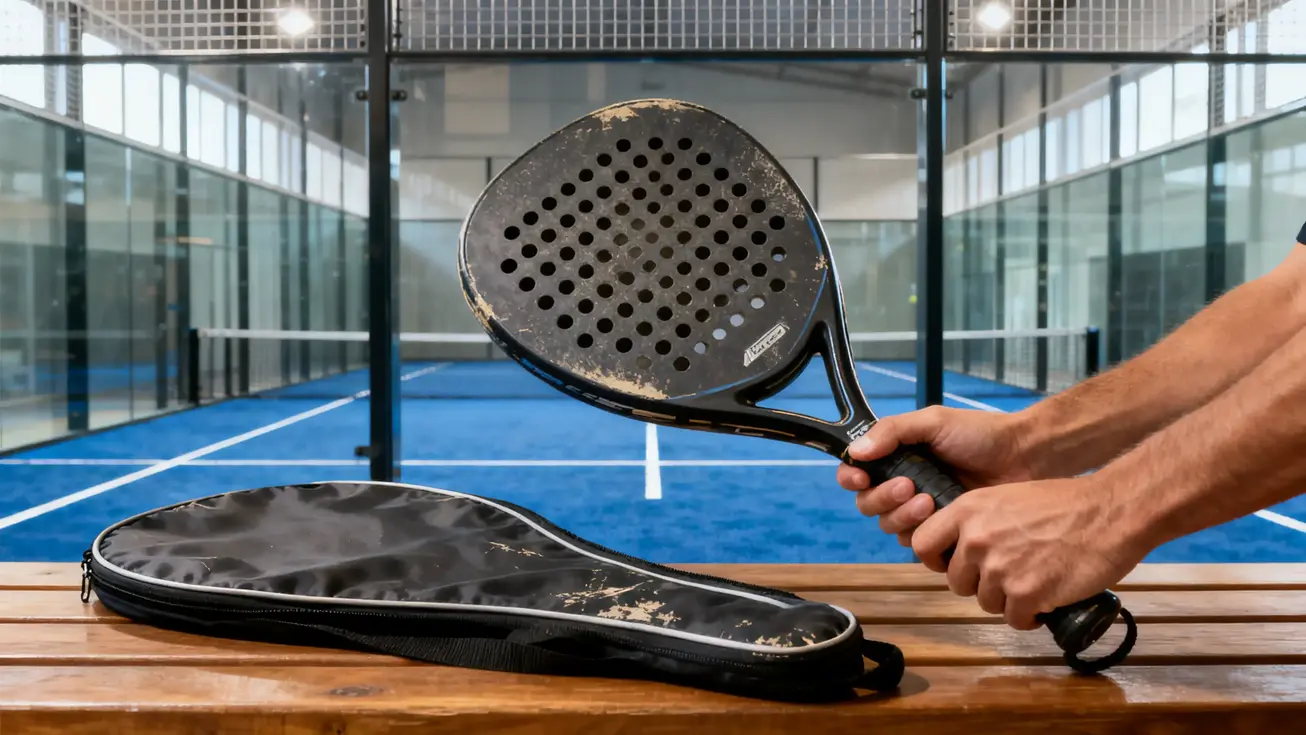
| Razoável | Desgaste cosmético significativo, verificar cuidadosamente fissuras | 15 - 30% |
| Moldura danificada / rachada | Problemas estruturais | Não recomendado para compra |
Então uma raquete que custava £300 no retalho em condição muito boa pode vender por £135 - £180. Uma raquete de iniciante de £90 em boa condição pode apanhar £30 - £40. A diferença entre o que alguém pagou e o que recupera é o custo oculto de comprar novo.
Algumas coisas movem os preços usados para cima ou para baixo. Uma raquete com a sua mala original e documentação vale mais. Modelos apoiados por jogadores profissionais ativos mantêm valor ligeiramente melhor enquanto esse jogador está visível. Modelos mais antigos de linhas descontinuadas podem ser mais difíceis de vender rapidamente, mesmo que a raquete seja estruturalmente sólida, simplesmente porque os compradores não conseguem verificar especificações ou encontrar críticas facilmente.
Uma coisa que não afeta o preço tanto quanto as pessoas assumem: a forma. As molduras redondas, lágrima e diamante todas trocam em percentagens semelhantes do seu PVP original - a condição e reconhecimento de marca importam mais.
Como usar isto se está a comprar ou vender#
Se está a comprar: uma raquete usada de nível avançado em condição muito boa a 55% do PVP é geralmente melhor valor do que uma raquete intermédia nova a preço total. Obtém melhores materiais, apenas precisa de a inspecionar cuidadosamente para fissuras nas bordas - passe o dedo ao redor de todo o perímetro e pressione a face no centro; deve sentir-se firme e recuperar.
Se está a vender: preço no topo do seu intervalo de condição se tiver a embalagem e recibo originais, e no topo inferior se houver algum dano na superfície que não consiga fotografar claramente. Não preço para recuperar o que pagou; preço contra o que modelos comparáveis estão atualmente listados.
EpicRackets lista raquetes de padel usadas em todos os níveis de condição, para que possa ver preços de venda reais em modelos comparáveis antes de decidir um número. Se tem uma raquete que quer vender, pode listá-la à venda no EpicRackets em alguns minutos - sem taxas de listagem, e os compradores já estão lá especificamente para equipamento pré-possuído. Se quer verificar quanto é que um modelo específico está a apanhar antes de se comprometer com um preço, a busca de raquete de padel dá-lhe uma vista ao vivo do mercado.
A versão curta: as raquetes de padel são caras porque os materiais genuinamente custam dinheiro a fabricar corretamente, e a procura está a ultrapassar o fornecimento num desporto em rápido crescimento. Mas essa mesma dinâmica significa que uma raquete de qualidade usada - comprada ou vendida ao preço certo - é um dos melhores movimentos de valor no desporto de raquete.