The first time I played on grass after a full clay season, I went to hit a forehand I had read perfectly and the ball was already past me. Same swing, same footwork, same read. Different court. The bounce had skidded through at half the height I expected and I was still loading for a shot that had already happened.
That gap between expectation and reality is what surfaces do to you. Every player has a default internal model of how the ball will behave, built from wherever they learned and wherever they play most. When the court breaks that model, you lose points before you have made a technical error. Understanding what each surface actually does to the ball, and adjusting your positioning and tactics accordingly, is one of the more transferable skills in the game.
Clay: the ball tells you it is coming#
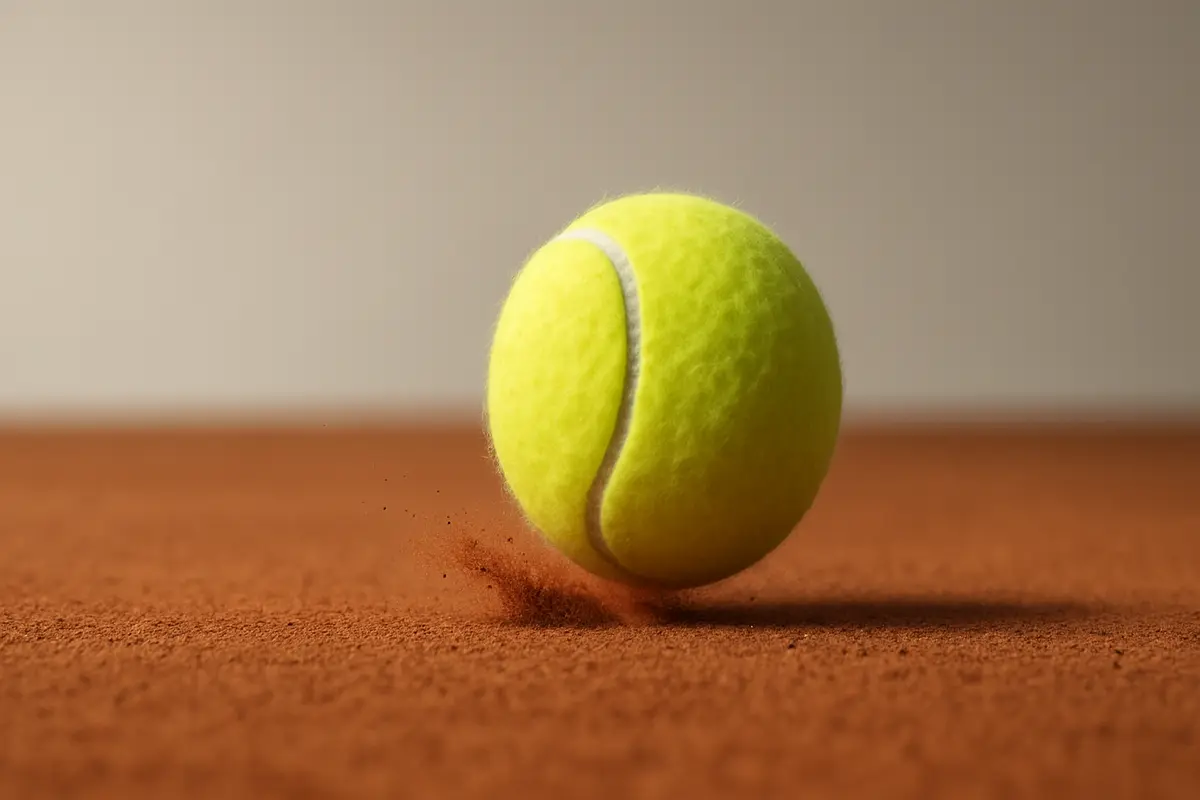
Clay slows the ball significantly and kicks it up. The friction between the felt and the loose surface robs pace and redirects energy upward, so you get a high, looping bounce that sits up and invites you in. This is why baseline rallies on clay run longer. The court is doing some of the defensive work for you.
The tactical adjustment is positional. Because the bounce climbs, you can afford to take the ball later and still hit it at a comfortable contact point. Players often move back a step or two on clay without realising it, which is correct. The risk is the opposite error: staying too close to the baseline and letting a heavy topspin ball climb into your body, where you have no room to swing.
On clay, I focus on building points rather than ending them early. A winner that works on hard courts, hit from the same position, will often be retrieved on clay because the surface bleeds pace off the ball after it lands. Patience is not a personality trait here. It is a tactical response to physics.
If you are thinking about gear for clay specifically, this post on clay vs hard court gear covers what actually changes in terms of frames and shoes.
Hard courts: the honest surface#
Hard courts (acrylic or concrete base, textured coating) produce what I think of as the truthful bounce. The ball comes through at roughly the angle it arrived, with moderate pace retention and a predictable height, usually around waist level on a flat shot. There is no dramatic kick, no skid, no dramatic slowdown.
That predictability is both the gift and the trap. Because nothing unusual is happening, errors tend to be yours alone. You cannot blame a wicked kick or a skid. Hard courts also transmit pace efficiently, so a flat, heavy ball stays heavy after the bounce. This rewards aggressive positioning and early ball-striking.
I take the ball earlier on hard courts than on clay, stepping inside the baseline when I am in control of a rally. The window to attack is shorter because the ball does not sit up, so waiting for a comfortable contact point often means letting the opportunity go. Compress time on hard courts; expand it on clay.
Grass: read it or lose it#
Grass is the surface that punishes guessing most severely. The ball skids low through the contact with the turf, retaining pace but losing height. A ball that would bounce to hip height on hard courts might stay below the knee on well-maintained grass. The contact point moves forward and down, and if your footwork is tuned to clay or hard courts, you will be late and cramped repeatedly.
The adjustment is to get lower, get in earlier, and shorten your backswing. Long looping groundstrokes that work beautifully on clay become a liability because by the time your racket arrives at the intended contact point, the ball has already dropped below the strike zone. Flatter, more compact swings suit grass better. Net approaches also become more viable because the low bounce makes passing shots harder to execute with topspin.
Grass also rewards the serve more than any other surface. A wide slice serve on grass can bounce away from the receiver at an angle that is almost unreturnable on a fast court. If you play on grass occasionally, it is worth practising serve patterns specifically for it.
Artificial surfaces: know which one you are on#
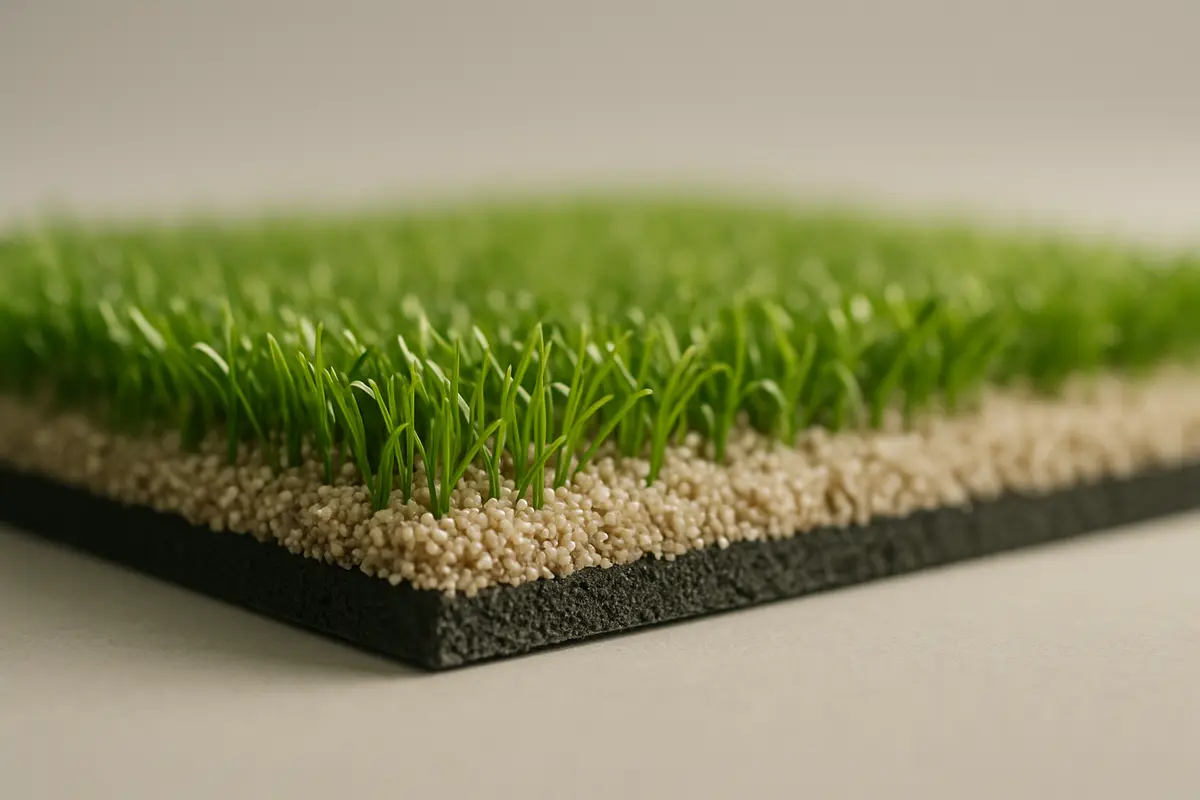
Artificial grass and padel turf are not interchangeable, and neither is the same as the acrylic hard courts you find at most clubs. Artificial grass (the kind used for some tennis facilities) typically plays somewhere between hard and clay, depending on the pile height and infill. Shorter pile with sand infill plays faster and lower. Longer pile plays slower and higher.
Padel turf is its own category. The ball in padel (which has no strings and a perforated EVA foam core face, so string tension is irrelevant) interacts with the turf and the walls in ways that make surface reading a three-dimensional problem. The bounce off the turf is generally consistent, but the second bounce off the back glass varies based on pace, spin, and the angle of entry. I will not go deep on padel wall play here, but the principle is the same: build your internal model of what this specific surface does, then adjust.
A surface comparison you can actually use#
| Surface | Bounce height | Pace retention | Key adjustment |
|---|---|---|---|
| Clay | High, kicking | Low | Move back, take ball late, build points |
| Hard (acrylic) | Medium, true | Medium to high | Step in early, compress time |
| Grass | Low, skidding | High | Get lower, shorten swing, approach net |
| Artificial grass (tennis) | Varies by infill | Medium | Check pile height before warming up |
| Padel turf | Medium, consistent | Medium | Factor in wall angles as second bounce |
The "key adjustment" column is the one worth internalising. When you walk onto an unfamiliar surface, you have about ten minutes of warm-up to build your new model. Use that time deliberately: hit a few balls and watch the bounce height, not the ball flight. The flight is what you already know. The bounce is what the court is telling you.
What to do with this#
If you are moving between surfaces regularly, the gear you carry matters as much as the tactics. A racket strung at a tension suited to slow clay play will feel dead on grass. Shoes that grip well on clay can be dangerously slippery on hard courts. I have written about the gear side of this in more detail in the clay vs hard court gear post, which is worth reading alongside this one.
If you are in the market for a frame suited to a specific surface, the tennis rackets marketplace is a good place to look for pre-owned gear from players who have already done the testing. Pre-owned is not a compromise here. It is often how you find a frame that has been genuinely played in the conditions you are buying it for.
The courts will keep telling you what they need. The job is to listen before the set slips away.