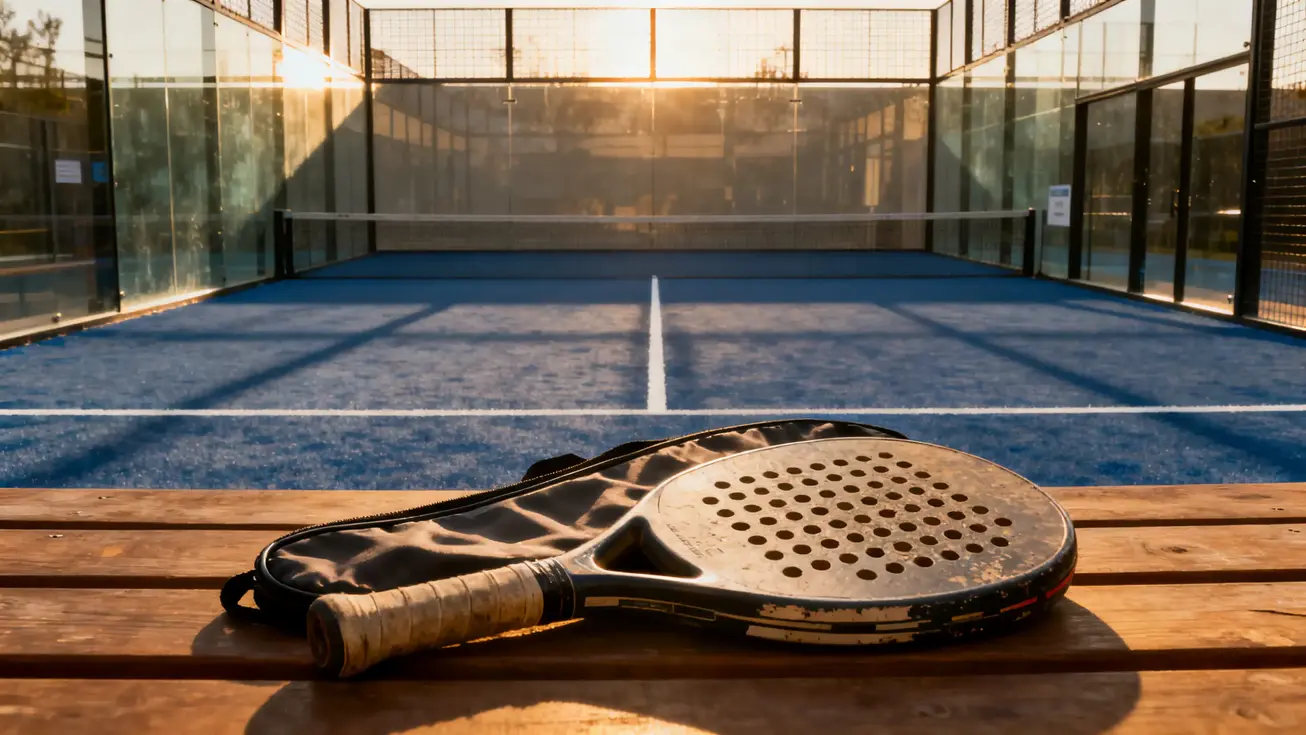
Cuánto tiempo dura una raqueta de pádel y cuándo es hora de reemplazarla o revenderla?
La mayoría de las raquetas de pádel duran entre uno y tres años de juego regular. Un jugador ocasional que juega dos veces por semana y cuida bien su raqueta puede sacarle casi tres años de uso; alguien que juega cuatro o cinco sesiones por semana en canchas de césped más abrasivas puede notar una caída de rendimiento significativa en menos de doce meses.
La respuesta honesta es que una raqueta de pádel no se desgasta de la misma manera que una raqueta de tenis. No hay cordajes que romperse. Lo que se degrada es la espuma o núcleo EVA, la cara de carbono o fibra de vidrio, y la protección del marco - y esa degradación puede ocurrir de forma invisible hasta que notes que tus golpes se sienten apagados o inconsistentes.
Qué se deteriora realmente dentro de una raqueta de pádel#
Las raquetas de pádel son sólidas - una cara perforada pegada a un núcleo de espuma o EVA, normalmente envuelta en una piel de carbono o fibra de vidrio. Los dos modos principales de fallo son:
Compresión del núcleo. La espuma EVA se endurece y pierde su capacidad de respuesta con el tiempo, especialmente si la raqueta se guarda en un maletero caliente o se deja al sol directo repetidamente. Una vez que el núcleo se ha compactado, la sensación se vuelve notablemente más plana y la transferencia de potencia disminuye. No puedes revertir esto.
Deslamination. La unión entre la cara y el núcleo se debilita, produciendo un sonido hueco o de cascabeleo al golpear la cara. Una pequeña zona deslamida normalmente se expande, y una vez que alcanza la zona de potencia la raqueta está efectivamente terminada para uso competitivo.
Daño en el marco y bordes. Raspar paredes y pisos es parte del pádel, pero los golpes profundos en el marco (no solo en la protección del borde) pueden comprometer la integridad estructural. Si el marco se flexiona de una manera diferente a antes, eso es señal de que la raqueta ha sufrido daño estructural.
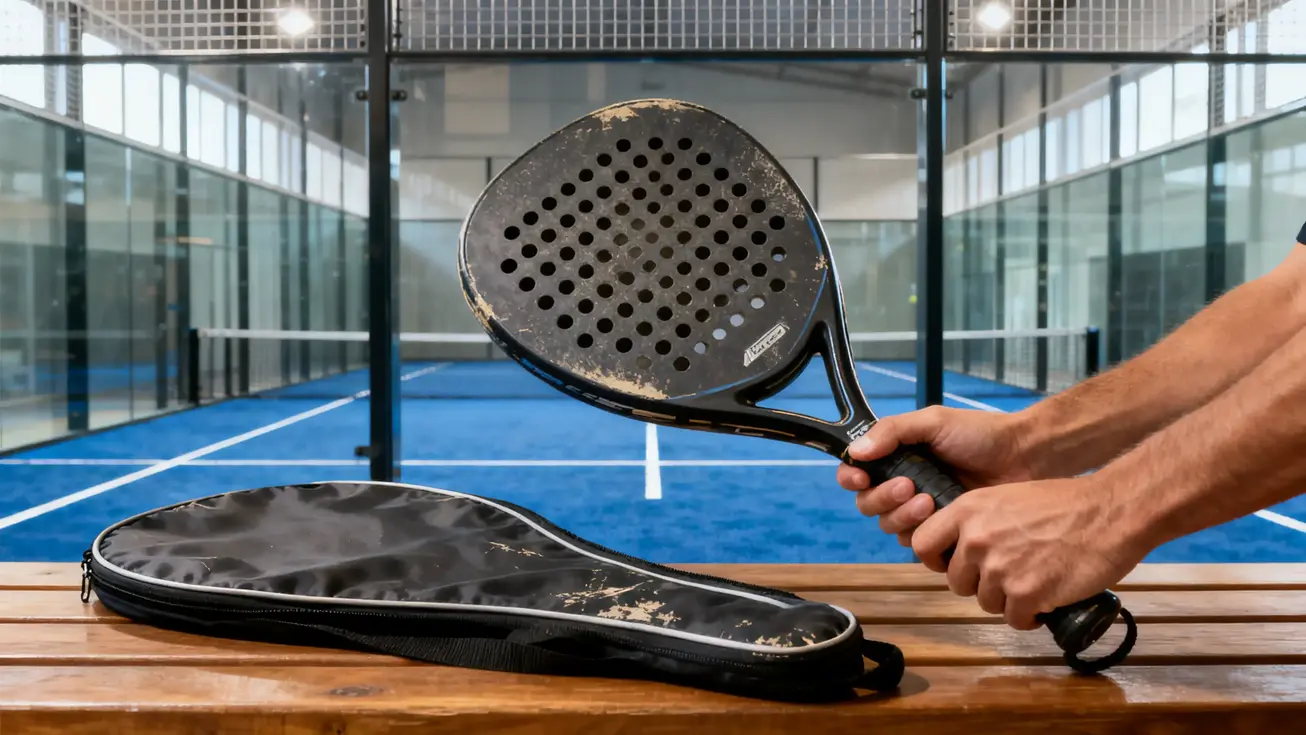
Los arañazos superficiales y los protectores de borde desgastados son solo cosméticos y no afectan el juego - toda raqueta de segunda mano los tiene.
Señales de que es hora de reemplazar (o revender) tu raqueta#
La pregunta clave no es qué edad tiene la raqueta, sino si sigue funcionando bien. Aquí hay una lista práctica de verificación de condición:
| Indicador de condición | Lo que significa para el juego | Acción |
|---|---|---|
| Arañazos superficiales, desgaste menor del borde | Solo cosmético | Sigue jugando - o vende a precio justo de usado |
| Grip desgastado, protección de borde faltante | Fácil de reparar, no afecta el núcleo | Reemplaza grip / protección de borde, continúa |
| Los golpes se sienten apagados o sin potencia | El núcleo puede estar comprimido | Prueba con una raqueta nueva; si se confirma, vende o reemplaza |
| Sonido hueco al golpear la cara | Deslamination comenzando | Vende pronto antes de que se expanda más |
| Grieta visible en el marco | Fallo estructural | Retírala - insegura e imposible de vender como raqueta de juego |
| Cascabeleo en el contacto | Deslamination avanzada | Retírala o vende solo como exhibición/práctica |
El momento ideal para vender es antes de que la deslamination o compresión del núcleo se hagan obvias para un comprador. Una raqueta que se siente un poco menos viva pero es estructuralmente sólida todavía tiene un valor real. Una que cascabelea tiene casi ninguno.
Cómo la condición afecta el valor de reventa#
Las raquetas de pádel de marcas de gama media a premium (piensa en raquetas que originalmente costaron entre 80 y 300 euros) mantienen el valor razonablemente bien si se venden en el primer año o dos. Una raqueta bien cuidada en excelente estado (0-6 meses) con desgaste cosmético ligero típicamente alcanza el 50-65% del precio original. Entre 6-18 meses con desgaste normal de juego, espera 30-50%. Pasados dos años, o con cualquier problema de núcleo o deslamination, los valores caen por debajo del 30% y la raqueta se vuelve más difícil de vender.
Vender más pronto es casi siempre mejor que esperar. Los modelos de pádel se actualizan regularmente, y una raqueta que tiene dos años ya está compitiendo contra versiones más nuevas de sí misma en el mercado usado.
Si no estás seguro de cuánto vale tu raqueta ahora, obtén una valoración rápida antes de anunciarla. El mercado se mueve más rápido de lo que la mayoría de la gente espera.
Cuándo reemplazar versus revender#
Si tu raqueta muestra signos tempranos de desgaste pero sigue siendo estructuralmente sólida, vende ahora y pon ese dinero hacia la siguiente. Aferrarse a un activo en declive mientras continúas jugando con una raqueta que está pasada su mejor momento es un mal negocio en ambos sentidos.
Si la raqueta tiene daño genuino - una grieta, deslamination avanzada, un marco que se flexiona - reemplázala por razones de seguridad y no intentes venderla como una raqueta de juego.
Para todo lo demás, el mercado de pádel de segunda mano en Europa es lo suficientemente activo para que encuentres un comprador al precio correcto. Lista tu raqueta de pádel en EpicRackets y llega a jugadores en Portugal, España y Reino Unido que buscan activamente equipo de segunda mano a precios honestos. Una raqueta que recoge polvo en tu bolsa es dinero sentado sin usar - y la próxima raqueta favorita de alguien.