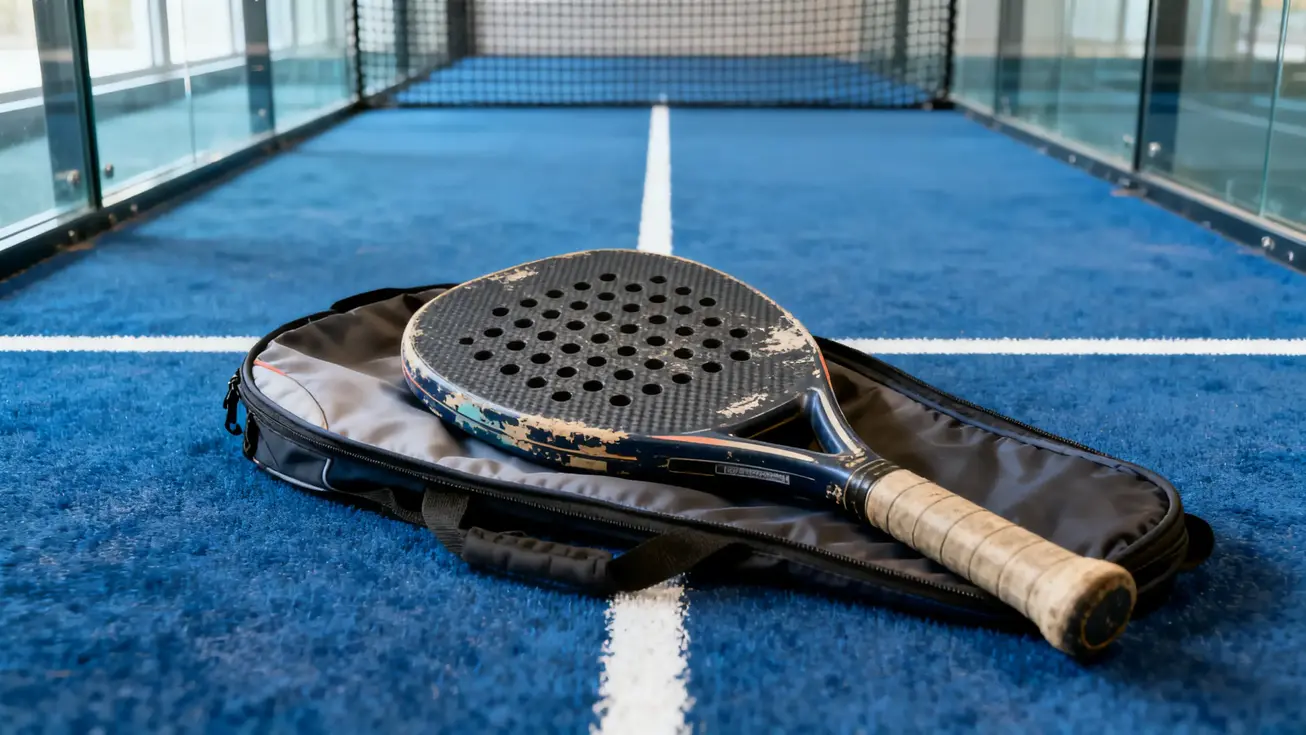
Si juegas padel una o dos veces a la semana, tu pala debería durar entre 12 y 24 meses antes de que el rendimiento comience a caer notablemente. Jugando tres o cuatro veces a la semana, esa ventana se reduce a aproximadamente 9 a 18 meses; quienes juegan a diario pueden encontrarse buscando un reemplazo después de tan solo seis a nueve meses. Estas cifras provienen del análisis de The Padel Brief sobre la vida útil de la pala, y se alinean con lo que escuchas de entrenadores y jugadores habituales de clubes.
El problema es que el tiempo de calendario es solo parte de la historia. Una pala de padel no es como una raqueta de tenis que se puede reenredar cuando las cuerdas se desgastan. Las palas de padel no tienen cuerdas: la superficie de golpeo es una cara sólida de fibra de carbono o fibra de vidrio unida a un núcleo de EVA o espuma. Cuando ese núcleo se comprime y pierde su elasticidad, o cuando la cara se delamina o se agrieta, no hay reparación. La pala se acabó.
Qué realmente daña una pala de padel#
Los tres culpables principales son daño por impacto, humedad y exposición UV, aproximadamente en ese orden.
El daño por impacto es lo obvio. Cada golpe de pelota envía una onda de choque a través del núcleo. Con el tiempo, especialmente con núcleos EVA más duros encontrados en palas avanzadas, se acumulan microfisuras. No siempre las verás, pero las sentirás: un punto muerto, una zona en la cara que produce un sonido sordo en lugar de un chasquido nítido, y notablemente menos potencia.
El daño en los bordes ocurre cuando los jugadores rascan el marco contra la cancha persiguiendo pelotas bajas (el clásico movimiento de rastrillo) o cuando la pala golpea el cristal. Los bordes de carbono se astillan y agrietan más rápido de lo que la mayoría de los jugadores esperan. Una buena cinta protectora de overgrip en el marco añade meses de vida a casi ningún costo.
La humedad es el asesino silencioso. El padel se juega frecuentemente al aire libre, y los núcleos de espuma y EVA absorben agua con el tiempo, especialmente si la pala tiene microfisuras. Un núcleo saturado de agua pierde completamente sus propiedades de rebote. Nunca dejes una pala en una bolsa húmeda o en el maletero caliente de un coche: ambos aceleran el proceso.
La exposición UV degrada la resina que une las capas de carbono. Una cancha al aire libre en el sur de Europa o incluso un verano portugués es genuinamente duro para las caras desprotegidas.
Señales de que tu pala ha llegado al final de su vida útil#
Antes de decidir reemplazar o vender, repasa esta lista:
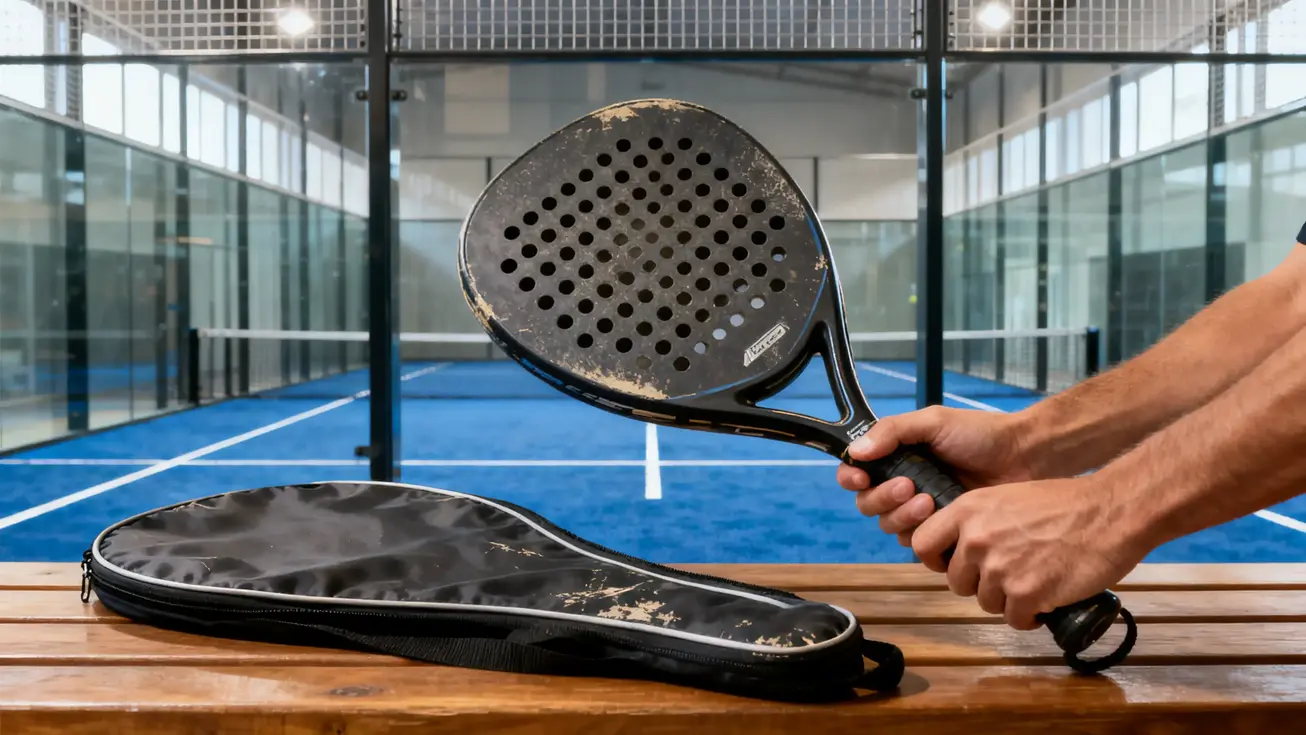
- Puntos muertos en la cara - golpea la superficie con un dedo; cualquier sonido hueco o notablemente diferente indica daño en el núcleo
- Delaminación visible - la cara comienza a formar burbujas o se despega del marco en los bordes
- Grietas en el marco o la cara - pequeños arañazos superficiales son cosméticos; las grietas estructurales no lo son
- Pérdida de potencia o control que no puedes explicar - si tu juego no ha cambiado pero los resultados sí, la pala puede estar dañada
- Vibración excesiva - un núcleo gastado o dañado transfiere más choque a tu brazo; este es también el punto donde comienzan los problemas de codo
- Desequilibrio de peso - una pala que se siente más pesada o más ligera de un lado de lo que solía es probable que haya absorbido humedad de manera desigual
Si marques dos o más de estos, es hora de tomar una decisión.
Lo que la condición significa en términos de reventa#
Las palas de padel mantienen su valor mejor de lo que la mayoría de la gente asume, siempre que vendas antes de que se degrade demasiado. Una pala de gama media comprada nueva por 150-200 euros puede realistically obtener 50-65% de su precio original si está en buen estado cosmético y tiene menos de un año. Espera hasta que muestre daño estructural y esa cifra se desmorona.
| Condición | Valor típico de reventa vs. precio nuevo | Lo que esperan los compradores |
|---|---|---|
| Como nuevo (menos de 6 meses, solo pequeños arañazos) | 60-75% | Sin puntos muertos, grip original, sin daño en los bordes |
| Bueno (6-18 meses, desgaste normal) | 40-60% | Algunas marcas cosméticas, cara intacta, sin grietas |
| Regular (18+ meses, chips visibles en los bordes, delaminación menor) | 20-35% | Jugable pero el comprador sabe que la vida es limitada |
| Pobre (puntos muertos, cara o marco agrietado) | Menos de 20% o invendible | Piezas / solo para exhibición |
El momento ideal para vender es antes de pasar de Bueno a Regular. La mayoría de los jugadores espera demasiado tiempo, lo que les cuesta dinero real.
Cuándo vender en lugar de seguir jugando#
La respuesta honesta: vende antes de que la pala necesite ser reemplazada, no después. Una pala que describes como "aún está bien" obtendrá un precio mucho mejor que una que describes como "aún se puede jugar pero está gastada". Si ya estás pensando en una pala nueva, lista la antigua ahora.
Factores que empujan la decisión hacia vender más pronto:
- Juegas más de tres veces a la semana (curva de degradación más rápida, mejor vender mientras la condición aún es Buena)
- Actualizaste a mitad de temporada y la pala anterior apenas ha sido utilizada desde entonces
- Compraste una pala avanzada que es demasiado exigente para tu nivel actual: estas realmente mantienen bien el valor porque el mercado de palas de rendimiento de segunda mano es fuerte
- Estás experimentando fatiga en el brazo o el codo, lo que a menudo señala un núcleo gastado transfiriendo más vibración de la que debería
Si estás indeciso, lista la en EpicRackets y ve qué oferta te llega. Siempre puedes retirarla si cambias de opinión, y obtendrás una lectura realista del valor de mercado actual sin comprometerte con nada.
Para jugadores que buscan lo opuesto: comprar una pala de segunda mano para reemplazar una que se ha desgastado, explorar los anuncios de padel vale la pena hacer antes de recurrir automáticamente a comprar nueva. Una pala de rendimiento con seis meses en condición Buena de un jugador que actualizó es a menudo la mejor relación calidad-precio en el deporte.