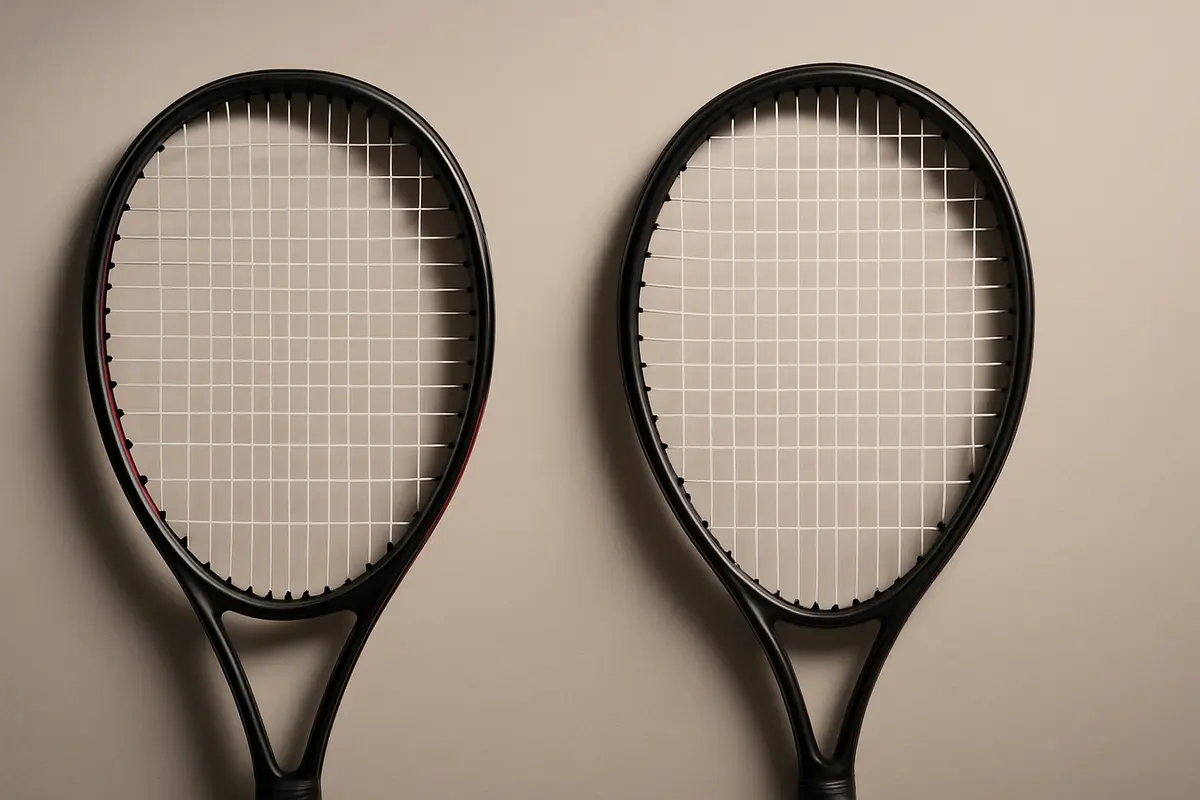
Two players buy the same frame, spec it with the same string at the same tension, and one comes back saying it feels crisp and lively while the other says theirs feels boardy and dead. The string and the racket are identical. The stringer was not.
Most of the conversation around racket setup centres on which string to buy and what tension to ask for. Those choices matter, but they are only part of what determines how a frame actually plays. The machine being used, how well it is calibrated, the pattern in which the strings are pulled, how the knots are tied, and whether the stringer checks the frame before they even start: all of these shape the finished product in ways that a tension number on a receipt cannot tell you. If you have ever picked up a pre-owned racket that felt lifeless and written it off, there is a real chance the string job is the problem, not the frame.
The machine matters more than most players realise#
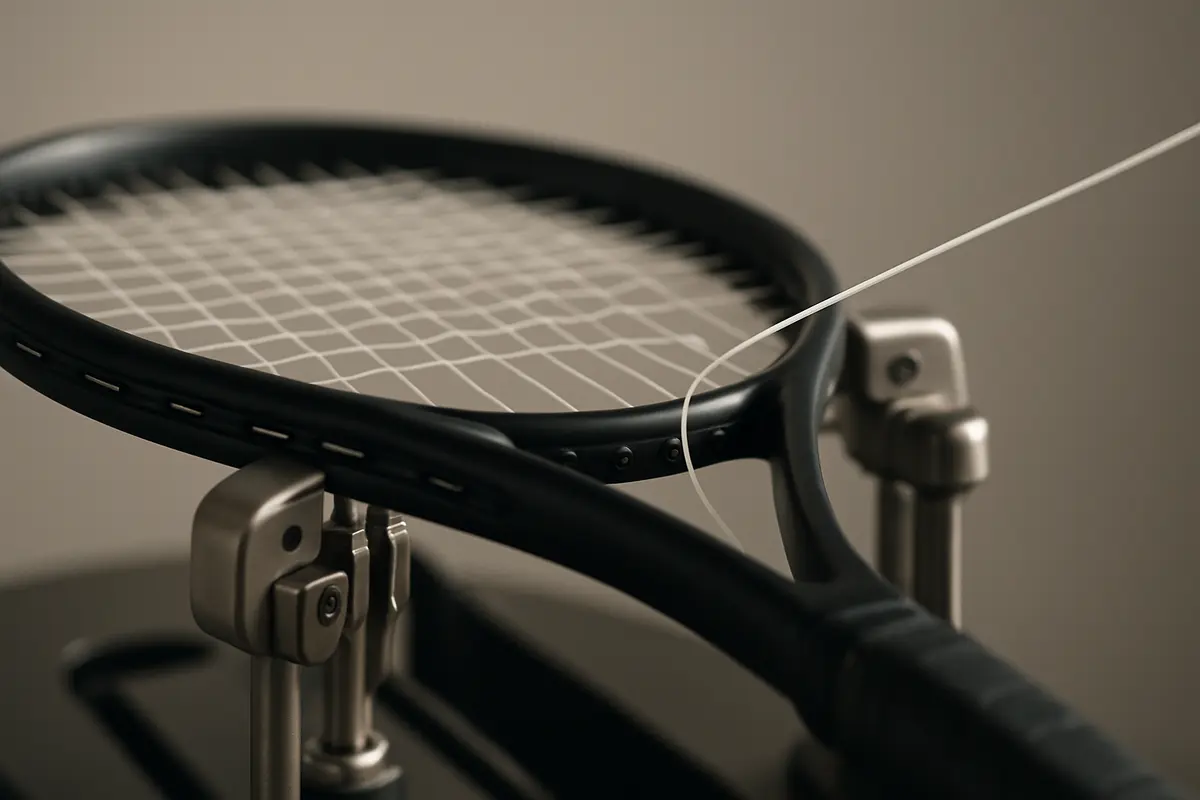
There are three types of stringing machine in common use. Drop-weight machines use a weighted arm to apply tension. You pull the string, clamp it, and the arm falls to confirm the tension has held. They are accurate when used correctly, but they are slow, and the tension is applied gradually rather than in one pull. Crank machines (sometimes called lockout machines) apply tension with a hand-turned crank that clicks off at the set point. They are faster, which is why a lot of shops use them, but they can release a small amount of tension the moment the crank locks, and that loss accumulates across fifty or sixty string pulls. Electronic constant-pull machines maintain tension throughout the entire pull and only release when you clamp. They are the standard at professional level for a reason.
Drop-weight and crank machines do not automatically produce bad string jobs. A skilled stringer on a well-maintained crank machine will produce better results than a careless one on an electronic. But if you are asking a shop to string your racket and the machine is a cheap crank that has not been serviced in two years, the tension you asked for and the tension you received are probably not the same number.
What a good stringer actually checks#
Before the string goes anywhere near the frame, a stringer worth their time will look at the grommets. Grommets are the plastic tubes that protect the string at each hole in the frame. Cracked or missing grommets cause string to wear through faster and can create dead spots by changing how the string moves at the contact point. On a pre-owned racket, this is often the first thing to inspect.
They will also check the frame for cracks, particularly around the throat and the top of the head. Stringing a cracked frame at full tension can finish it off entirely. A good stringer declines that job or at least flags it clearly.
During the job itself, technique shapes the outcome in several specific ways. The starting knot placement affects how evenly tension distributes across the first few mains. Pulling mains and crosses in the correct sequence (following the manufacturer's recommended pattern rather than whatever is fastest) keeps the frame from distorting under asymmetric load. Knots tied too tight or in the wrong location can create a localised stiff point that you feel on off-centre hits. And the time between pulling tension and clamping matters: string that sits under tension for too long before being clamped loses some of what was pulled.
How stringing explains a "dead" pre-owned racket#
A frame that has been sitting unplayed for six months with the original string in it is not a write-off. String loses tension over time even without being hit, and polyester strings in particular go dead relatively quickly. A racket that feels dull and unresponsive may simply be playing with string that has lost a significant portion of its original tension and elasticity.
Restringing pre-owned frames that players were ready to sell can produce a dramatic difference. The frame had not changed. The sweet spot was exactly where it should be. The previous string job had just given up.
This is worth keeping in mind when you are browsing tennis rackets in the marketplace. A listing at a fair price for a frame that the seller describes as "plays a bit dead" is often an opportunity. Factor in the cost of a restring and you may still be well ahead of buying new. If you want more context on evaluating pre-owned gear before you buy, the post on how to spot a fake tennis racket also covers what to look for physically in a frame.
Stringer quality: what to look for and what to ask#
| Factor | What to look for | Red flag |
|---|---|---|
| Machine type | Electronic constant-pull for best consistency | Unserviced crank with no calibration record |
| Calibration | Machine tested against a reference weight regularly | "We just use it as-is" |
| Grommet check | Stringer inspects before starting | Job starts immediately without looking |
| Stringing pattern | Follows manufacturer recommendation | One pattern used for every racket |
| Knot placement | Tied at a cross string, not a main | Knot on a main under high load |
| Tension loss compensation | Stringer adds a small percentage for string type | Same pull for every string |
| Turnaround time | Enough time to do the job properly | Same-day guarantee on a busy weekend |
The question worth asking any new stringer is simple: do you follow the manufacturer's recommended stringing pattern, or do you use your own? A confident, specific answer tells you a lot. A vague one tells you more.
What to do next#
If you have a frame that is not playing the way you expect, a restring from a skilled stringer is the first thing to try before drawing any conclusions about the racket itself. Find a stringer who uses an electronic machine, ask about their process, and specify your string and tension in writing so there is no ambiguity.
If you are in the market for a frame and want to keep the budget sensible, browsing pre-owned is genuinely the smart move. A quality frame with a tired string job is a project that costs the price of a restring. We built the EpicRackets marketplace specifically so that gear like this stays in play rather than sitting in a cupboard. For more on why pre-owned is worth taking seriously, the post on second-hand gear and sustainability makes the case in full.
The racket you are playing with is only as good as the string job inside it. That part is worth getting right.