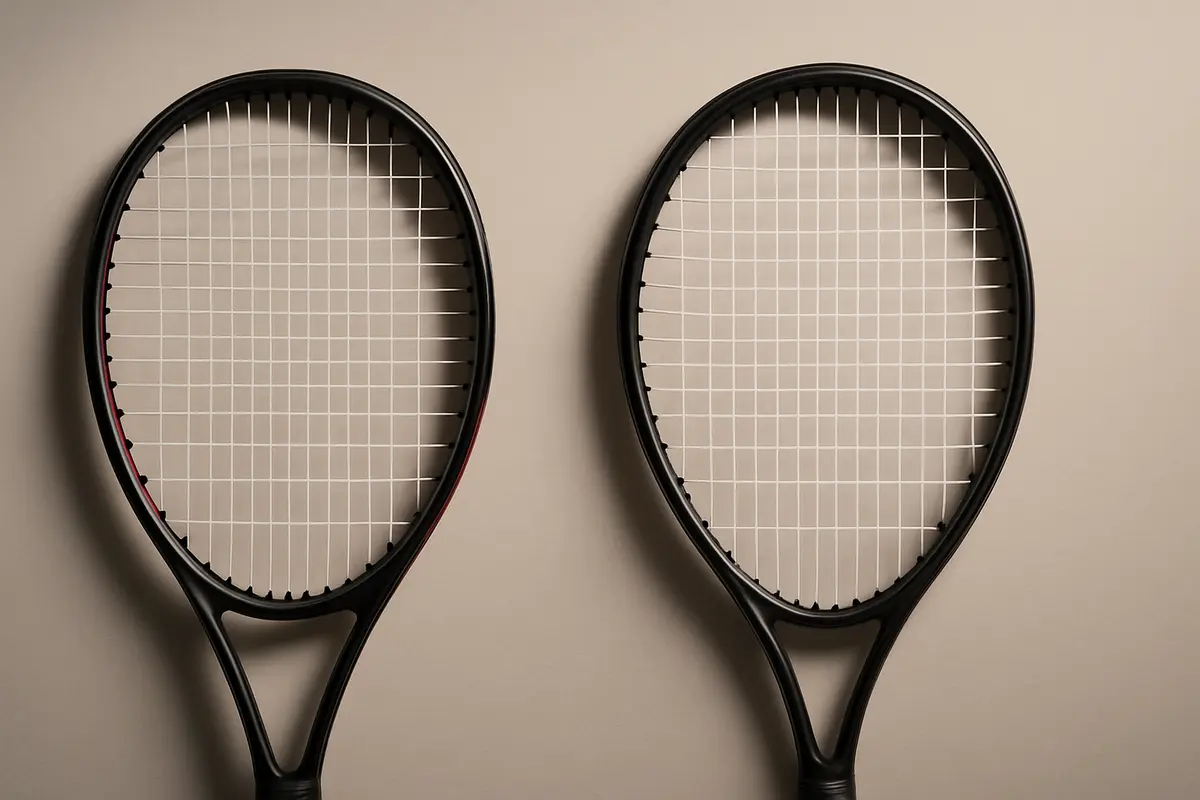
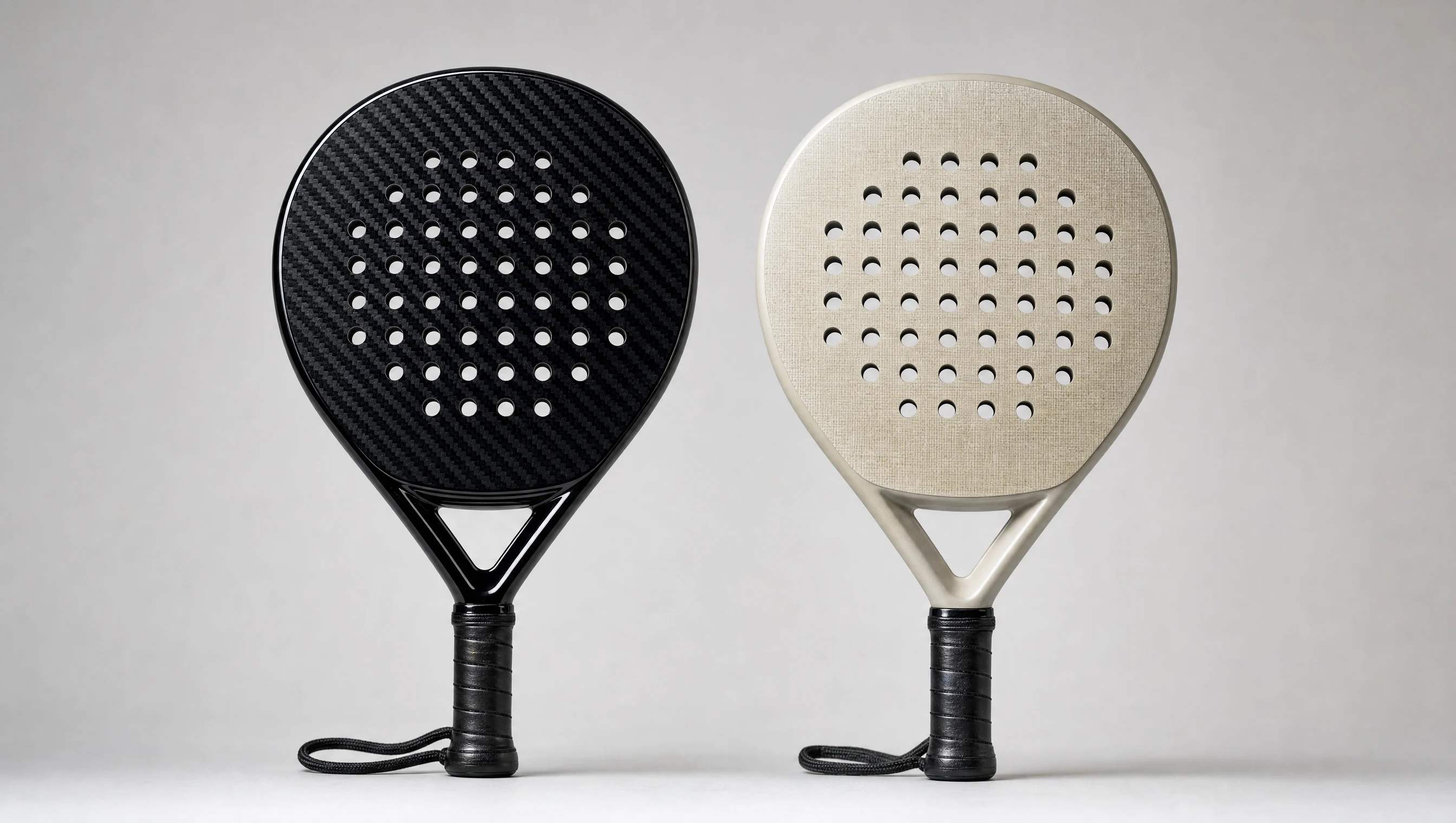
Coge dos palas de pádel que parezcan casi idénticas y da unos toques sobre la superficie de golpeo de cada una. Una sonará como llamar a una puerta; la otra cederá un poco, casi como el parche de un tambor. Esa diferencia no está en tu cabeza, y no es marketing. Es el material de la cara, y cambia el comportamiento de la pala más que la forma, el peso o el color juntos.
Si estás intentando averiguar qué tipo de marco te conviene, o si merece la pena gastar más en carbono cuando todavía estás encontrando tu sitio en la pista, este post te dará una respuesta directa. Sin recomendaciones de productos, sin lealtad a marcas. Solo lo que hacen realmente los materiales y cómo usar esa información cuando estás mirando anuncios.
Qué es realmente la cara (y por qué importa específicamente en pádel)#
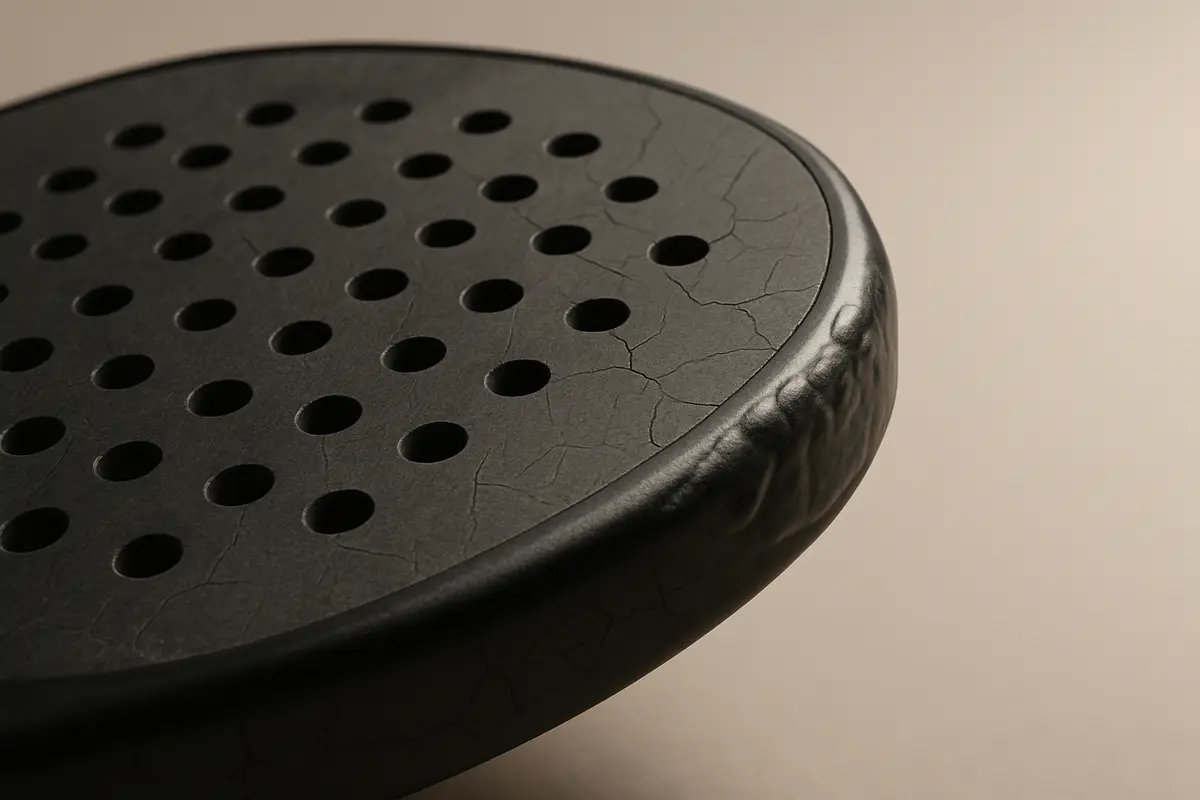
Una pala de pádel no tiene cuerdas. La superficie de golpeo es una cara sólida y perforada adherida sobre un núcleo de espuma EVA. Cuando la bola hace contacto, la cara flexa ligeramente, la espuma se comprime y la bola rebota. La rigidez del material de la cara controla cuánto de esa secuencia notas y cuánta energía vuelve a la bola.
La fibra de carbono y la fibra de vidrio son materiales compuestos tejidos en láminas que se colocan sobre el núcleo durante la fabricación. La diferencia está en cómo responden a esa compresión. El carbono es más rígido. La fibra de vidrio es más flexible. Todo lo demás se deriva de ese único hecho.
Esto importa en pádel de una forma que no ocurre en tenis, porque no hay un encordado que absorba y redistribuya el impacto. La cara hace todo ese trabajo directamente, lo que significa que la elección del material tiene un efecto mucho más inmediato sobre tu brazo, tu timing y tu margen de error.
Qué te da la fibra de vidrio#
Las caras de fibra de vidrio flexan más en el contacto. Esa flexión hace dos cosas: mantiene la bola sobre la superficie de golpeo una fracción de tiempo más y absorbe más vibración del impacto antes de que llegue a tu mano y tu brazo.
El resultado es una sensación más tolerante. Los golpes descentrados aún van a algún sitio útil. El punto dulce se siente más grande porque la cara trabaja contigo en lugar de penalizarte por la falta de precisión. Para jugadores que todavía están desarrollando una técnica consistente, esa tolerancia se traduce directamente en menos errores y más puntos largos.
La contrapartida es que renuncias a parte de la respuesta nítida e inmediata que los jugadores experimentados usan para generar ritmo y efecto. La bola no sale disparada de una cara de fibra de vidrio como lo hace del carbono. Para un jugador principiante o intermedio, eso no es una pérdida. Todavía no golpeas con la mecánica necesaria para aprovechar esa respuesta extra, y una cara más rígida solo hará más evidentes tus errores de timing.
Los marcos de fibra de vidrio también son más baratos de fabricar, por eso los encuentras en la gama de precio más baja. Un marco de fibra de vidrio de segunda mano a un precio sensato es, en mi opinión, el punto de partida adecuado para la mayoría de los jugadores que llegan al pádel desde el tenis o el squash.
Qué te da el carbono#
Las caras de carbono son más rígidas, y esa rigidez significa que la transferencia de energía es más rápida y más directa. La bola comprime la cara, y la cara rebota con menos retardo. Notas el contacto con más precisión, lo cual es útil cuando das forma a los golpes de manera deliberada: una bandeja seca, un globo ajustado desde la pared del fondo, un drive paralelo.
Esa misma rigidez también significa que la vibración viaja con más eficiencia por el marco hasta tu brazo. En una bola bien golpeada, eso se siente satisfactorio. En un mal golpe, se siente como un aviso. Los jugadores con cualquier historial de problemas de codo o muñeca deberían pensárselo bien antes de pasarse a una cara de carbono completa, sobre todo si juegan varias veces por semana.
Los marcos de carbono se sitúan en la gama alta del mercado. El carbono completo (carbono en ambas caras) cuesta más que el carbono en una sola cara, que es una construcción habitual en los marcos de gama media. Algunos fabricantes usan tejidos de fibra de carbono de distintas densidades, lo que afecta aún más a la rigidez. Un tejido 3K es menos rígido que un tejido 12K, y la diferencia es real en pista, no solo en una ficha de especificaciones.
El carbono premia a los jugadores que tienen una mecánica consistente y quieren más de cada golpe. No es más rápido por defecto. Responde mejor a lo que tú le aportas.
Carbono vs fibra de vidrio: un marco para decidir#
| Cara de fibra de vidrio | Cara de carbono | |
|---|---|---|
| Flexión en el contacto | Mayor (más tolerante) | Menor (más precisa) |
| Sensación del punto dulce | Más grande, más tolerante | Más pequeño, más exigente |
| Vibración al brazo | Amortiguada | Más directa |
| Techo de potencia | Moderado | Más alto |
| Más indicado para | Principiantes, jugadores de control, jugadores sensibles del brazo | De intermedio a avanzado, jugadores de potencia |
| Precio típico (nuevo) | Más bajo | Más alto |
| Valor de segunda mano | Sólido: menor coste de entrada | Sólido: prueba el carbono sin pagar el precio completo |
Una nota importante: el material de la cara es una sola variable. La densidad del núcleo, la forma del marco (redonda, lágrima, diamante) y el peso total interactúan con él. Un marco de carbono pesado en forma de diamante se comporta de forma muy distinta a un marco de carbono ligero y redondo. La tabla anterior describe el material de la cara de forma aislada.
Usar los anuncios de segunda mano para probar antes de comprometerte#
El argumento práctico para comprar de segunda mano al afrontar esta decisión se reduce al coste y al riesgo. Un marco nuevo de carbono completo en lo más alto del mercado cuesta dinero serio. Si compras uno y descubres que la rigidez te agrava el codo, o que todavía no golpeas con la consistencia suficiente para sacarle partido, esa es una lección cara.
Un marco de carbono de segunda mano a un precio justo te permite hacer el experimento sin el compromiso económico completo. Si te funciona, has ahorrado dinero. Si decides que la fibra de vidrio te sienta mejor, puedes volver a ponerlo en venta y recuperar la mayor parte de lo que pagaste. El buen material no pierde su valor de la noche a la mañana, y un marco de carbono en condición honesta encontrará a otro jugador que lo quiera.
Yo mismo lo he hecho. Pasé de un marco de fibra de vidrio al carbono tras unos dieciocho meses jugando tres veces por semana. Compré un marco de carbono de gama media de segunda mano para probar la sensación antes de decidir si gastar en algo nuevo. Me dijo todo lo que necesitaba saber en unas cuatro sesiones.
Si estás en ese punto de decisión, echar un vistazo a las palas de pádel en el marketplace merece diez minutos de tu tiempo. Filtra por material si el anuncio lo incluye, o consulta la ficha de especificaciones del modelo de marco. La mayoría de los fabricantes publican si la cara es de fibra de vidrio, de carbono o de construcción híbrida.
Si estás más al principio del proceso y todavía decidiendo si el pádel es lo tuyo, la guía de la primera pala de pádel cubre qué priorizar cuando estás empezando. Y si estás pensando en el aspecto de la sostenibilidad de comprar de segunda mano en lugar de nuevo, también escribimos sobre eso.
La versión corta: fibra de vidrio si estás construyendo tu juego o quieres proteger tu brazo. Carbono si tu técnica es consistente y quieres más de cada golpe. De segunda mano en cualquier caso, hasta que estés seguro.