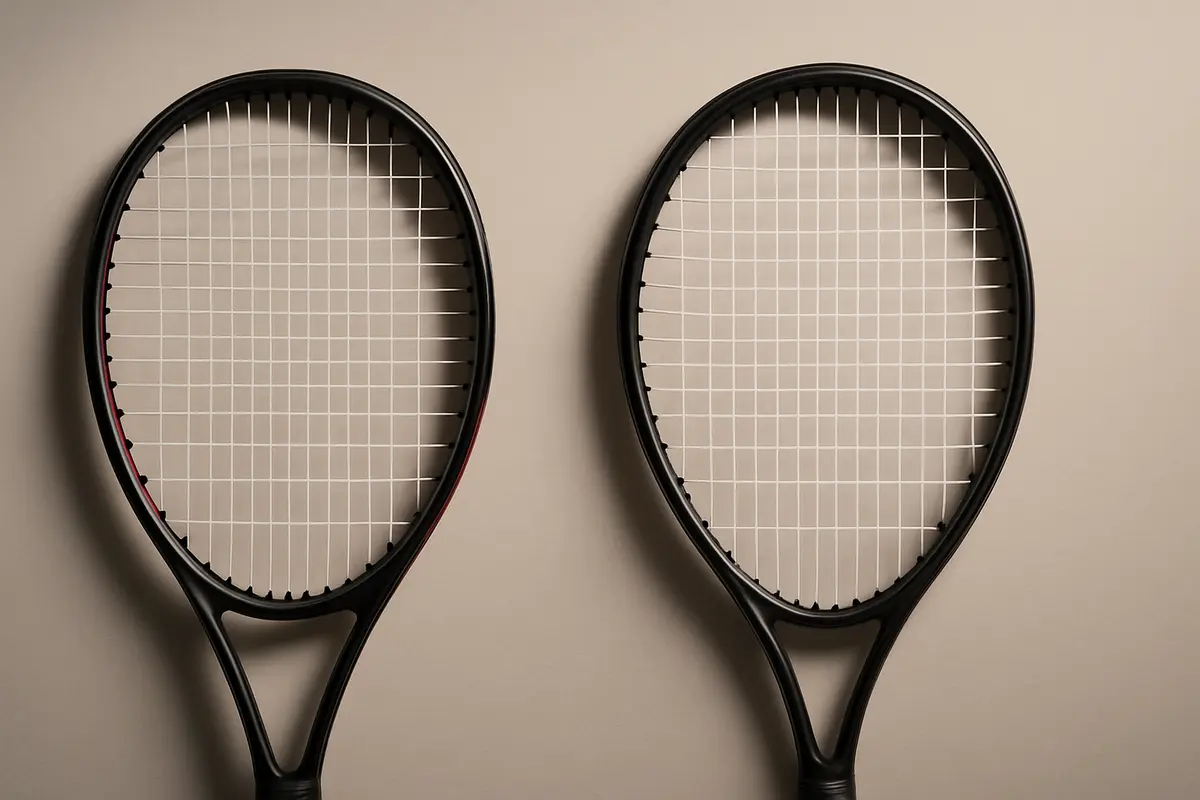
Most club players are playing with the wrong string. Not the wrong tension, not the wrong racket. The string itself. They bought a frame they love, then left whatever the shop put in it, or copied the setup of a pro they watched at the weekend. Neither approach is wrong exactly, but neither is right for them.
String is the only part of your racket that actually touches the ball. It shapes how much power you generate, how much spin you can access, and whether your arm feels fine after two hours or starts complaining on the drive home. Getting it right matters more than most players realise, and it costs less to change than almost any other piece of gear.
Polyester: the control string that earns its reputation#
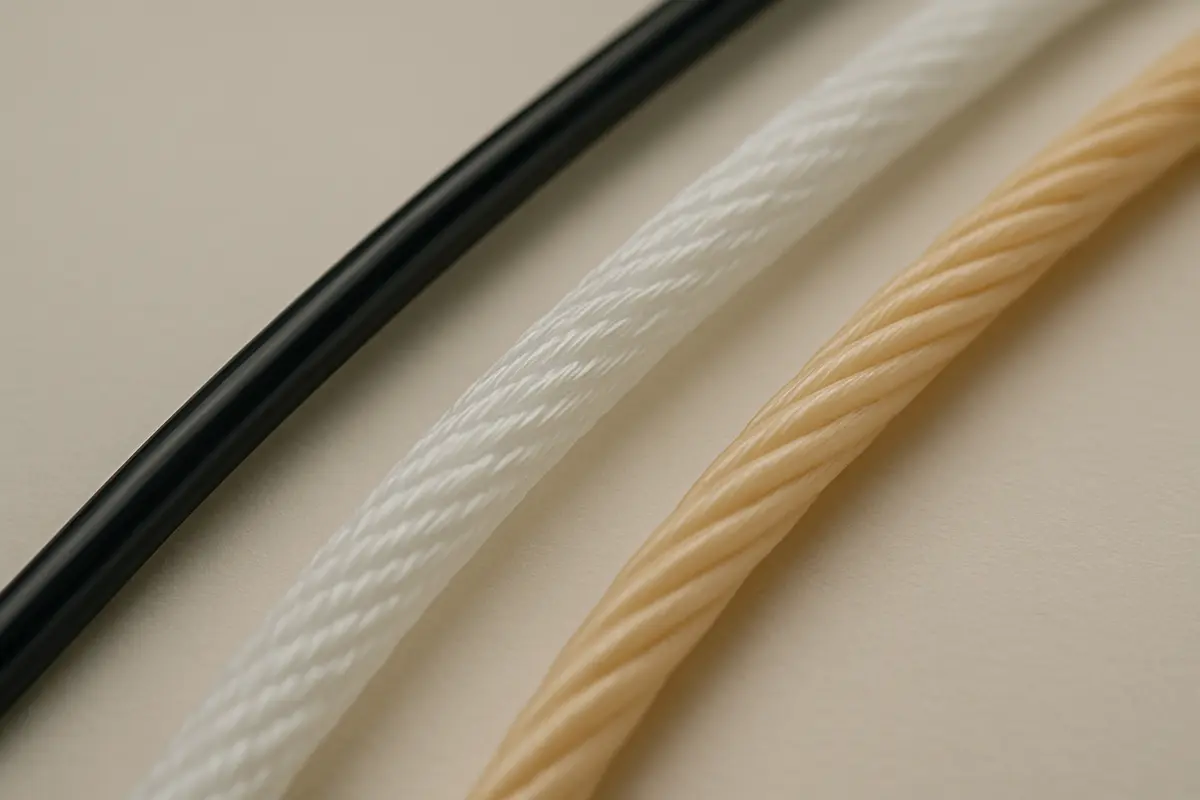
Polyester (poly) is a monofilament string, meaning it is made from a single extruded strand of plastic. It is stiff, dense, and it does not move much in the string bed. That stiffness is the point. When you swing hard at a ball, poly gives you a predictable, dampened response rather than a springy one. The ball does not fly. You can take a full cut at it and it stays in the court.
The spin benefit is real too. Poly strings snap back into position after contact faster than softer strings, which helps them bite into the ball and generate topspin. That is why every heavy-hitting baseline player on tour uses it.
The problem is that stiffness transfers shock straight into your arm. Poly strings are genuinely harsh. At a low tension they become a little more forgiving, but they never become comfortable. If you have any history of tennis elbow, golfer's elbow, or wrist pain, poly is working against you. I have seen players chase the pro setup, string up with a stiff poly at 54 lbs, and be unable to hold a coffee cup two days later.
Poly also goes dead faster than it breaks. The tension drops significantly within the first ten hours of play. It still looks fine, but the response has changed. If you string with poly, plan to restring more often than you think you need to.
Best for: intermediate to advanced players with full swings, good technique, no arm issues, who want control and spin over comfort.
Multifilament: the comfort string that does not get enough credit#
Multifilament strings are built from hundreds of tiny fibres bundled together, which gives them a soft, lively feel. They flex on impact rather than resisting it, which means more power from less swing and far less shock transmitted to your arm.
If you are coming back from injury, play three times a week but not at a high competitive level, or simply find that your arm aches after sessions, multifilament is worth trying before you blame the racket. The difference is significant. I switched a regular hitting partner from a mid-range poly to a multifilament after she mentioned her elbow had been sore for weeks. The problem cleared up inside a fortnight.
The trade-off is durability. Multifilament strings break sooner than poly, sometimes much sooner if you hit with heavy topspin. They also do not offer the same level of control at high swing speeds. For a player who generates a lot of pace, the extra power from a lively string can actually work against them.
Best for: recreational players, beginners, anyone with arm sensitivity, older players, or anyone who values comfort and power over maximum control.
Natural gut: the string that started everything#
Natural gut is made from cow intestine, which sounds unpleasant and plays beautifully. It has a tension maintenance that no synthetic string matches. It stays at its strung tension longer, which means the feel you get on day one is close to the feel you get on day twenty. The elasticity gives it a softness and a responsiveness that multifilament approximates but never quite reaches.
The problems are price and weather sensitivity. A set of quality natural gut costs four to six times what a decent synthetic costs. And gut does not like moisture. In humid conditions or wet weather it can soften unpredictably, and if it gets genuinely wet it deteriorates fast. For outdoor players in variable climates, that is a real concern.
If you can afford it and play indoors, or in a dry climate, natural gut is worth trying at least once. It changes what you think a tennis racket can feel like.
Best for: players who prioritise feel above everything else, indoor players, those with arm problems who can justify the cost.
Hybrid setups: getting two things at once#
A hybrid means stringing the mains (the vertical strings) with one type and the crosses (the horizontal strings) with another. The most common combination is natural gut mains with poly crosses. You get the feel and tension maintenance of gut where it matters most, with the durability and spin of poly in the crosses, which break less often. It is what a large portion of the ATP tour actually uses.
A more accessible version is poly mains with multifilament crosses. You get most of the control and spin from the poly, with the crosses softening the overall feel a little. It is not as dramatic a difference as gut and poly, but it is a meaningful one.
Hybrids do cost more in labour if your stringer charges per set, and not every stringer will do them without being asked. But if you find yourself stuck between wanting poly's control and needing a softer feel, a hybrid is a genuine solution rather than a compromise.
Which string suits which player#
| Player type | Recommended string | Why |
|---|---|---|
| Beginner or recreational | Multifilament | Power, comfort, forgiving on arm |
| Club player, no arm issues | Multifilament or soft poly | Balance of control and comfort |
| Intermediate with heavy topspin | Poly (mid gauge, lower tension) | Spin, control, durability |
| Advanced baseliner | Poly or gut/poly hybrid | Full control, spin, tour-style response |
| Arm pain or injury history | Natural gut or multifilament | Shock absorption, tension maintenance |
| Indoor player, high budget | Natural gut | Best feel, no weather risk |
| Outdoor player in wet climate | Multifilament or poly | Gut degrades in moisture |
One thing worth repeating: the pros use poly because they generate enormous racket head speed and need something that keeps the ball in the court. At club level, most players need more power and more comfort, not less. Copying a pro's string setup without matching their swing speed is one of the most common mistakes I see.
What to do next#
If you are unsure what tension to pair with whichever string you choose, the tennis string tension guide covers that in detail. The two decisions work together.
If you are thinking about upgrading your frame at the same time, browsing tennis rackets in the marketplace is a good place to start. Pre-owned frames in good condition often come already strung, and knowing what is in them before you buy means you can factor in a restring if the setup does not suit you.
String is cheap to change relative to everything else in this sport. Try something different, give it a few sessions, and notice what actually changes. That is more useful than any guide, including this one.