Most players glance at the head size figure on a frame, shrug, and move on to the string pattern or the colour. I have done it myself. But that number, whether it reads 93 sq in or 107 sq in, tells you more about how a racket will behave than almost any other spec. Get it wrong and you are fighting the gear on every ball. Get it right and the racket starts doing a share of the work.
If you are buying pre-owned, this matters even more. You are choosing from what is available rather than building a custom order, so knowing exactly what head size suits your game means you can move quickly when the right frame appears, and skip the ones that look attractive but will quietly frustrate you for months.
What head size actually controls#
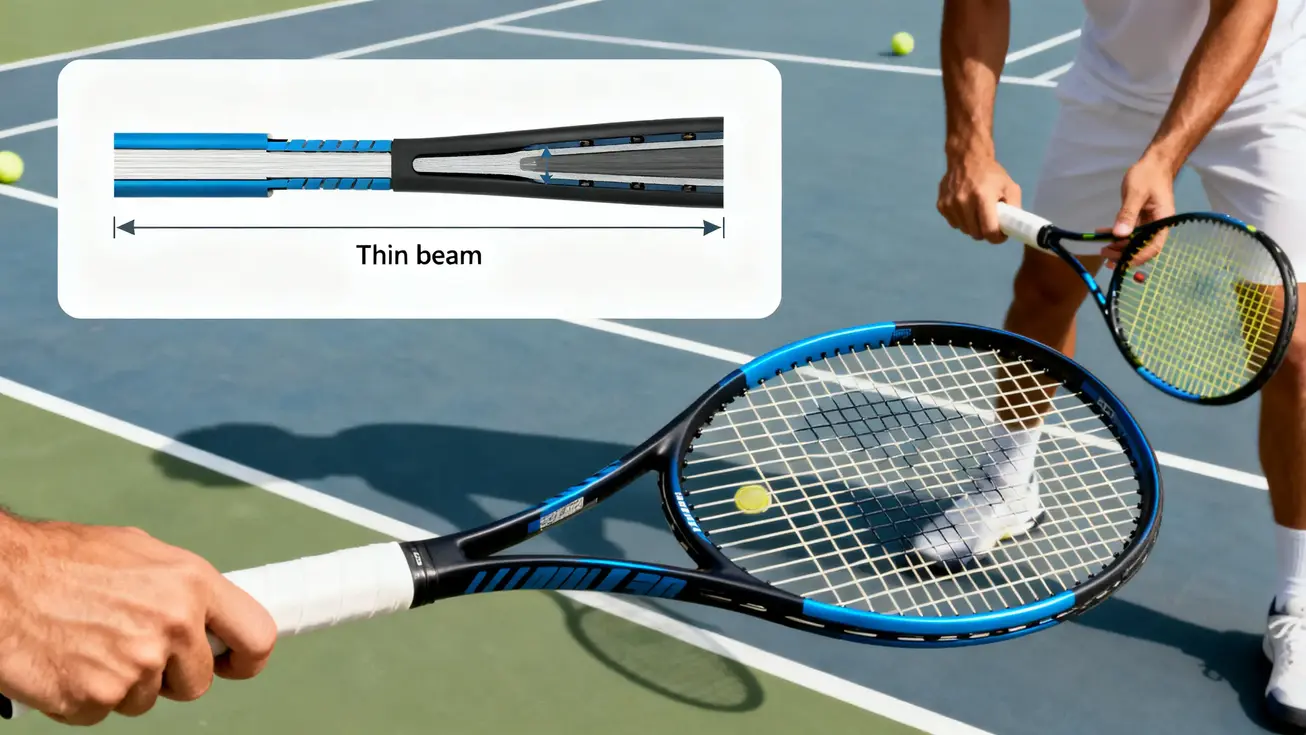
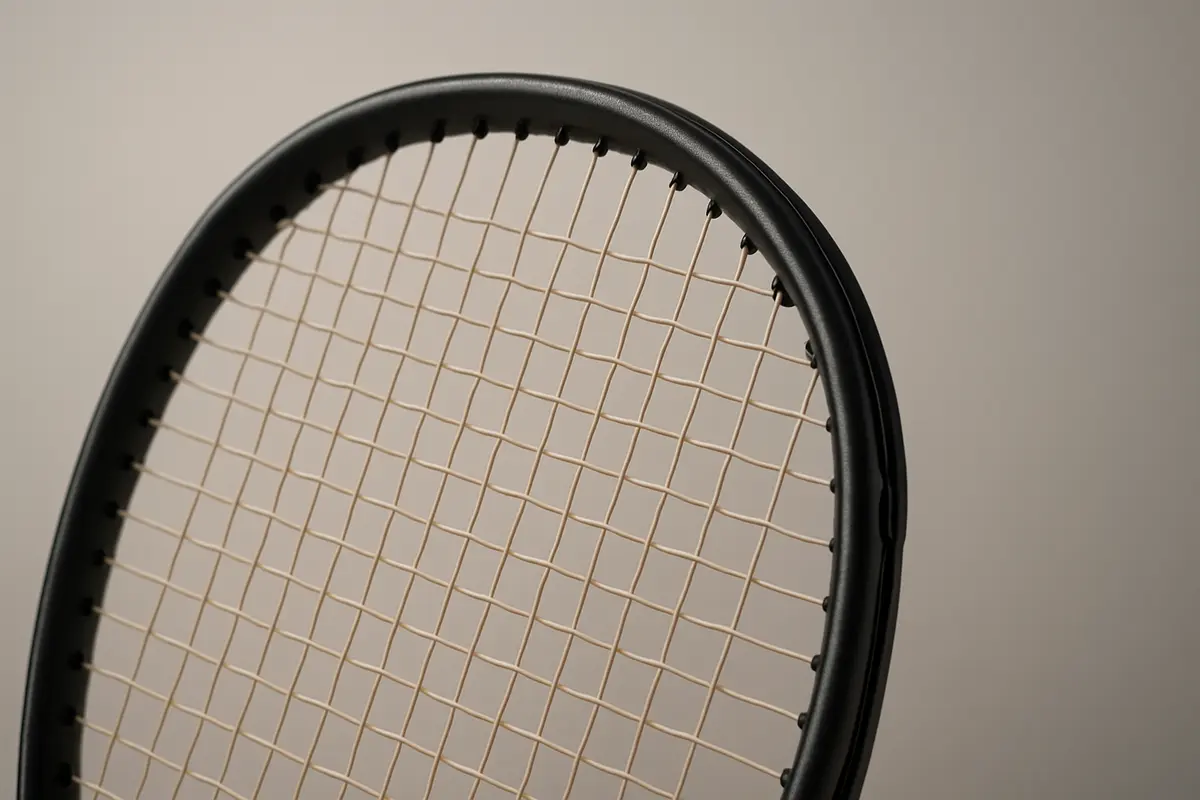
The hitting surface of a racket is a strung trampoline. A larger trampoline flexes more on contact, stores more energy, and returns it to the ball. A smaller trampoline is stiffer at the edges, gives less energy return, but rewards you with more direct feedback from the strings to your hand.
The sweet spot, the area of the string bed that produces the best combination of power and feel, scales with head size. A 110 sq in frame has a sweet spot large enough that an off-centre hit still goes somewhere useful. An 85 sq in frame will punish the same off-centre hit with a shot that drops into the net or balloons wide. That is not a flaw in the smaller frame. It is a feature for the player who hits the centre consistently and wants to feel exactly where the ball landed.
Head size is a tolerance setting. Bigger means more forgiveness. Smaller means more information, and more consequence.
The four ranges and who plays them#
Midsize: 85 to 90 sq in. These are players' frames in the strictest sense. Pete Sampras famously played a 90 sq in Wilson Pro Staff for most of his career. The sweet spot is small, the feedback is immediate, and the control ceiling is high. I would only recommend this range to someone with a technically consistent groundstroke who plays at least three times a week. If your contact point moves around depending on your footwork, a midsize frame will expose that every session.
Mid-plus: 95 to 100 sq in. This is where most club-level competitive players land, and honestly where I spend most of my time. The sweet spot is generous enough to survive a slightly late contact point without disaster, but the frame still gives you the control to shape shots and feel the difference between a clean strike and a sloppy one. The Wilson Blade 98, the Babolat Pure Strike 100, and the Head Prestige MP all live in this range. If you are buying your first serious pre-owned frame and you play regularly, start here.
Game-improvement: 100 to 105 sq in. The boundary between mid-plus and this range is blurry, but above 100 sq in you start to notice the power creep. These frames suit players who are still developing their swing mechanics, returning to the sport after a break, or who simply prefer a more effortless ball. There is nothing wrong with playing a 102 sq in frame at any level. Some senior players move up in head size to compensate for reduced swing speed, and that is a sensible adjustment.
Oversize: 106 sq in and above. At 110 sq in or more, the frame is built around accessibility. The sweet spot is generous, the power is high, and the control demands on the player are low. These frames are excellent for beginners and for players with injuries that limit swing speed. I would not recommend them to anyone who already hits with pace and topspin, because the extra power becomes difficult to control and the lack of feel feedback slows development.
Head size comparison at a glance#
| Range | Size | Sweet spot | Power | Control | Best suited to |
|---|---|---|---|---|---|
| Midsize | 85 to 90 sq in | Small | Low | Very high | Advanced, consistent ball-strikers |
| Mid-plus | 95 to 100 sq in | Medium | Medium | High | Club competitive to advanced |
| Game-improvement | 100 to 105 sq in | Large | Medium-high | Medium | Developing players, returners |
| Oversize | 106 sq in and above | Very large | High | Lower | Beginners, limited mobility |
One note on units: you will see sq in on most frames sold in the UK and US. Some European brands print sq cm instead. To convert, multiply sq in by 6.45. A 100 sq in frame is approximately 645 sq cm.
How head size should shape your pre-owned search#
When you are browsing pre-owned frames, head size is the first filter to apply, before brand, before price, before anything cosmetic. Almost everything else can be adjusted or adapted to. String tension can be changed. Grip size can be built up with an overgrip. Weight can be managed with technique. Head size is fixed to the frame. You cannot shrink a 107 sq in racket or stretch a 93 sq in one.
My approach when I am looking for a pre-owned frame: I set my acceptable head size range first, usually 95 to 100 sq in for my own game, and I treat anything outside that as a different conversation entirely. That discipline has saved me from buying frames that looked beautiful but would have sat in the corner after three sessions.
There is also a practical upside to buying pre-owned in the mid-plus range specifically. These frames are the most commonly listed because they are what most serious players own, and serious players upgrade on a cycle. That means more choice, more condition variety, and more competitive prices. A two-year-old 98 sq in frame from a player who restrings regularly and stores their gear properly will often perform identically to a new one. If you want to understand what else to look for when inspecting a pre-owned frame, the post on how to spot a fake tennis racket covers the physical checks worth doing before you commit.
It is also worth thinking about what happens when you move up or down in head size. Players who drop from 100 to 95 sq in often report that their first few sessions feel like they have lost power. They have not. They have lost forgiveness, and their swing is compensating. Give it two weeks. Players who go the other direction, from 90 to 98 sq in, sometimes feel like they cannot miss, and then notice their shot-shaping has gone flat. Both adjustments are real and both are temporary if you commit to the change.
What to do next#
If you already know your head size range, the tennis rackets section of the marketplace is worth a look now. Filter by what you know, ignore the rest, and focus on condition and provenance. If you are still working out what suits your game, the string tension guide is a useful companion read, because string tension interacts directly with head size in determining how a frame actually plays.
The right frame for your game is out there. It does not need to be new.