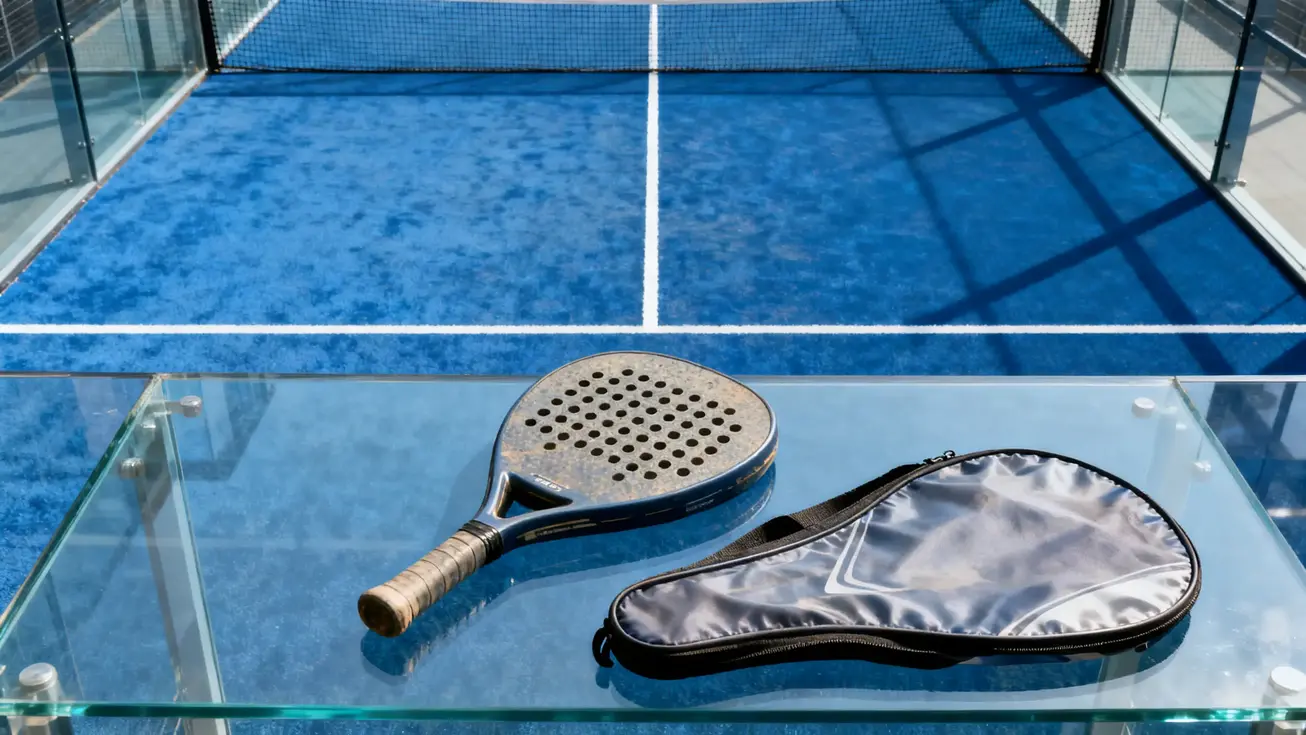
A half-decent padel racket retails for €150–€200. A top-end one - think full carbon frame, 3K woven face, high-rebound EVA core - will sit between €300 and €400 new, sometimes higher. People who've just come from tennis or badminton tend to do a double-take, because the thing has no strings. So what exactly are you paying for?
The short answer: specialised materials, a small production scale, and a sport that's growing fast enough that brands haven't felt much pressure to cut margins. The longer answer explains why the used market is so healthy - and why buying or selling second-hand makes genuine sense.
What actually goes into a padel racket#
A padel racket is a solid-faced frame with a perforated hitting surface and a foam or EVA (ethylene-vinyl acetate) core. There are no strings, but the construction is anything but simple.
The face is where the money goes. Entry-level rackets use fibreglass, which is flexible and forgiving but relatively cheap to produce. Mid-range models start blending in carbon fibre - either in the frame, the face layers, or both. At the top end, you get full 3K or 12K woven carbon faces, which are stiffer, lighter, and noticeably more expensive to manufacture. A single sheet of high-grade woven carbon costs multiples of what fibreglass does, and the layup process is more labour-intensive.
The core matters just as much. EVA foam cores come in different densities - softer foam gives more feel and power, firmer foam gives more control. High-performance rackets use proprietary foam formulations that brands spend real money developing and testing. Some also integrate rubber or multi-layer dampening systems.
Add in a rough or textured surface finish (which adds spin), a reinforced frame to handle the glass-wall and side-wall impacts that padel generates, and a grip system, and you have a product that's genuinely complex to make well.
Finally, production volumes are still modest compared to tennis. Tennis racket moulds get amortised across millions of units worldwide. Padel is growing fast, but the total market is a fraction of that size, so fixed manufacturing costs are spread across fewer rackets. That shows up in the price.
The used-market reality: how much do padel rackets actually hold?#
Padel rackets depreciate, but not as aggressively as you might expect - partly because demand has been rising for several years, and partly because a well-looked-after racket genuinely performs close to new for a long time. The foam core doesn't wear out quickly; what degrades is the surface texture and, occasionally, small face cracks around the holes.
Here's how used prices tend to shake out by condition for mid-range to premium models (€200–€400 new):
| Condition | Description | Typical used price (% of RRP) | Example: €300 RRP racket |
|---|---|---|---|
| Like new / unused | Unplayed, original bag, no marks | 65–75% | €195–€225 |
| Excellent | A few sessions, no damage, full grip | 50–60% | €150–€180 |
| Good | Regular use, minor scuffs, solid frame | 35–50% | €105–€150 |
| Fair | Visible wear, grip replaced, no cracks | 20–35% | €60–€105 |
| Poor / damaged | Cracks, delamination, damaged frame | Under 20% | Under €60 |
These ranges hold broadly across brands like Babolat, Head, Nox, Wilson and Bullpadel. A few things shift value significantly upward: original bag included, no frame damage at all (check the top and sides - those hit walls constantly), and a surface that still has texture rather than being polished smooth from use.
High-end rackets (€350–€450 new) from the previous one or two seasons hold value particularly well in the €150–€250 range used, because players who know what they want often prefer a proven model over a brand-new mid-range one.
What kills resale value fast#
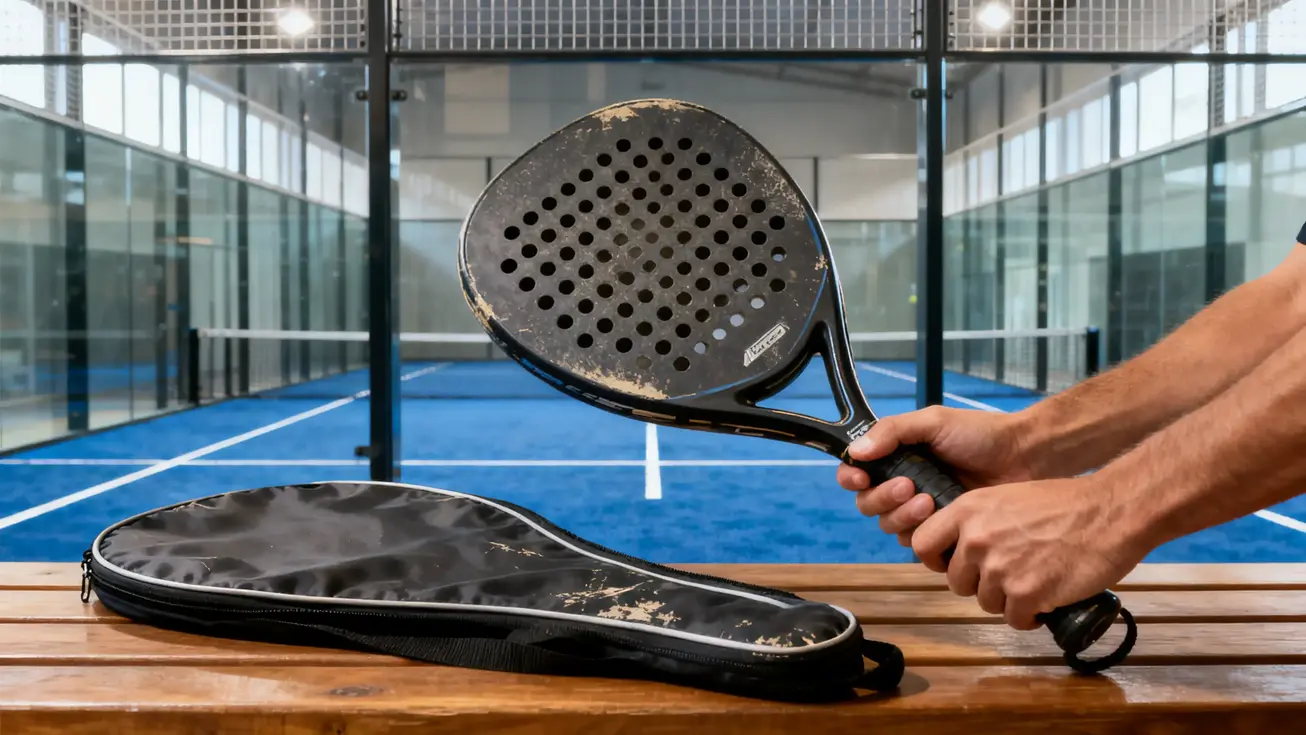
Two things tank a padel racket's second-hand price more than anything else: frame cracks and delamination. A crack - even a small one near a hole on the face - means the structural integrity is compromised, and no buyer should pay serious money for it. Delamination (where the face layer separates from the foam core, creating a hollow sound on part of the face) is similarly terminal for value.
Surface wear matters but is recoverable in perception terms if you're honest about it. A racket that's been played twice a week for a year will have a smoother face than new - that does genuinely reduce spin potential - but it's still a functional, enjoyable piece of kit at the right price.
Protecting resale value is straightforward: use a bag or cover (the racket should never rattle around loose), grip the handle before the original grip wears through to bare plastic, and avoid leaving the racket in a hot car (EVA foam is sensitive to sustained heat).
How to buy smart on the used market#
If you're coming into padel and the new-racket prices have put you off, the used market is genuinely your friend. A €120–€160 used racket from a reputable seller in good condition will play considerably better than a €100 new entry-level model, because the materials are in a different class.
When buying, ask for photos of all four edges of the frame (the sides and top take the most punishment), a face close-up, and a photo of the throat area. If the seller can't provide these, walk away. Weight should be stated too - most padel rackets fall between 355g and 375g, but it varies, and it matters for your game.
If you have a racket sitting in your bag that you've moved on from, it's worth more than you probably think. You can list it on EpicRackets in a few minutes - just be honest about condition, photograph those edges, and price it using the table above as a guide.
Not sure what your specific racket is worth? Check recent sold listings to see what comparable models have actually cleared for, not just what people are asking.
The padel racket market is expensive new because the product genuinely warrants it. Second-hand, though, it's one of the better-value sports gear markets around - provided you know what to look for.