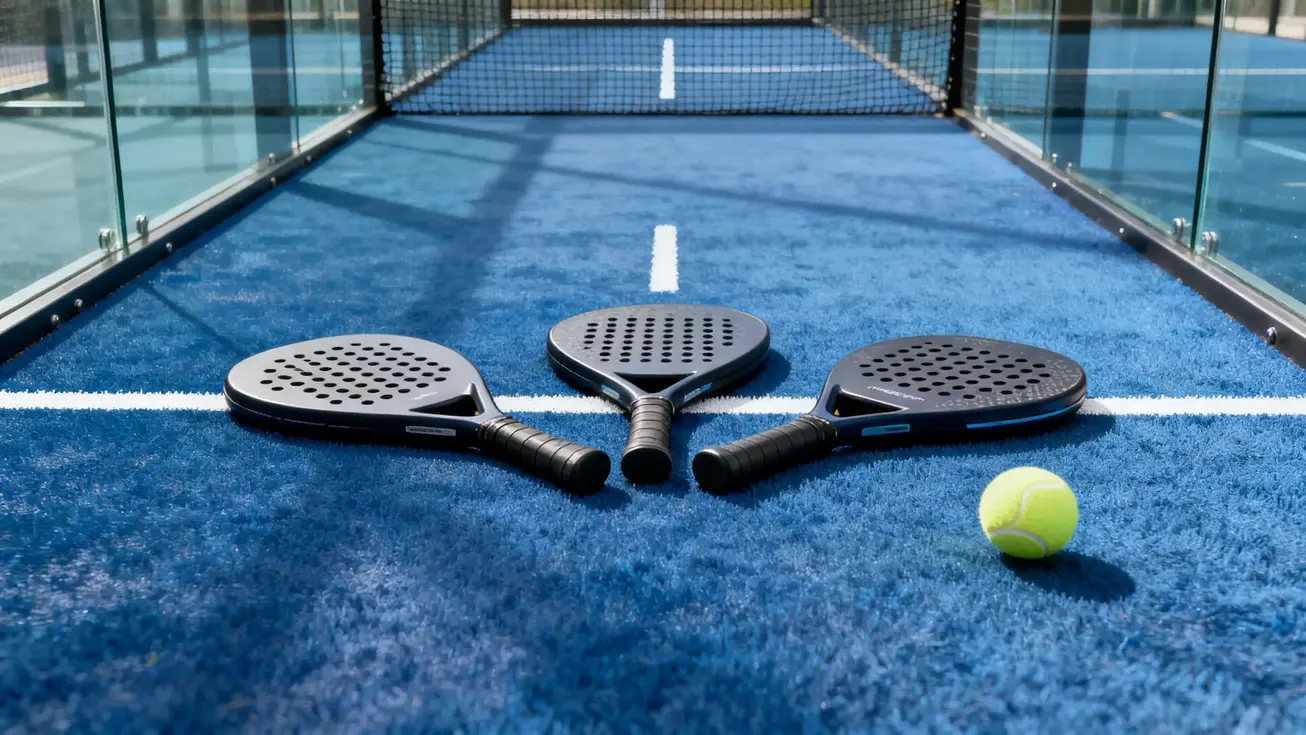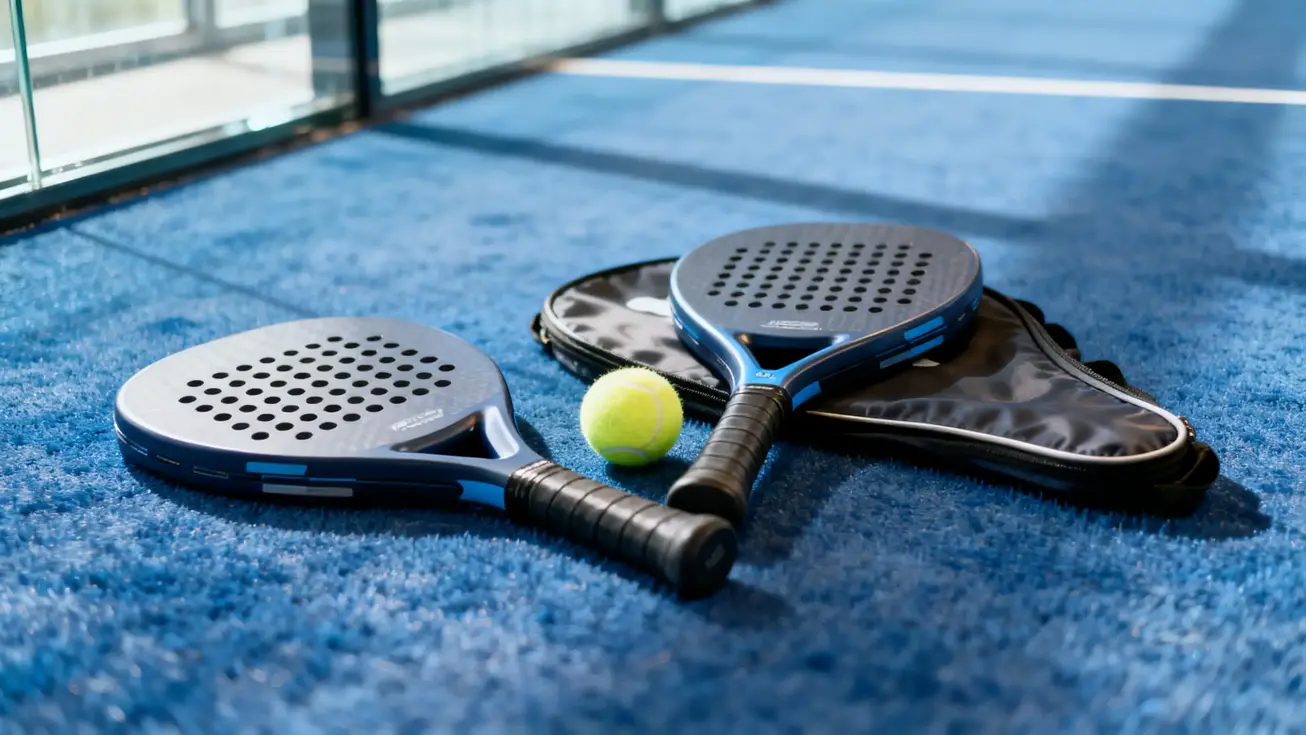
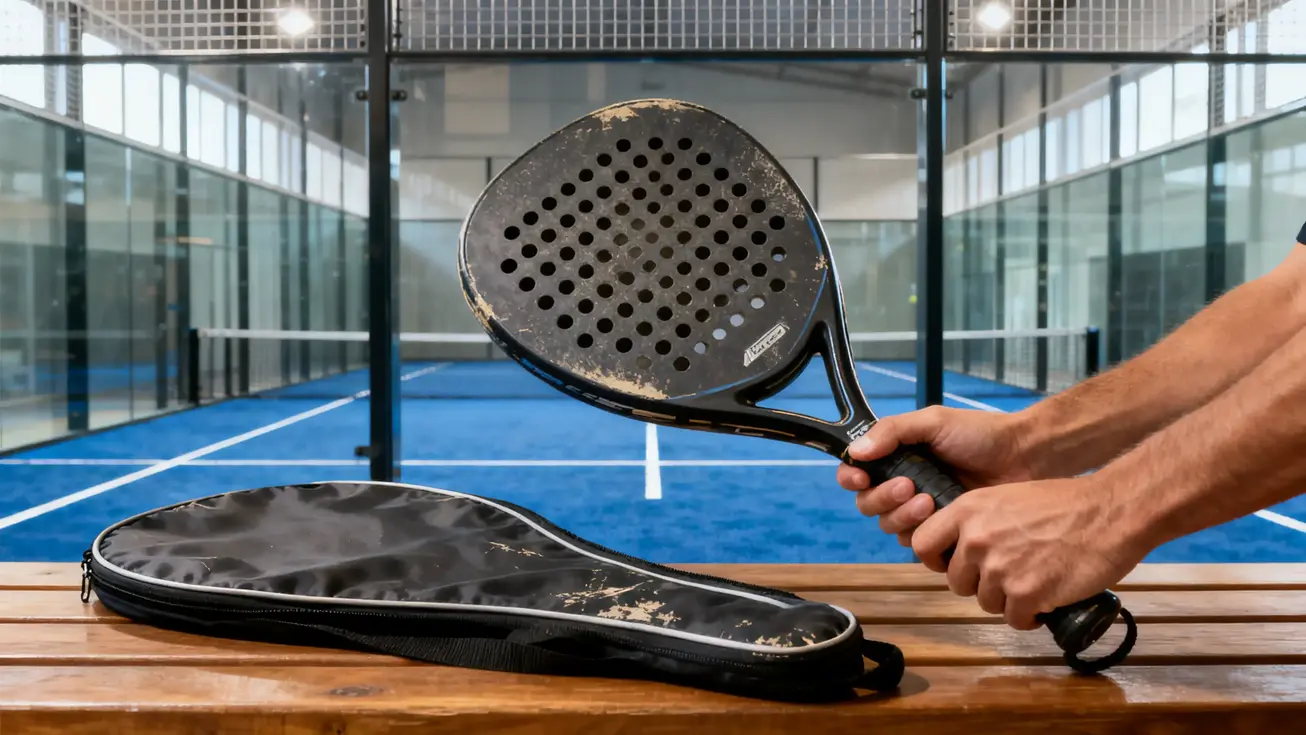
Most padel rackets last one to three years of regular play before the core starts to lose its responsiveness. That is a wide range, and the gap between the short end and the long end comes down to three things: how often you play, how well you store the racket, and the quality of the materials in the frame.
The honest answer to the question is this: a racket is not done when it looks rough, it is done when it plays rough. Understanding that distinction saves you money in both directions - you will not bin a racket that has years left in it, and you will not keep playing with one that is quietly costing you points.
What actually wears out inside a padel racket#
Unlike a tennis racket, a padel racket has no strings. The hitting surface is a solid carbon fibre or fibreglass face bonded to an EVA or foam core. When you hit a ball, the face flexes very slightly and the core absorbs the shock. Over time - usually 12 to 18 months of regular play - an EVA core begins to break down. It compresses unevenly, loses its spring and starts to feel "dead". That sensation of hitting a wet newspaper rather than a solid surface is the single clearest sign the core has had it.
The face itself can delaminate from the core (you will hear or feel a hollow, inconsistent thud) or crack outright, usually from a hard wall or floor impact. Edge guards take a battering too, but worn edge protection is cosmetic and replaceable; a delaminated face is structural.
Storage matters more than most players expect. Leaving a racket in a hot car boot over a summer weekend can accelerate EVA breakdown significantly. A bag with a thermal pocket is cheap insurance.
How to check whether your racket is actually dead#
Before you spend on a replacement, do a thirty-second check:
- The tap test. Tap the face firmly across the entire hitting surface with your knuckle. The sound should be consistent - a uniform, firm thud. A hollow or noticeably different tone in one zone points to delamination.
- The flex test. Hold the throat and press gently on the face with both thumbs. It should flex very slightly and spring back uniformly. If one area feels softer or spongier, the core is gone in that spot.
- Visual inspection. Look along the frame for hairline cracks, bubbling on the surface, or the edge guard lifting and exposing the frame. A surface paint scratch is nothing. A crack in the frame or separation between layers is a different conversation.
As the team at Racket Loop point out, a lot of rackets are written off as dead when the owner simply cannot feel the improvement they expected from a step up in their own game. If the tap test and flex test come back clean, your racket may be fine - your expectations may just have outgrown it.
When it makes more sense to resell than replace#
This is where it gets interesting. A mid-range padel racket bought new for £120-180 can still command 40-60% of its original price on the second-hand market if it is in good condition after a year of play. At the premium end (£200+), well-known models from established brands hold value even better, particularly if you have kept the original bag and protective cover.
The window to sell is earlier than most people think. Once a racket is two seasons old, or once players at your level start moving to a newer generation of the same model, resale prices drop noticeably.
| Condition | Typical resale value vs. original RRP |
|---|---|
| Like new (used under 10 times, no marks) | 60-70% |
| Good (light cosmetic wear, full performance) | 40-55% |
| Fair (visible scuffs, edge wear, plays fine) | 20-35% |
| Poor (structural damage, dead core) | Parts / display only |
The sweet spot for selling is after six to twelve months of regular use, while the racket still plays well and the model is still current or one generation old. That timing gives the next owner something genuinely useful and gives you the strongest return.
Getting the most from your next move#
If you are upgrading, the smartest sequence is to list your current racket before you buy the new one - not after. Knowing what you will actually get back shapes the budget for what comes next.
If your racket still has life in it but you have simply outgrown the spec (moving from a beginner-friendly fibreglass frame to a carbon-heavy model, for instance), sell it now rather than leaving it under the bed. Someone coming into the sport would pay real money for it. You can list your padel racket at EpicRackets in minutes, with free valuation guidance built into the process.
If the frame is cracked or the core is genuinely gone, the racket belongs in the bin or at a repair specialist, not in someone else's hands. Honesty about condition is the baseline of a decent second-hand market - and players can tell.
Ready to see what your current racket is worth? Search current padel listings to benchmark condition and price before you decide.