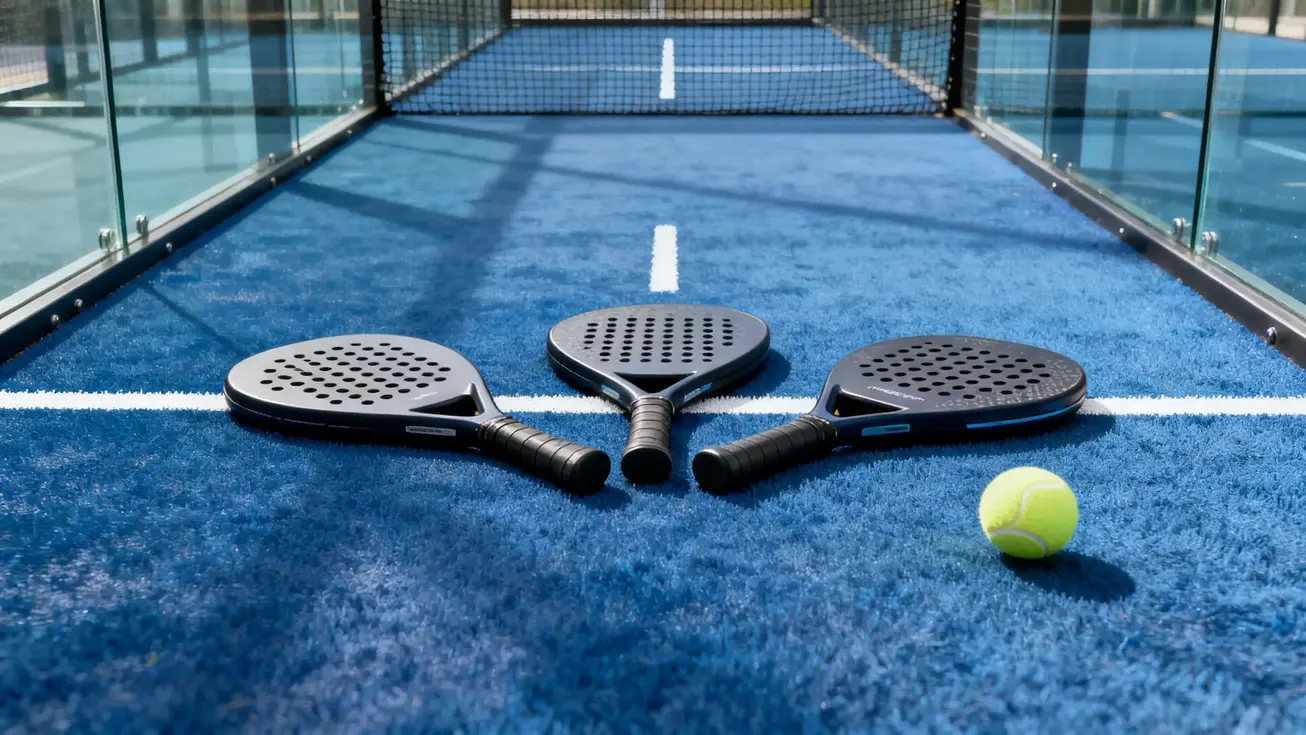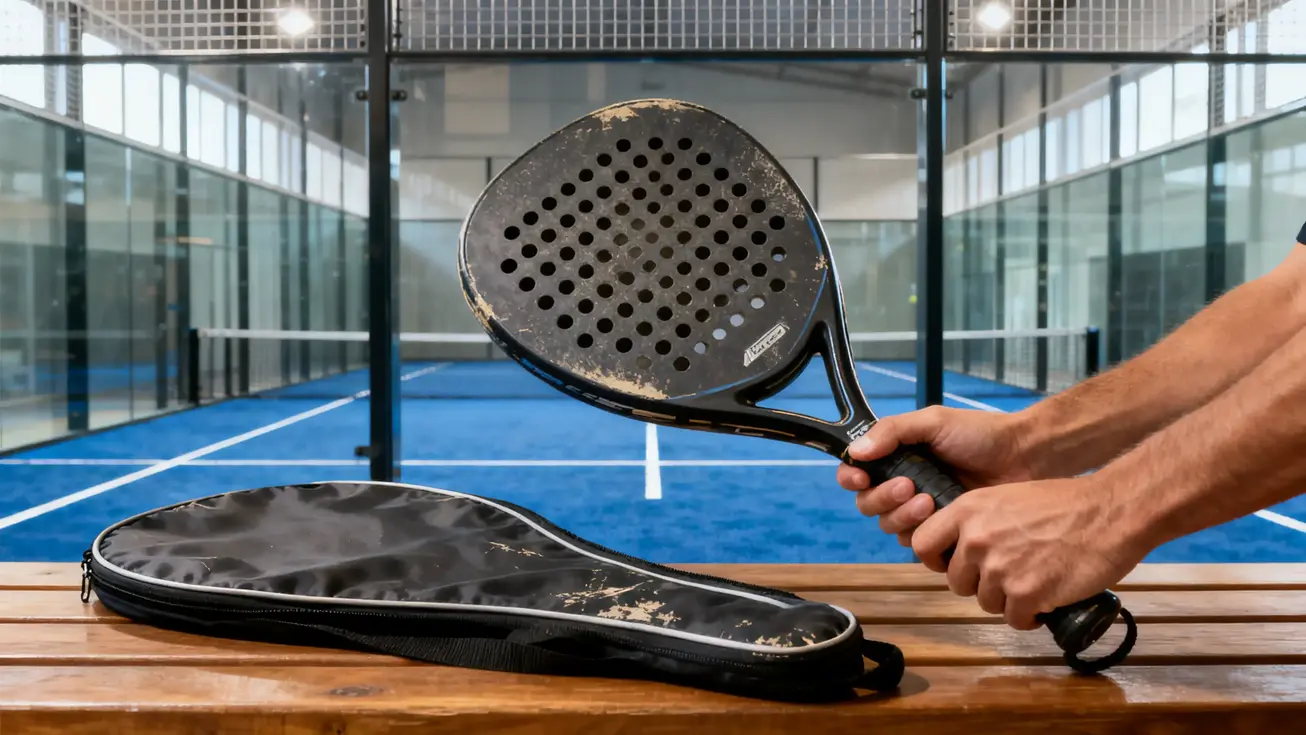
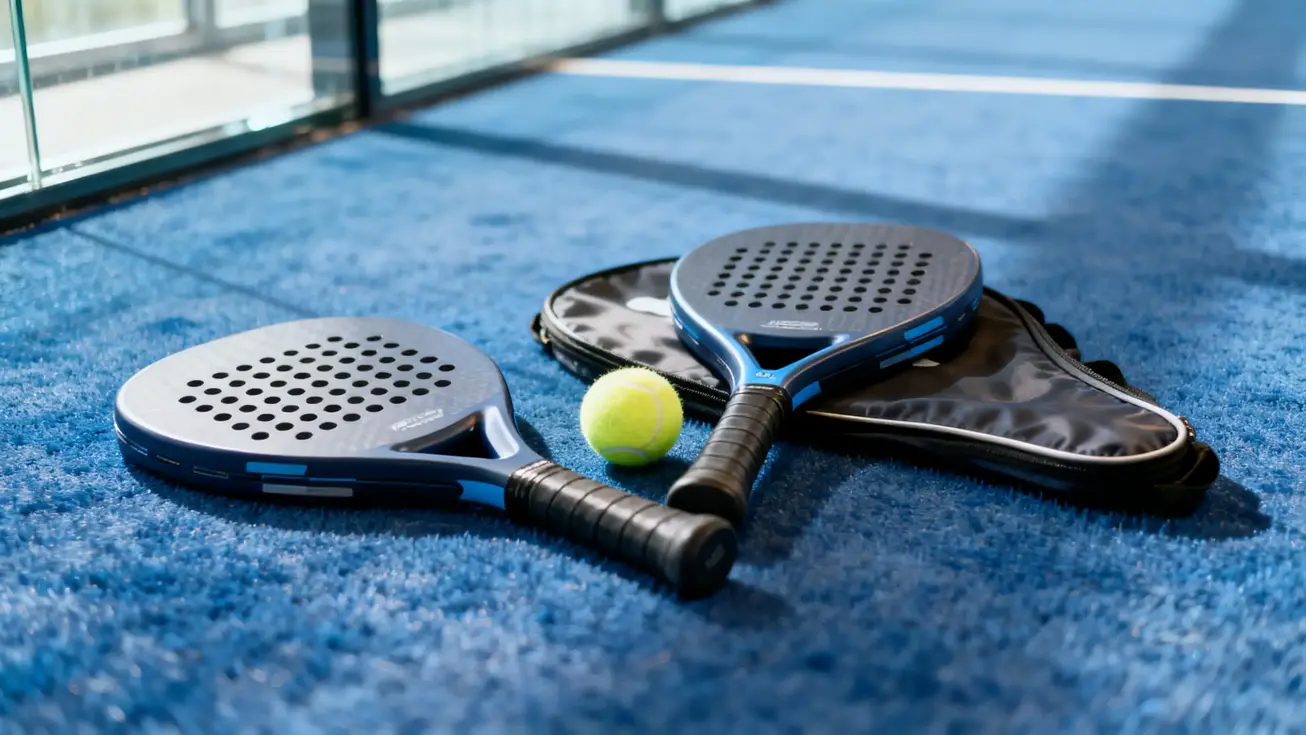
The short answer: beginners want a round, mid-soft foam core racket that forgives off-centre hits; value hunters should look at last season's mid-range models on the used market; and anyone with tennis elbow needs the softest EVA foam they can find in a round or teardrop shape with a low swing weight. Everything below explains why.
What makes a padel racket different - and why it matters here#
Before getting into recommendations, one thing worth knowing: padel rackets have no strings. The face is solid - carbon fibre or fibreglass - and the core is either EVA foam or softer polyethylene foam. The face and core combination determines how the ball feels on impact, and that is the single most important spec for both beginners and players managing elbow pain.
A harder carbon face with a dense EVA core gives experienced players more pop and precision, but it transmits vibration straight up your arm. A softer fibreglass face with a lighter foam core absorbs that shock instead. That distinction will come up repeatedly below.
Racket shapes matter too. Round shapes have a lower sweet spot (closer to your hand), which is more forgiving. Diamond shapes have a high sweet spot suited to aggressive, overhead play. Teardrop sits in between. For beginners and elbow sufferers, round is almost always the right starting point.
Best padel racket for beginners#
If you have played fewer than 20 hours of padel, spending more than €120 on a racket is hard to justify. You are still learning court position, how to use the glass walls and where your swing actually makes contact - and that last point is the critical one. Until you are consistently finding the sweet spot, a forgiving face will give you far more playable returns than a technically superior frame you are not ready to use.
What to look for:
- Round shape - the larger sweet spot makes off-centre hits recoverable
- Fibreglass face - softer than carbon, reduces vibration and gives more feel at slower swing speeds
- Soft or medium EVA foam core - absorbs impact, easier on the arm from day one
- Weight around 360–370 g - the standard range; avoid anything marketed as "pro weight" at 375 g or above until you have proper technique
- Low-to-mid price point - between €60 and €150 new, or €30–€90 pre-owned in good condition
The used market is genuinely ideal for beginners. A racket that retailed at €130–€150 twelve months ago can be found pre-owned in good condition for €50–€70, giving you a solidly made frame without the new-price risk. Browse the current padel stock at EpicRackets and filter by condition - "good" or "very good" is plenty for someone starting out.
Best value padel racket#
Value does not mean cheapest. It means the most performance per euro, which on the padel market almost always means buying one generation behind.
Brands like Babolat, Head, Bullpadel and Wilson release updated lines roughly every 12 to 18 months. When a new line drops, last season's version gets discounted heavily at retail - and pre-owned prices fall further still. The underlying technology in a racket from 18 months ago is not meaningfully inferior for club-level play.
| Condition | Typical pre-owned price (mid-range model, RRP €150–€250) |
|---|---|
| Like new (minimal use, original cover) | €90–€140 |
| Very good (light cosmetic marks, plays perfectly) | €60–€100 |
| Good (visible wear, structurally sound) | €35–€65 |
| Fair (surface scratches, check for frame cracks) | €15–€40 |
A racket with an original RRP of €200 bought pre-owned in "very good" condition for €80 is exceptional value. The same money spent on a brand-new entry-level frame at €80 typically gets you a heavier, less refined racket with cheaper materials.
If you have a racket sitting unused, sell it on EpicRackets to offset your next purchase - a pre-owned mid-range frame traded in covers most of the cost of an upgrade.
Best padel racket for tennis elbow#
Tennis elbow (lateral epicondylitis) is inflammation of the tendons on the outside of the elbow, aggravated by repetitive gripping and impact vibration. In padel, the main culprits are a stiff face, a dense core and mishits - all of which send a sharp vibration jolt up the forearm.
The good news is that padel is structurally gentler on the elbow than tennis, because the ball is slower and you do not string a racket at high tension. The bad news is that the wrong racket frame can still make elbow pain significantly worse.
What to prioritise:
- Soft EVA or polyethylene foam core - the single most important spec; look for terms like "soft touch", "comfort core" or "anti-vibration foam" in the product description
- Fibreglass or carbon-fibreglass hybrid face - pure carbon is stiffer; a fibreglass layer damps vibration noticeably
- Round shape - keeps the sweet spot central and reduces the shock from mishits, which are unavoidable when elbow pain is already limiting your swing
- Grip size - go one size up from your normal grip if you are mid-flare; a thicker grip reduces the gripping force needed and takes strain off the tendons
- Weight no higher than 365 g - a lighter frame means less load on the elbow per swing
Avoid diamond-shaped rackets entirely until you are fully recovered. Their sweet spot sits high, mishits are more common, and the stiffer construction that gives them their power is exactly what aggravates elbow problems.
On the used market, look for control-oriented models from any of the major brands - these are built around softer cores by design and appear regularly in pre-owned stock at EpicRackets. Condition "very good" or better is worth paying slightly more for here: a frame with a hairline crack in the carbon or a dented edge will transmit more vibration than an intact one.
A practical checklist before you buy#
- Decided on shape: round (beginner/elbow) or teardrop (intermediate value)?
- Checked the core material: soft EVA or fibreglass face mentioned in the description?
- Weighed up new vs. pre-owned: is an older mid-range frame better than a new entry-level one at the same price?
- Checked condition grade carefully if buying pre-owned (run your fingers along the frame edge for cracks before playing)
- Considered grip size, especially if managing elbow pain
The used padel market in Europe moves quickly, and genuinely good frames come up regularly. Whether you are picking up your first racket, replacing one that has done its time, or managing an injury, searching by condition and shape at EpicRackets is the fastest way to find something that actually fits your situation - without paying new retail for it.