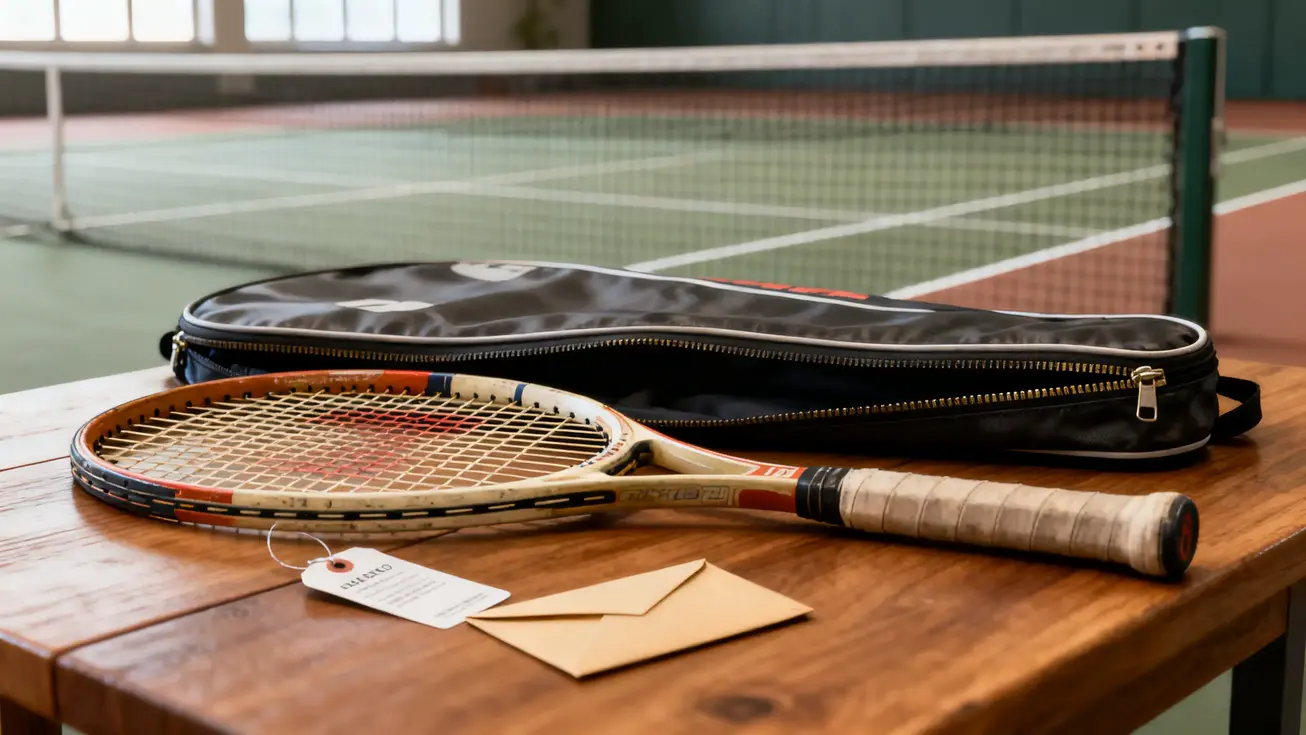
The short answer: trading in a tennis racket at a shop will almost always get you less money than selling it yourself, but it is considerably less effort. Whether you take cash or store credit depends entirely on whether you plan to spend that value on gear in the same breath.
If you have a racket sitting in the corner and want to move it on, here is a practical breakdown of your options and what to realistically expect from each.
What a trade-in actually means, and what it will get you#
A trade-in is when you hand a racket to a retailer or marketplace in exchange for either cash or credit against a future purchase. The retailer then resells it at a margin, which is how they make the model work. That margin comes directly out of what you receive, so you are always leaving something on the table compared to selling privately.
As a rough guide, here is what condition typically means for resale value:
| Condition | What it looks like | Typical trade-in return vs private sale |
|---|---|---|
| Mint / like new | No scuffs, original strings or freshly strung, grip unworn | 50–65% of private sale value |
| Good used | Light cosmetic marks, grip replaced or worn, strings functional | 35–50% of private sale value |
| Played in | Visible frame wear, scratches, strings may need replacing | 20–35% of private sale value |
| Heavily used | Deep chips, cracked bumper, strings dead or missing | Low or no offer; often declined |
These are honest approximations. A high-demand frame in mint condition from a brand like Wilson, Babolat or Head will always attract stronger offers than a mid-tier model from five years ago. Unstrung weight, grip size and whether the original cover is included all matter too.
Cash versus store credit: which is actually better?#
Store credit nearly always has a higher face value than a cash offer for the same racket. A shop might offer you £30 cash or £45 in credit on a played-in frame. That gap exists because the retailer knows some of that credit will be spent on high-margin items, and some customers never use the full amount.
Store credit makes sense if you are already planning to buy a new racket, a bag, string, or overgrips from the same retailer. In that scenario you are essentially getting a discount on your next purchase, and the headline number is genuinely better.
Cash makes sense if you want flexibility, if you are not sure what you will buy next, or if you intend to use the money toward a racket from a different source entirely. A pre-owned marketplace, for example, will often have better prices on second-hand frames than a bricks-and-mortar shop selling new stock.
One thing to check before you accept any credit offer: does it expire? Some shop credit schemes have a 6 or 12-month window. If you are not a frequent buyer, that constraint can make the apparently generous credit offer less useful than it looks.
Where to trade in a tennis racket#
High street and specialist tennis retailers. Shops like Tennis Direct, Ace Sports and independent club pro shops in the UK sometimes run trade-in programmes, though these vary by location and are not universally available. Your best starting point is to ring ahead and ask, since many smaller shops will negotiate informally even if they do not advertise a formal scheme. Expect low cash offers and slightly better credit.
Manufacturer and brand programmes. Some brands have run take-back or trade-up schemes, typically tied to the launch of a new racket line. These are usually credit-only against a new purchase of the same brand and tend to appear and disappear, so they are worth searching for by brand name when you are ready to upgrade.
Online pre-owned marketplaces. This is where you will consistently get the best return, because you are selling direct to another player with no retailer margin in between. The trade-off is that you handle the listing, photographs and postage yourself. Platforms focused on racket sports, rather than general second-hand sites, tend to attract buyers who understand what a racket is worth and are less likely to lowball you.
EpicRackets is built specifically for this: a pre-owned marketplace for tennis and other racket sports, serving players across Europe. You list your racket, set your price, and reach buyers who are actively looking. List your racket on EpicRackets and you keep a far greater share of the sale price than any shop trade-in will offer.
A practical close: which route fits your situation?#
If speed and zero effort are the priority, a shop trade-in for credit toward a new purchase is perfectly reasonable, especially if you are upgrading at the same retailer. Accept the lower return as the cost of convenience.
If you want a fair price and are happy to spend 20 minutes on a listing, sell it yourself. Check what comparable rackets are fetching on the pre-owned market before you accept any offer, shop or otherwise. Knowing the going rate is the single most useful thing you can do before you walk into any negotiation.