The short answer: a dedicated pre-owned racket marketplace will almost always get you more money than a general platform like Facebook Marketplace or eBay, and a lot more than a shop trade-in. The longer answer depends on your racket's condition, how quickly you need the cash, and how much effort you want to put in.
Padel is still growing fast in the UK, which means demand for second-hand rackets is genuinely healthy right now. Buyers know what they want, they know what models cost new, and they will pay a fair price for a racket that has been honestly described. So the game is really about choosing the right channel and presenting your racket well.
What your used padel racket is actually worth#
Before you list anywhere, you need a realistic number. Padel rackets do not have strings to replace (the face is carbon or fibreglass over an EVA or foam core), so condition is almost entirely about the frame and the face: chips, cracks, delamination, and how worn the surface texture is.
A rough guide to resale value as a percentage of the original retail price:
| Condition | What it means | Typical resale value |
|---|---|---|
| Like new | Used fewer than five times, no marks, original bag included | 60–70% of RRP |
| Very good | Light cosmetic scratches only, no structural damage, plays perfectly | 40–55% of RRP |
| Good | Visible edge wear, perhaps a small chip, face grip reduced but core intact | 25–40% of RRP |
| Fair | Heavy cosmetic wear, multiple chips, some soft spots in the face | 10–20% of RRP |
| Poor / damaged | Cracks, delamination, or a dead core | Hard to sell; parts or display only |
Not sure where your racket sits? Use our racket value estimator to get a realistic figure before you commit to any channel.
Brand and model matter a lot too. Bullpadel, Head, Nox, and Babolat rackets from the last two or three seasons hold value better than off-brand or heavily discounted models, simply because buyers can look up reviews and know what they are getting.
The main places to sell, and what each one costs you#
Dedicated pre-owned racket marketplaces (like EpicRackets)
This is where you will get the closest return to true market value. Buyers here are looking specifically for padel gear, so you are not competing with garden furniture or second-hand phones for attention. Listings tend to convert faster, and because buyers arrive informed, you spend less time answering basic questions. The trade-off is a small seller fee or commission, but in most cases the higher sale price more than covers it. List your racket here and reach buyers across Europe.
eBay
eBay has a broad audience but padel is still niche enough that your listing can sit for weeks. Fees run to roughly 12–13% of the final sale price for most categories, plus PayPal or payment processing costs. It works best for well-known models where buyers are already searching by name.
Facebook Marketplace and local groups
Good for a quick, cash-in-hand sale if there is a padel club nearby and you are happy to meet locally. Prices tend to be lower because buyers expect a discount for the informal arrangement, and there is no buyer or seller protection. Useful if speed matters more than price.
Shop trade-ins
Most UK padel retailers will take a used racket in part-exchange, but the offer is typically 20–30% of what the racket is actually worth on the open market. They need to make a margin when they resell it. Fine if you are buying a new racket from that shop anyway, but a poor choice if you just want to sell.
How to make your listing stand out#
However you sell, the same principles apply.
- Photograph in natural daylight, not a dark cupboard. Show all four sides of the frame, both faces, and any damage close up.
- State the model name, year if you know it, and approximate number of sessions played.
- Be honest about damage. Buyers who receive a racket in worse condition than described will open disputes or leave negative feedback.
- Include the original bag if you have it. It signals care and adds perceived value.
- Price at the mid-point of the condition range first. You can always come down; it is hard to go up.
Before you list: one question worth asking#
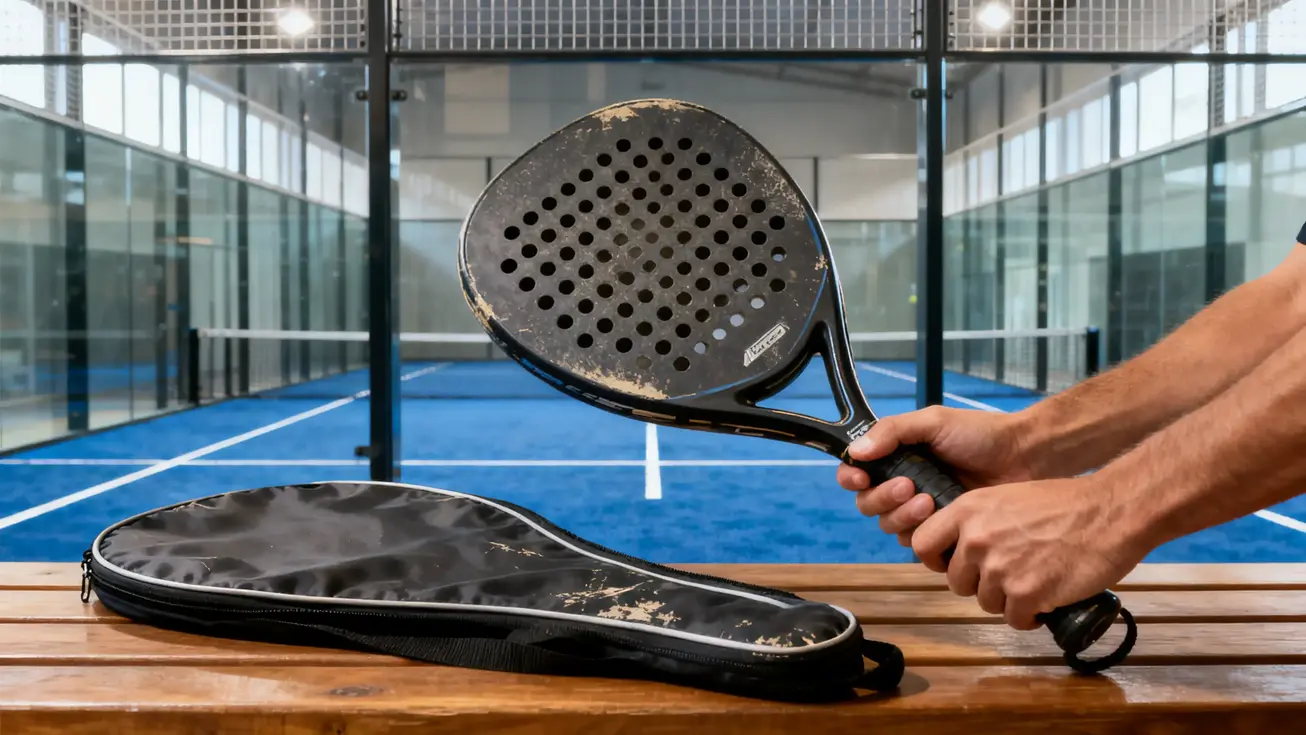
Is the racket actually worth selling, or is it at end of life? A padel racket with a soft core (press the face gently with your thumb - it should feel firm throughout) or visible delamination will not play well and a knowledgeable buyer will spot it. If the core has gone, it is better to recycle or donate it than to list it and disappoint someone.
If the racket is in decent shape, though, the UK pre-owned padel market is active enough that you should be able to move it within a couple of weeks at a fair price. Check what comparable models are listed for at /racket-value, pick the right channel from the table above, and take decent photos. That is genuinely most of the work.