If you have just walked into a padel shop for the first time and seen rackets priced anywhere from €80 to €400, you probably had one immediate question: what on earth is in this thing? The honest answer is that the materials genuinely are expensive, production runs are still relatively small compared to tennis, and the sport's rapid growth in Europe has let brands price with confidence. But the new price is only half the story. The used market tells you what a racket is actually worth once it leaves the shop, and that number is often far more interesting.
What you are actually paying for#
A padel racket has no strings. Instead, it is a solid foam core - usually EVA rubber or a foam compound - bonded between two faces of carbon fibre or fibreglass. That layered construction is where most of the cost sits.
Carbon fibre is the main driver. High-modulus carbon (the stiff, powerful stuff used in performance rackets) is genuinely expensive to buy and to work with. Cheaper rackets use fibreglass faces or a mix of fibreglass and carbon; they are noticeably heavier and less responsive. Mid-range rackets blend the two. Top-end frames use full carbon, sometimes with specific weaves (3K, 12K, 18K) that affect both stiffness and how the racket feels on mishits.
Core density matters too. Softer EVA cores give more comfort and dwell time on the ball - good for control players and anyone managing an elbow. Harder cores generate more power but transmit more vibration. The foam itself is not wildly expensive, but engineering the right combination of core and face for a specific playing style is where R&D cost accumulates.
Shape and weight add complexity. Padel rackets come in round (more forgiving, lower sweet spot), teardrop (balanced) and diamond shapes (smaller sweet spot, maximum power). Each shape requires a different mould. Most rackets weigh between 355 g and 385 g, and being 10 g off spec in either direction changes how a frame plays entirely. Precision manufacturing in relatively short production runs keeps unit costs high.
Finally, brand and marketing do a real job on price. The top brands sponsor World Padel Tour and Premier Padel professionals, run pop-up experiences at clubs and invest heavily in packaging. You are paying for some of that. It does not mean the technology is fake - but it does mean a €350 racket from a headline brand and a €200 racket from a quieter brand can sometimes perform very similarly on court.
Where the price goes once a racket has been used#
This is where it gets practical. Padel rackets depreciate quickly in the first year because new models arrive constantly and most players want the latest. After that, depreciation slows - a well-kept three-year-old racket from a quality brand can hold reasonable value simply because the frame is still structurally sound.
A rough guide to what used padel rackets actually sell for on the pre-owned market:
| Condition | Original RRP €150-200 | Original RRP €250-320 | Original RRP €350-400 |
|---|---|---|---|
| Like new (barely used, with cover) | €90-120 | €150-190 | €200-260 |
| Good (normal play marks, solid frame) | €55-80 | €100-140 | €140-190 |
| Fair (visible wear, no cracks) | €30-50 | €60-90 | €90-130 |
| Poor (edge damage, soft spots) | €10-25 | €25-50 | €40-70 |
These ranges reflect typical European pre-owned transactions. The biggest variable is brand recognition: an Adidas, Bullpadel or Head racket at "good" condition will sell faster and closer to the top of its range than an equivalent frame from a brand buyers do not recognise. Shape matters too - diamond-shaped power rackets have a narrower audience and can sit unsold longer unless priced keenly.
What actually kills resale value#
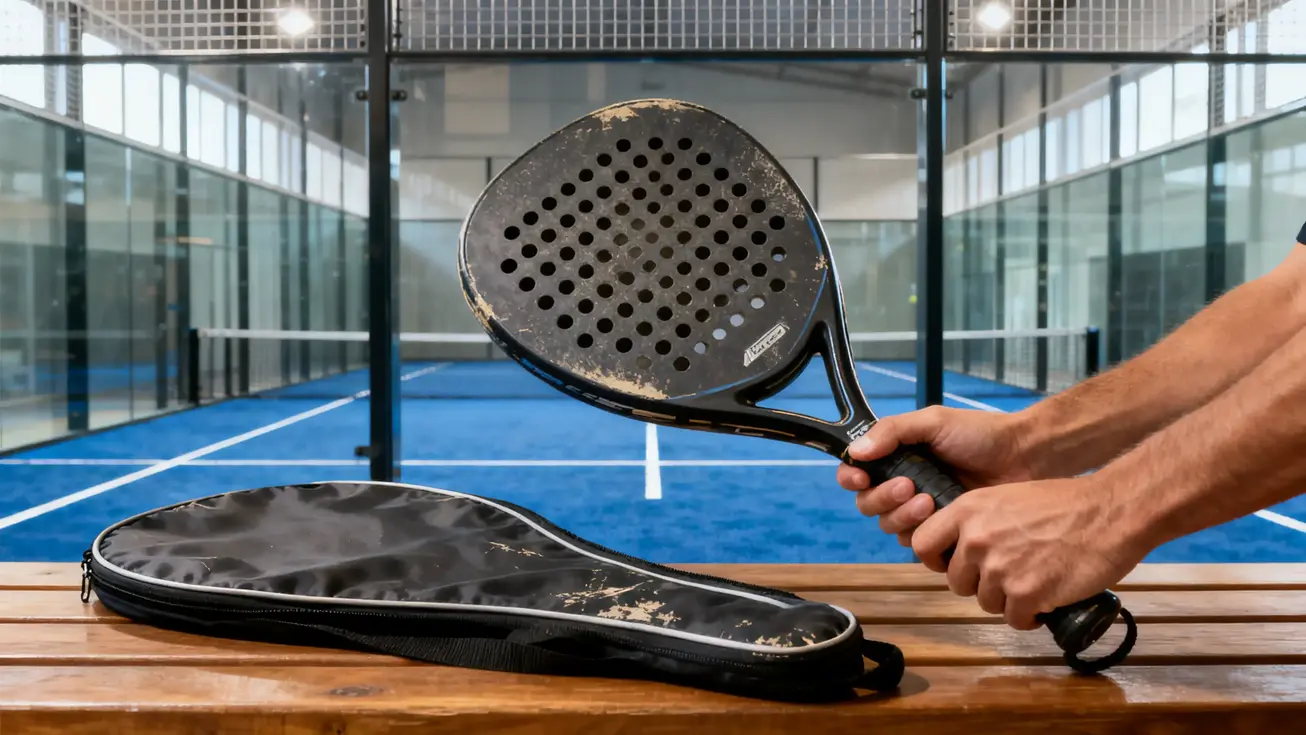
The frame around the hitting face - the edge - takes most of the punishment in padel. A small chip on the edge tape is cosmetic. A crack in the frame itself, even a short one, is structural and will spread. Buyers know this, and a cracked frame drops into "poor" territory immediately regardless of how pristine the face looks.
Soft spots in the face (press gently with your thumb - any give indicates delamination) are another red flag. The foam core separates from the carbon face over time, particularly in rackets that have been stored damp or left in a hot car. Once a face has soft spots, the power and feel degrade noticeably and repair is not really possible.
The cover matters more than most sellers think. A racket listed with its original cover signals that the seller looked after it. It also protects the frame in transit. Always include it.
How to use this if you are selling#
Be honest about condition - padel buyers are experienced and will spot hidden damage quickly, which leads to disputes and returns. Clean the frame with a damp cloth before photographing. Shoot the edge from all four sides in good natural light, not just the face. State the weight (check the throat area of the frame where it is usually printed) and the core type if you know it.
If your racket is in "like new" or "good" condition, price it at the upper end of the ranges above and leave a small margin for negotiation. If it has edge wear or any frame damage, price it honestly from the start - an overpriced damaged racket just sits there.
You can list your racket on EpicRackets in a few minutes and reach buyers across Portugal, Spain and the wider European market who are specifically looking for pre-owned padel gear. If you are not sure what your specific frame is worth before you list, the racket value tool gives you an estimate based on model, age and condition.
The new price of a padel racket reflects real material and engineering costs. The used price reflects reality. Knowing both puts you in a much stronger position whether you are buying or selling.