How to choose a padel racket: shape, weight and level explained#
Not sure which padel racket to buy? This guide cuts through the jargon and tells you exactly what to look for based on how you play.
The short answer: if you are new to padel, pick a round-shaped racket weighing between 355 g and 370 g with a fibreglass face. If you have been playing for a year or two and want more from your smashes, move to a teardrop shape with a carbon face. If you are an advanced player who already generates plenty of pace, a diamond shape gives you the highest sweet spot for power - but it punishes off-centre hits. Everything below explains the reasoning so you can apply it to whatever is available in your budget.
Shape: the single most important decision#
Padel rackets come in three basic shapes, and each one moves the sweet spot to a different part of the hitting surface.
Round rackets have a sweet spot low and central, right where most beginners naturally make contact. The forgiving hitting area means mishits do not sting your arm or send the ball flying sideways. Control is high; raw power is lower. This is the right starting point for anyone in their first season.
Teardrop (or oval) rackets sit between the two extremes. The sweet spot moves slightly higher, which suits players who have developed a consistent swing and want a bit more pop on overheads without giving up too much forgiveness. Most intermediate players land here and stay here for a long time - it is a genuinely versatile shape.
Diamond rackets have the sweet spot near the top of the frame. When you connect cleanly, the power output is noticeably higher than the other shapes. When you miss the sweet spot - and at club level, you will - the feedback is harsh and control drops off sharply. These are built for experienced players with repeatable, aggressive technique.
Weight: heavier is not always better#
Most adult padel rackets weigh between 340 g and 390 g, and that relatively small range makes a bigger difference than people expect.
- Under 355 g: light, very manoeuvrable, kind on the elbow. Good for juniors, players returning from injury, or anyone with a shoulder issue.
- 355 g to 370 g: the sweet spot for most recreational players. Enough mass to generate pace without fatiguing your arm during a two-hour session.
- 370 g to 385 g: suited to physically strong players who want extra punch on drives and smashes. Requires a solid technique or you risk repetitive strain over time.
- Above 385 g: specialist territory. Very few club players genuinely benefit from rackets this heavy.
One thing worth noting: padel rackets have no strings. The face is carbon fibre or fibreglass over an EVA foam or rubber core, and that core density affects the feel as much as the weight does. A softer EVA core absorbs more vibration and suits beginners; a harder core gives a crisper, more direct feel that advanced players often prefer for touch shots at the net.
Core material and face: what the specs actually mean#
| Face material | Feel | Best for |
|---|---|---|
| Fibreglass | Softer, more flex, forgiving | Beginners and intermediates |
| Carbon fibre (12K, 18K, 24K) | Stiffer, more direct, more spin potential | Intermediates to advanced |
| Carbon + fibreglass hybrid | Balanced | Good all-round option |
The number next to carbon (12K, 18K, 24K) refers to the weave density. Higher numbers mean a stiffer, rougher texture that grips the ball better for spin - but the difference between 18K and 24K is marginal for anyone below a 5.0 level. Do not pay a premium for a number unless you will genuinely feel it.
Matching racket to level: a practical summary#
| Level | Shape | Weight | Face |
|---|---|---|---|
| Beginner (0–1 year) | Round | 355–365 g | Fibreglass |
| Intermediate (1–3 years) | Teardrop | 360–375 g | Fibreglass or hybrid carbon |
| Advanced (3+ years, competes regularly) | Diamond or teardrop | 365–385 g | Carbon |
One honest caveat: many intermediate players are sold diamond rackets they are not ready for. If you are under a 4.0 rating and someone is pushing you toward a diamond shape, ask them to let you test it for a full match first. A teardrop at the right weight will almost certainly serve you better.
Budget and the pre-owned case#
New padel rackets from the main brands typically start around €80–100 for an entry-level model and reach €250–350 at the top end. A pre-owned racket in good condition can get you into a mid-range or premium model for 40–60% of the retail price - which is a meaningful saving when you are still figuring out which shape suits you.
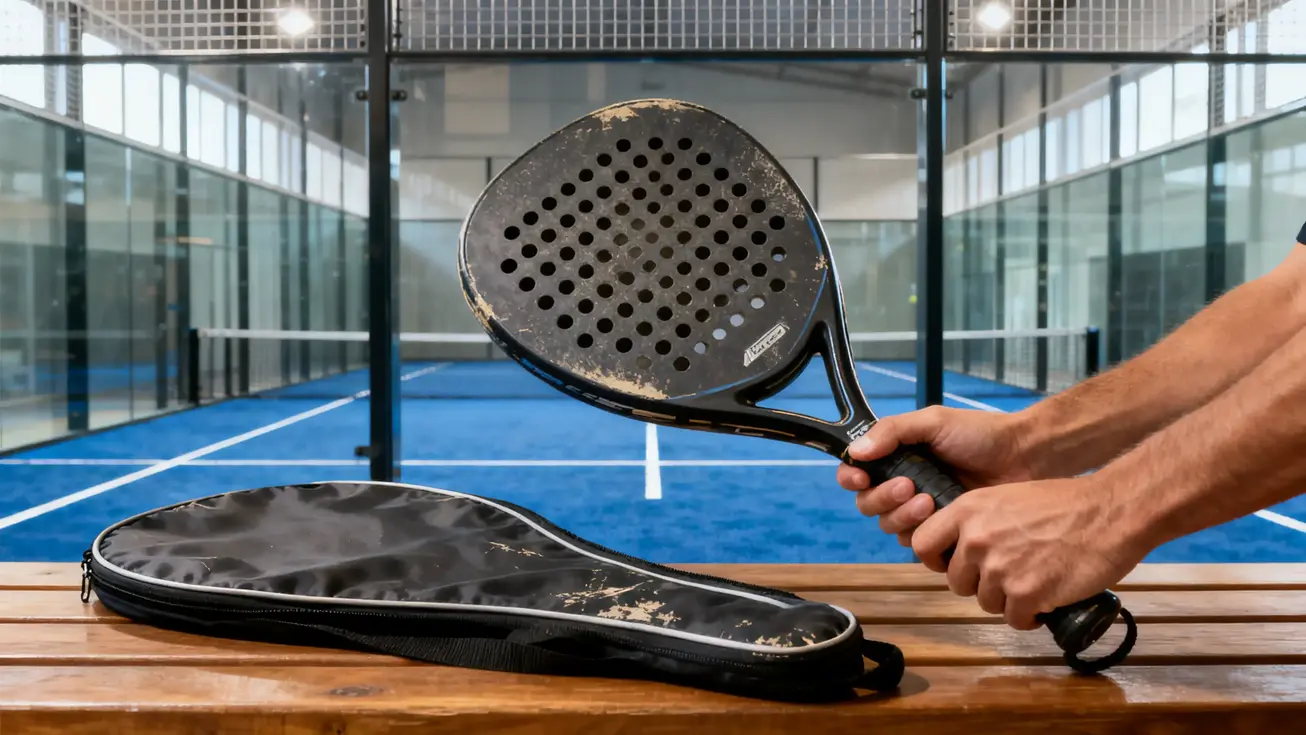
The things to check on a used racket: inspect the frame for cracks, particularly at the throat (the junction between the handle and the face); look for delamination on the hitting surface (bubbling or a hollow sound when you tap it); and check the grip for wear. A frame crack is terminal. Surface wear or a tired grip is cheap to fix.
If you want to see what is currently available, browse pre-owned padel rackets on EpicRackets - stock turns over quickly, and you can filter by condition. If you are upgrading and want to offset the cost, you can list your current racket for sale in a few minutes.
The right racket will not fix your footwork, but the wrong one - too heavy, too stiff, wrong shape for your level - genuinely makes the game harder than it needs to be. Start forgiving, move to control when your technique is consistent, and add power only when you are ready to use it.