How long does a padel racket last - and when should you replace or resell it?
Most padel rackets last one to three years of regular play before performance noticeably drops off. That window narrows fast if you play three or four times a week, smash the frame against the glass regularly, or leave your racket in a hot car boot. It stretches if you play once a week, store it properly, and protect the frame with edge tape. Neither end of that range is wrong - what matters is knowing which end you are on, and what to do about it.
What actually wears out on a padel racket#
Padel rackets have no strings. The hitting surface is a solid face - usually carbon fibre or fibreglass - bonded over a foam or EVA rubber core. That construction is what makes lifespan so different from tennis. There is nothing to restring, so wear is structural rather than cosmetic.
The face degrades first. Micro-fractures appear in the carbon or fibreglass after repeated high-impact shots, especially smashes and bandejas off the back glass. You cannot see most of these cracks, but you feel them: the sweet spot shrinks, the racket starts to feel either oddly stiff or oddly dead, and you lose the springy response you remember from when it was new.
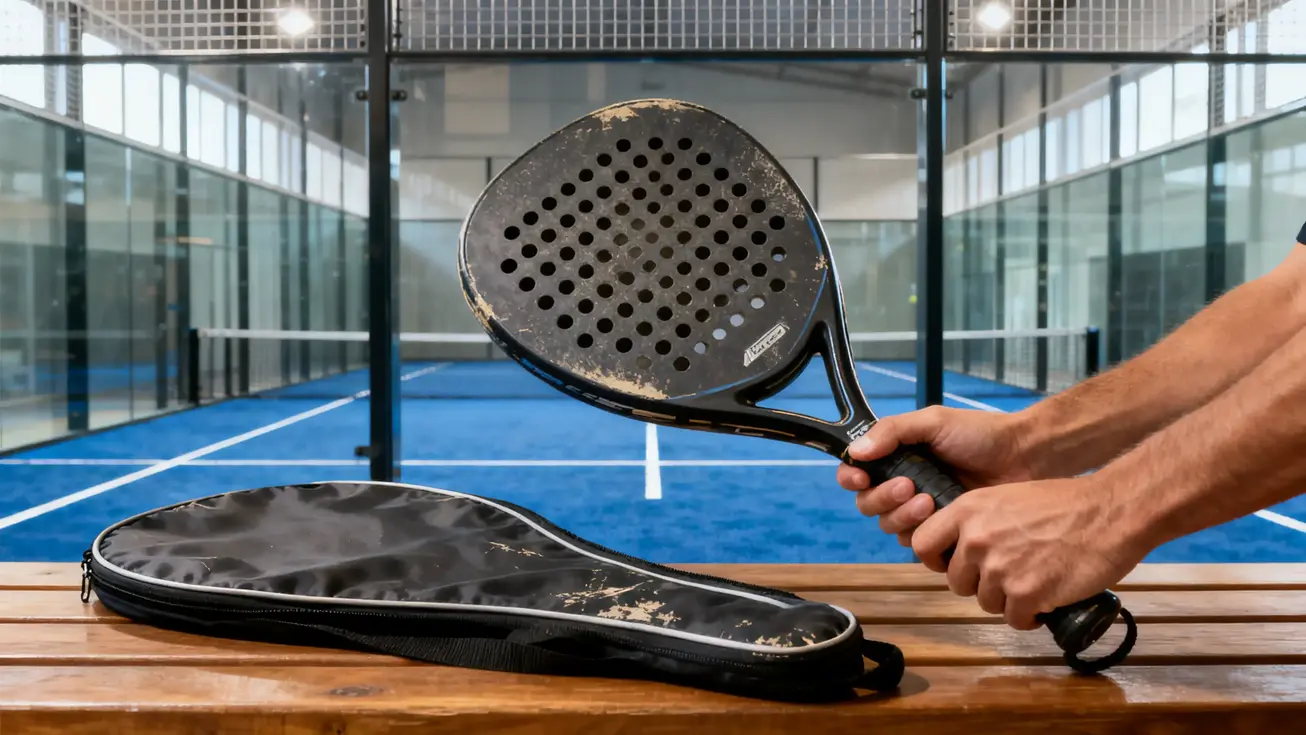
The frame edge takes the most visible punishment. Every time the frame clips the glass or turf, material chips away. Small chips are cosmetic; a crack that runs from the edge into the face is structural and effectively ends the racket's useful life, because that crack propagates under load.
The core compresses over time too. EVA rubber hardens with age even without play - heat accelerates this. A hardened core transfers more vibration to your arm and gives you less control on touch shots.
What shortens (and lengthens) racket life#
The biggest variables are play frequency, storage habits, and build quality.
Play frequency is the obvious one. A club player who plays twice a week for a year puts roughly 100 sessions on a racket. A social player who plays once a fortnight in summer only might manage 30. Those are very different amounts of structural stress.
Storage is underestimated. Leaving a racket in direct sunlight or in a car on a warm day softens the EVA core, and then it re-sets in a compromised state. Keep it in its cover, away from heat. Moisture is also a problem for fibreglass-faced rackets - the face can delaminate from the core if water gets in through chips in the edge.
Build quality matters more than brand loyalty. Entry-level rackets typically use a softer fibreglass face and a basic foam core; these are more forgiving on the arm but wear out faster, often within 12 to 18 months of regular use. Mid-range and high-end rackets with full-carbon faces and higher-density EVA cores hold their performance characteristics longer - 18 months to three years is realistic. The trade-off is that when a carbon racket does start to go, the deterioration feels more sudden.
Edge tape is a genuine lifespan extender. A strip of protective tape around the frame absorbs the clips and scrapes that would otherwise eat into the frame. It costs almost nothing and can add months of serviceable life.
Condition guide and resale value#
If you are thinking about selling, condition is everything. Here is a realistic guide to what used padel rackets fetch relative to the original retail price:
| Condition | What it looks like | Resale value (% of new price) |
|---|---|---|
| Like new | Played fewer than 5 times, no marks, full accessories | 60-75% |
| Very good | Light surface marks, no frame damage, feels responsive | 40-55% |
| Good | Visible edge wear, minor cosmetic chips, plays well | 25-40% |
| Fair | Significant edge wear, some face scuffs, sweet spot smaller | 15-25% |
| Poor / end of life | Frame cracks, delamination, dead feel | Not worth selling - recycle |
Timing matters for resale too. A well-known model holds its value best in the first six months after its release window, before the next generation arrives and the new-price drops. If you bought a mid-range racket for €150 and you are already in year two, selling now while it is still in "good" condition will return you more than waiting until it is "fair".
When to replace rather than sell#
Sell when the racket still has genuine value to someone else - that means it plays acceptably, it has no structural cracks, and a buyer can get real use from it. Replace rather than persevere when:
- You feel vibration in your elbow or shoulder that was not there before (the core has hardened or the face has micro-fractured)
- The sweet spot feels noticeably smaller than when the racket was new
- There is a visible crack running from the edge into the face
- Your game has genuinely improved and the racket's shape or weight no longer suits your style
That last point is worth taking seriously. A lot of players hang on to a technically functional racket that stopped suiting them 18 months ago. If you have moved from a defensive player to someone who wants to finish points at the net, the round-shaped racket you started with is working against you - regardless of its physical condition.
If your racket is still in good or very good shape, listing it on EpicRackets takes a few minutes and puts it in front of buyers across Europe who are specifically looking for pre-owned padel gear. If you want to see what comparable models are currently listed for before you decide, browse the padel racket search to get a feel for the market. Either way, getting something back for a racket you have outgrown beats leaving it in the garage until it is worth nothing.