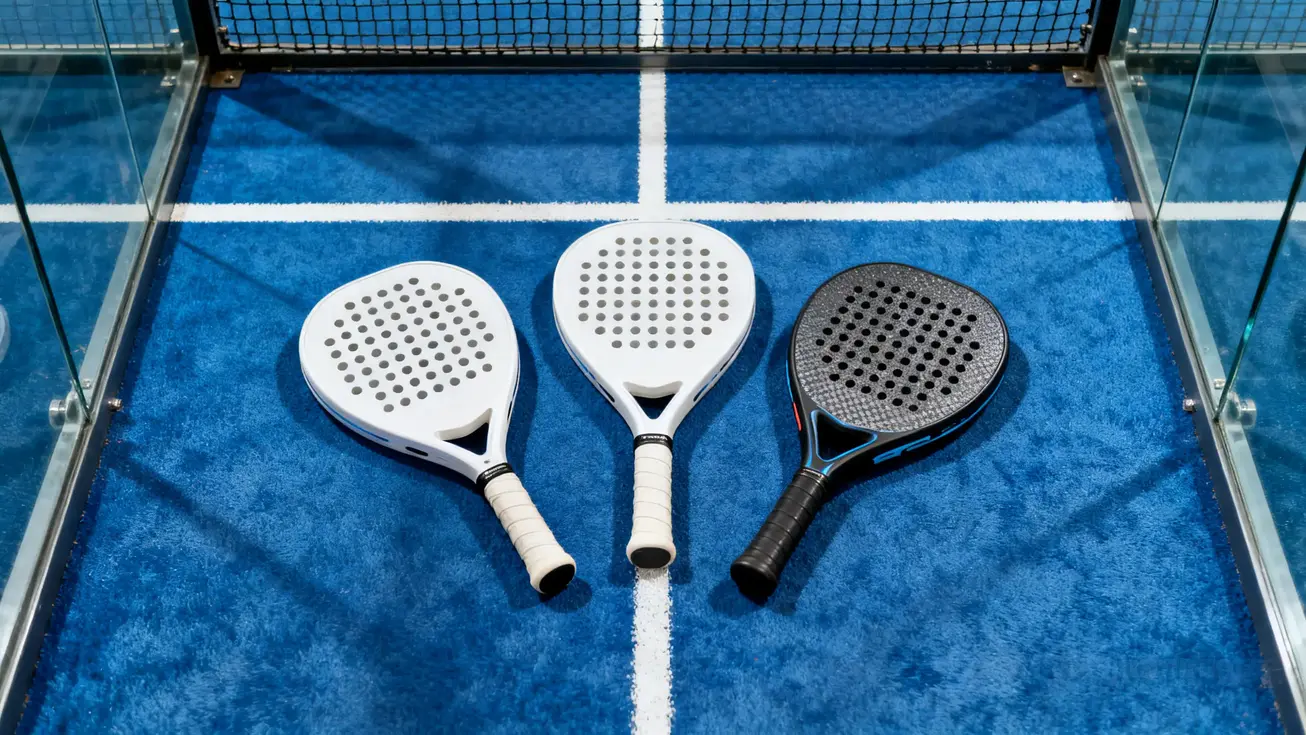
Best padel racket for your situation: beginners, best value, and tennis elbow#
Walk into any padel shop and the sheer range of rackets makes the choice feel impossible. Round, teardrop, diamond. Fibreglass, carbon. EVA foam, soft foam. The good news: once you know what you actually need, the field narrows fast. This guide cuts through the noise for three specific situations: you are brand new to padel, you want the most racket for your money, or you are managing lateral epicondylitis (tennis elbow) and cannot afford to aggravate it.
For beginners: forgiveness over power#
The single most common mistake new players make is buying a racket marketed at advanced players because it looks impressive. Diamond-shaped rackets with high-carbon faces are stiff, head-heavy, and punishing on off-centre hits. As a beginner, almost every hit is slightly off-centre.
What you want instead:
- Round shape. The sweet spot sits in the centre of the face, which is exactly where a round racket places it. You get a larger forgiving zone and more consistent feel.
- Fibreglass or soft-carbon face. Fibreglass flexes more than carbon, which means the face absorbs some of the shock and gives you a bit of extra dwell time to feel the ball. This also helps protect your arm.
- Soft EVA or multi-layered foam core. A softer core reduces vibration and is more comfortable over long sessions.
- Weight around 360-375 g. This is the standard padel racket range. Avoid anything heavier if your wrist and forearm are not yet conditioned.
- Low to mid balance point. A more handle-heavy or even-balance racket is easier to manoeuvre and puts less strain on the wrist.
For budget, expect to pay €60-€120 new for a solid beginner racket. On the pre-owned market, a lightly used beginner-to-intermediate model in good condition typically trades at €30-€70, which is genuinely good value given that these rackets often have months or years of life left. Browse pre-owned padel rackets on EpicRackets to see what is available right now.
Best value: where the sweet spot actually is#
The best value in padel rackets is almost never at the very bottom of the market or at the top. Here is why.
Entry-level rackets under €50 new often use lower-grade foam and cheaper face materials that deteriorate quickly and feel hollow. You will likely replace them within a year. At the other extreme, flagship rackets from €200-€350+ new are engineered for players already hitting technically well enough to feel the difference. If you are not at that level yet, you are paying a premium that does not convert into better results.
The genuine sweet spot sits in the €80-€160 new range, or €40-€100 pre-owned. Rackets in this bracket typically feature:
- Decent EVA foam core (sometimes dual-density)
- A fibreglass or hybrid carbon face
- Acceptable build quality that lasts two to three seasons with normal use
- Round or teardrop shapes that suit intermediate players moving up from beginner level
| Condition | Typical pre-owned price range | What to expect |
|---|---|---|
| Like new (under 3 months, no marks) | €90-€140 | Near-retail feel, full lifespan ahead |
| Good (3-12 months, minor cosmetic wear) | €50-€90 | Solid performer, check face for dents |
| Fair (12-24 months, visible use) | €25-€55 | Fine for casual play, inspect edges and core |
| Worn (2+ years, heavy use) | Under €25 | Learning or backup only |
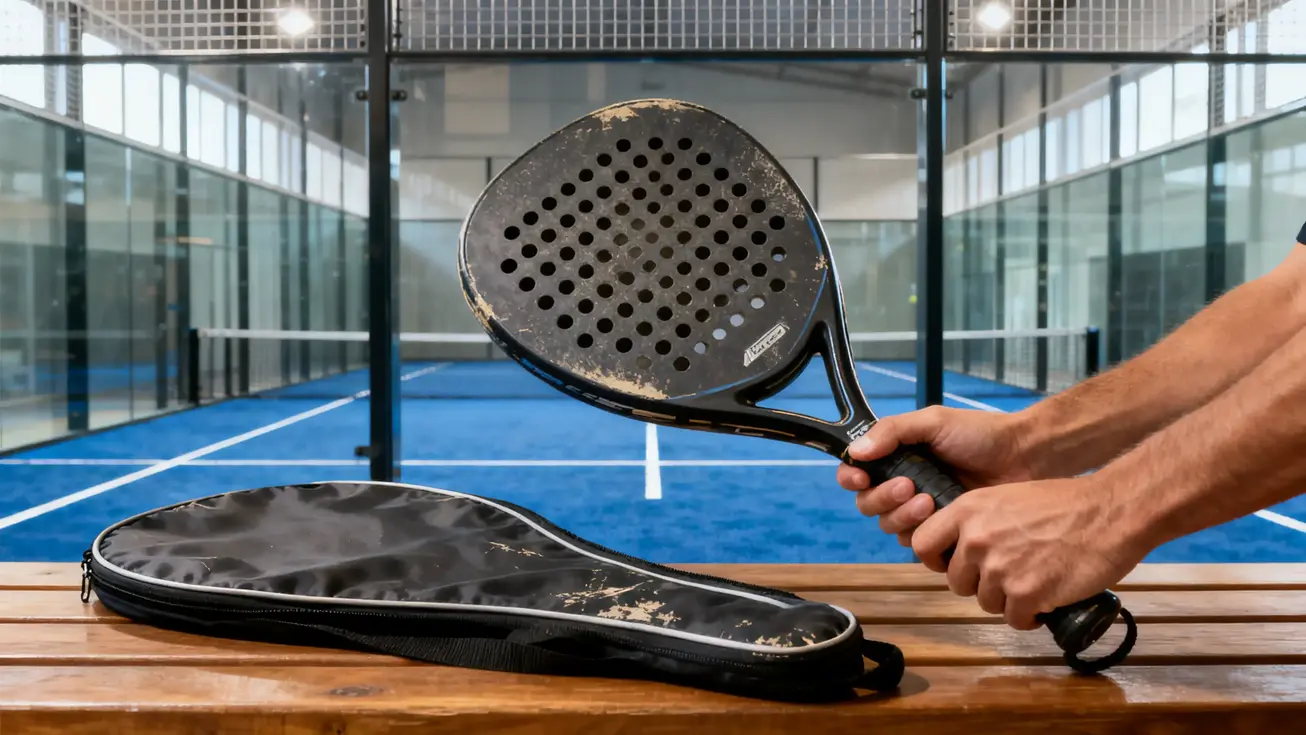
When buying pre-owned, always check the frame edges for chips (which can crack further), press the face to feel for dead spots in the foam, and look at the grip for signs of heavy sweating or replacements. A re-gripped racket is fine; a frame with cracks near the throat is not.
For tennis elbow: soft is everything#
Tennis elbow in padel players is common, especially among those who have recently converted from tennis or who are overplaying as the sport hooks them in. The mechanics are slightly different from tennis because you are not hitting with the same angular swing, but vibration and shock still travel up the arm on every block, volley, and smash.
The racket characteristics that reduce stress on the lateral epicondyle are:
- Soft core foam (softer EVA or polyurethane). This is the single biggest factor. A soft core absorbs vibration before it reaches the frame and your hand.
- Fibreglass face. Again, more flex means less shock transmission. Full-carbon faces are stiffer and transmit more vibration.
- Round shape. More central balance, less head weight, less torque on impact.
- Medium weight (360-370 g). Going lighter than 355 g can actually increase vibration paradoxically, because there is less mass to dampen oscillation.
- Overgrip or thicker grip. Wrapping a thicker overgrip reduces vibration at the handle and takes some load off the forearm muscles.
If your elbow is already inflamed, rest comes first. But once you return to play, choosing the right racket is genuinely protective and not just a nice-to-have. Some players also add a vibration-dampening grip sleeve, which sits inside the grip and is worth the modest cost.
If you currently own a stiff diamond-shaped racket and are experiencing elbow pain, selling it and switching to a softer round racket is a practical, evidence-backed move. You can list your current racket for sale on EpicRackets and put the proceeds towards something that does not hurt.
Finding the right racket without overspending#
The best padel racket for you is the one that matches your current level, your physical situation, and your budget. A beginner does not need a touring-level carbon slab. Someone with tennis elbow should not be using the stiffest racket on the shelf. And almost everyone gets better value in the €80-€160 new or €40-€100 pre-owned range than at either price extreme.
The pre-owned market is particularly useful here: you can afford to try a round fibreglass racket at €45 second-hand, decide you love it, and then invest more confidently in a higher-end version later. See what is currently listed on EpicRackets and filter by sport, condition, and price to find the right match.