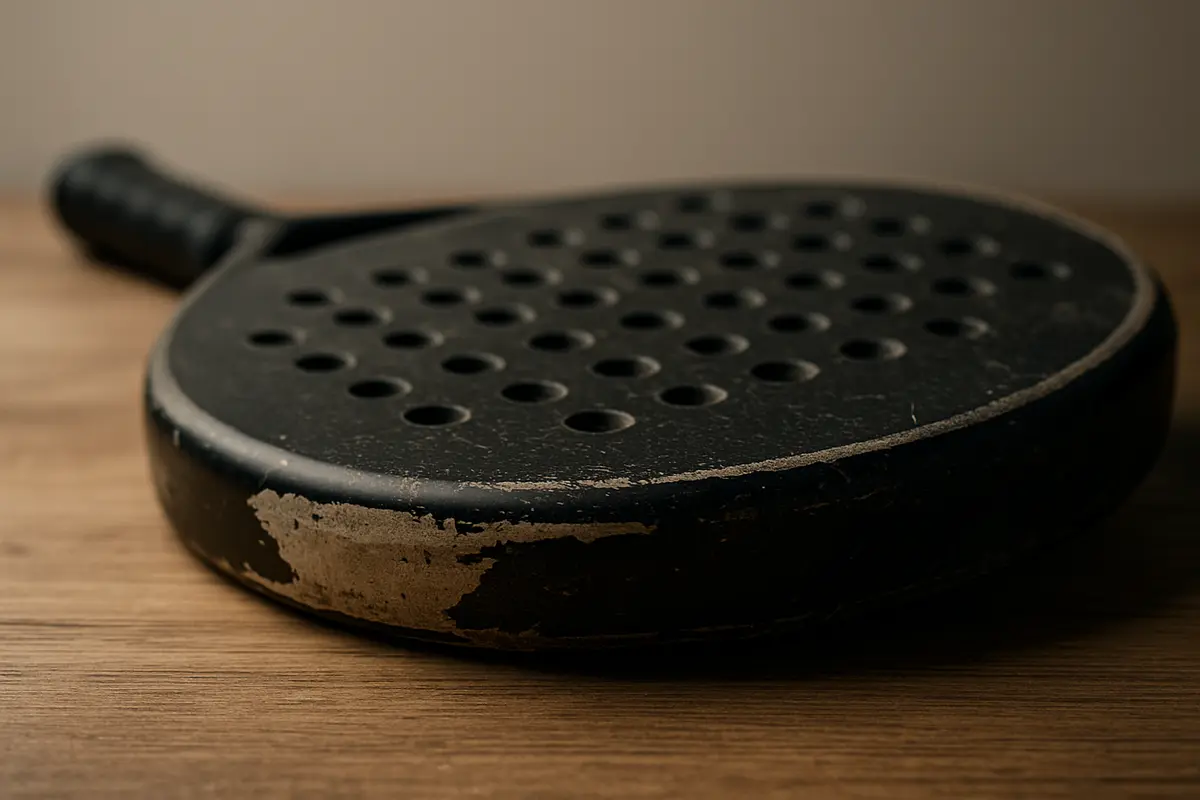
A padel racket can look fine in a photo and be quietly ruined. Delamination, a cracked face, a compromised frame edge: none of these show up in a listing unless the seller knows what to look for, and plenty of sellers do not. Two minutes of structured inspection before you hand over money is the difference between a bargain and a liability.
This matters more in padel than in tennis because the hitting surface is doing structural work. There are no strings to replace. The EVA foam core and the carbon or fibreglass face are the racket. Once the bond between them breaks down, or once the face develops a crack, the feel changes, the sweet spot shrinks, and there is no straightforward fix. Pre-owned padel gear is genuinely smart buying when the frame is sound. When it is not, you are paying for something that belongs in a bin. The checks below take the guesswork out of it.
The tap test: your first and most important check#
Pick up the racket and tap the face firmly with one knuckle, working methodically from the centre outward in a grid pattern. A healthy racket returns a consistent, slightly dense sound across the whole surface. What you are listening for is a hollow, papery thud in any particular zone. That sound means the face has separated from the foam core beneath it, a condition called delamination.
Delamination is not always visible. The face can look perfect while the bond underneath has failed across a significant area. I have picked up rackets in good-looking condition that failed this test badly, with a hollow patch covering nearly a third of the hitting surface. The sweet spot on a delaminated racket feels dead and inconsistent, and the problem only spreads with continued play. If the tap test reveals any hollow zones, walk away or negotiate a price that reflects the racket's actual value, which is close to zero as a playing implement.
Face and surface inspection: cracks, bubbles, and wear#
With the racket under good light, work across the entire face at an angle so the light rakes across the surface. You are looking for three things: cracks in the face material, small bubbles or blistering where the face has lifted, and deep abrasion that has broken through the surface layer.
Hairline cracks near the frame edge are common on older carbon-face rackets and are often the result of a hard court impact. A crack that has not propagated is less serious than one that runs toward the centre of the face, but any crack is a stress point. Fibreglass-face rackets are more forgiving of minor surface wear but can chip and flake along crack lines once they start. Bubbling anywhere on the face is early-stage delamination: the tap test may not have caught it yet, but the bond is already failing.
Surface abrasion from wall play is normal and cosmetic. Deep gouges that have broken through to the foam are not. Ask the seller directly how the racket was stored: frames left in a hot car or damp bag deteriorate faster than their playing hours suggest.
Frame edge and bumper: where most damage hides#
Turn the racket on its side and run a finger around the full perimeter of the frame edge. The bumper, the protective strip that absorbs wall and floor impacts, should sit flush and intact all the way around. Lift, gaps, or missing sections mean the frame itself has been taking direct hits without protection.
Look at the frame beneath and around the bumper for chips, cracks, or compression damage. The top of the frame takes the most punishment in padel because players drag the racket along the back wall. A small chip is cosmetic. A crack that runs into the frame wall is structural: it changes the flex characteristics of the racket and will worsen. I once bought a racket with a cracked frame at a price that seemed to account for it, and the crack had spread to the throat within three months of light play. It is not a gamble worth taking.
If the bumper is replaceable (most are), a worn or slightly lifted bumper on an otherwise sound frame is a minor issue. Factor in the cost of a replacement strip, which is cheap, and move on.
Weight check: does it match what the seller claims?#
Padel rackets are sold in weight ranges, typically 355 to 385 grams unstrung, and the balance point matters as much as the raw weight. A racket that has absorbed moisture, been heavily overgripped, or had repairs done to it may weigh noticeably more than its spec. A kitchen scale takes ten seconds to use and tells you immediately whether the racket is within the range the seller has stated.
This is also a useful fraud check. Some counterfeit padel rackets are heavier than the genuine article because the internal structure is cruder. If you are buying a premium frame and the weight is off by more than five grams from the published spec, that is worth questioning. The how to spot a fake tennis racket post covers counterfeit detection in more detail and much of the logic transfers directly to padel.
Ask about play history: the questions that matter#
The physical checks tell you the current state of the racket. Play history tells you how it got there and what is likely to happen next. Ask the seller directly: how many hours per week, on what surface, for how long? A racket used twice a week on a well-maintained indoor court for a year is in a different position to one used four times a week outdoors on a court with a rough back wall.
Ask whether it has been repaired, resprayed, or had the bumper replaced. A repaired racket is not automatically a bad buy, but you want to know what was done and why. Ask whether it has been stored properly. Padel rackets do not like sustained heat or damp, and a frame that has been in a garage for two summers may show no visible damage while the foam core has already degraded.
Pre-owned padel racket: checks at a glance#
| Check | What to do | Pass | Fail |
|---|---|---|---|
| Tap test | Knuckle-tap face in a grid | Consistent dense sound | Any hollow or papery zone |
| Face inspection | Rake light across surface | Clean, no cracks or bubbles | Cracks, blistering, deep gouges |
| Frame edge | Run finger around full perimeter | Bumper flush, frame intact | Chips, cracks, lifted bumper sections |
| Weight | Kitchen scale | Within 5g of published spec | Significantly over or under spec |
| Play history | Ask seller directly | Low hours, good storage | Heavy use, outdoor exposure, prior repairs |
What to do with this before you buy#
Run these checks in order. The tap test and face inspection take the most time and catch the most problems. If a racket passes all five, you are looking at pre-owned gear that is genuinely worth buying. If it fails one, decide whether the price reflects the issue. If it fails two or more, move on.
When you are buying through a marketplace, ask the seller to photograph the face under raking light and to confirm the weight. A seller who will not do this is telling you something. A seller who does it without being asked is probably someone who has taken care of their gear.
If you are ready to look, there are padel rackets listed on the marketplace right now across a range of conditions and price points. And if you have a frame that has passed these checks sitting unused, the tips on selling pre-owned rackets post covers how to list it in a way that builds trust with buyers quickly.
Good gear should be in play. These checks are how you make sure the gear you buy actually is.