Most adult beginners spend either too little or too much on their first racket. The £30 supermarket frame feels fine for the first two lessons, then becomes the thing your coach quietly asks you to replace. The £200 player's racket you bought because a pro uses it will punish every mishit until your elbow starts complaining.
There is a better path, and it starts with understanding three numbers and one purchasing decision.
If you are picking up tennis properly for the first time, your racket choice will affect how quickly you improve. A frame that is too heavy makes you late on the ball. One with too small a head size punishes the off-centre hits that beginners produce constantly. Getting this right in the first month means you spend your court time actually learning, not fighting your gear.
The three specs that matter for beginners#
Head size is the area of the hitting surface, measured in square inches. For adult beginners, 100 to 110 sq in is the right window. A larger head size means a bigger sweet spot, which means more consistent contact when your technique is still forming. Player's frames used by advanced club players typically sit at 95 to 98 sq in. That is not where you want to start.
Weight is quoted unstrung in grams. Beginners generally do well between 265 g and 285 g. Lighter than that and the frame can feel unstable on pace; heavier and fatigue sets in quickly, especially if you are playing for the first time in years. If you see a racket listed as "300 g strung", bear in mind stringing adds roughly 15 to 17 g, so you are looking at a roughly 284 g unstrung frame.
String pattern is the grid of crosses and mains: 16x19 is the standard open pattern you want. It grips the ball more, generates spin more easily, and forgives imperfect swing paths. A denser 18x20 pattern suits advanced players who already generate their own pace. As a beginner, you will not notice the control benefit of 18x20, but you will notice the loss of spin and forgiveness.
One more thing: balance. A head-light balance shifts weight towards the handle, reducing arm fatigue on groundstrokes. Most modern rackets marketed at beginners and intermediate players are head-light or even-balanced. If a listing does not specify, you can ask the seller or look up the model name.
Why a pre-owned mid-range frame beats a cheap new one#
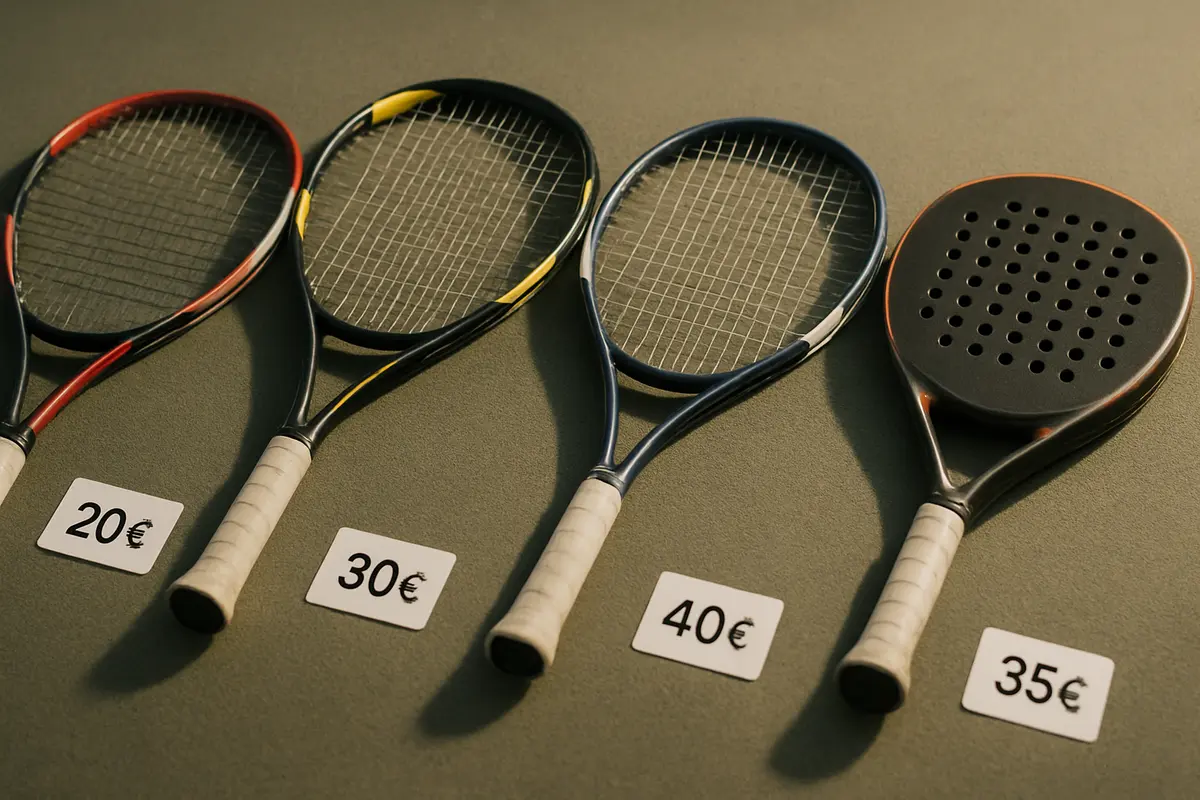
A new racket at £30 to £50 is almost always made with lower-grade aluminium or entry-level graphite composites. The frame flexes unpredictably, the string job that comes with it is usually poor quality, and the grip construction wears quickly. You are not saving money; you are buying something you will replace within three months.
A pre-owned racket from a mid-range brand, something that retailed at £80 to £130 new, is built from better materials, has a more consistent flex profile, and will hold up for years. On the pre-owned market, that frame might cost £25 to £55 depending on condition. Having hit with both categories, the difference in feel is immediate. The mid-range frame transmits the ball more cleanly, which actually helps you learn what good contact feels like.
The key is buying pre-owned from a source where condition is described honestly. On EpicRackets, every listing includes condition grading, so you know whether you are getting a frame with light cosmetic wear or one that has genuinely been used hard. Browse tennis rackets and filter by condition if you want something close to new.
If you are curious about the broader case for buying pre-owned, the sustainability argument is worth reading. Quality gear sitting unused in a cupboard is a waste in every sense.
Budget guide: what to expect at each price point#
| Budget (pre-owned) | What you can realistically find | Notes |
|---|---|---|
| Under £25 | Entry-level frames, older models | Fine for occasional use; inspect for frame cracks |
| £25 to £50 | Mid-range frames from reputable brands, 2 to 4 years old | Best value window for most beginners |
| £50 to £80 | Near-current mid-range or older performance frames | Worth it if you know you will play regularly |
| Over £80 | Current performance frames, lightly used | Only makes sense if you are already improving fast |
For most adults starting out and playing once or twice a week, the £25 to £50 window is where I would spend. You get a frame that will not hold you back, you are not overcommitting financially, and if tennis clicks for you, you can sell it on and upgrade without much loss.
What to check before you buy#
A few things worth confirming before you commit to any listing:
- Grip size: European sizing runs L0 to L5 (L2 is 4 1/4 inches, L3 is 4 3/8 inches). If you are unsure of your size, L2 or L3 fits most adults and you can build up with an overgrip.
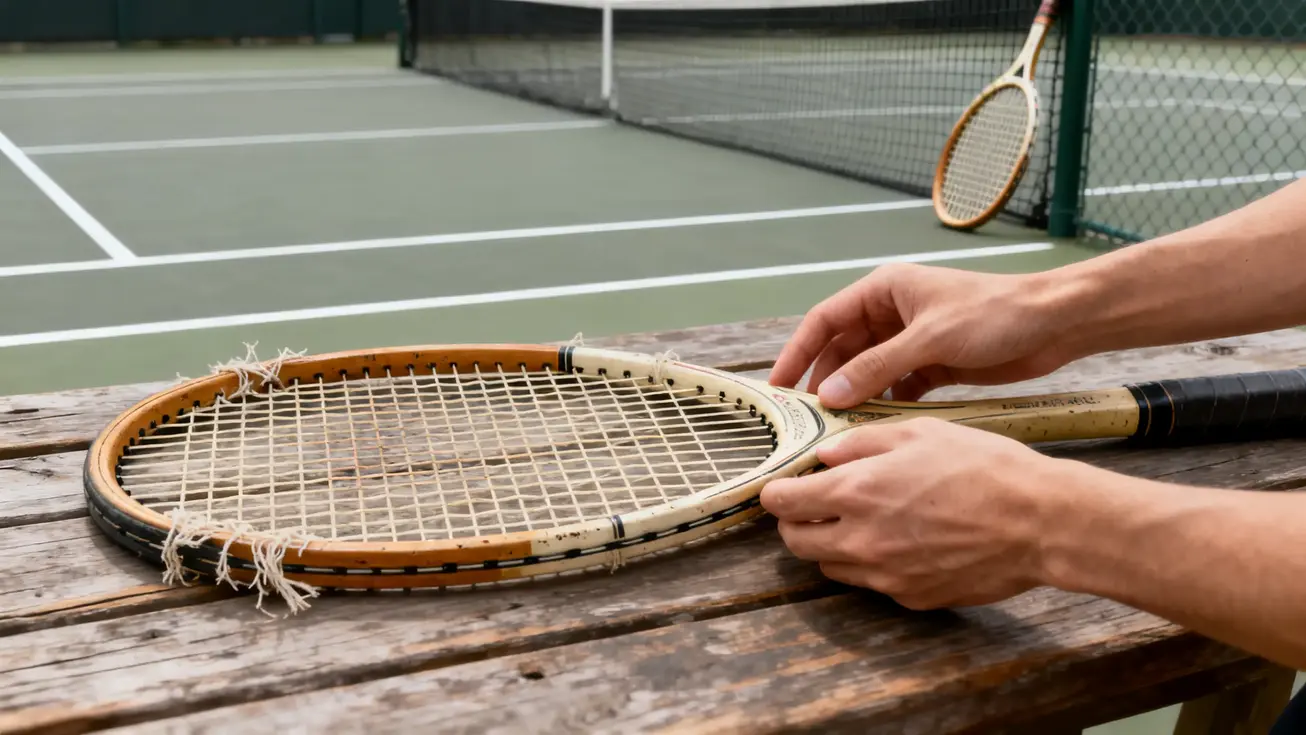
- String condition: Ask whether the racket is currently strung and, if so, when it was last restrung. Old strings lose tension and feel dead. Budget £15 to £25 for a restring if needed. Do not let string condition put you off an otherwise good frame.
- Frame integrity: Look at the photos carefully around the throat and the top of the head. Hairline cracks are a reason to pass. Cosmetic paint chips are not.
- Brand reputation: Wilson, Babolat, Head, and Yonex all make solid beginner-to-intermediate frames. Avoid unbranded or very obscure frames even at low prices; getting replacement strings or grips becomes harder.
If you want to understand more about string tension once you are past the beginner stage, the tennis string tension guide covers it properly.
Where to start#
Search for tennis rackets on EpicRackets and set your condition filter to "good" or better. Look for head sizes between 100 and 110 sq in, weights in the 265 to 285 g range, and open 16x19 string patterns. If you find something that looks right but have questions about the spec, message the seller directly.
You do not need to spend a lot to start well. You need to spend wisely. A quality pre-owned frame from a player who has moved up to something more advanced is exactly what it sounds like: a good racket that has already proven itself, now available at a fraction of its original price.
That is a better starting point than anything in a supermarket sports aisle.