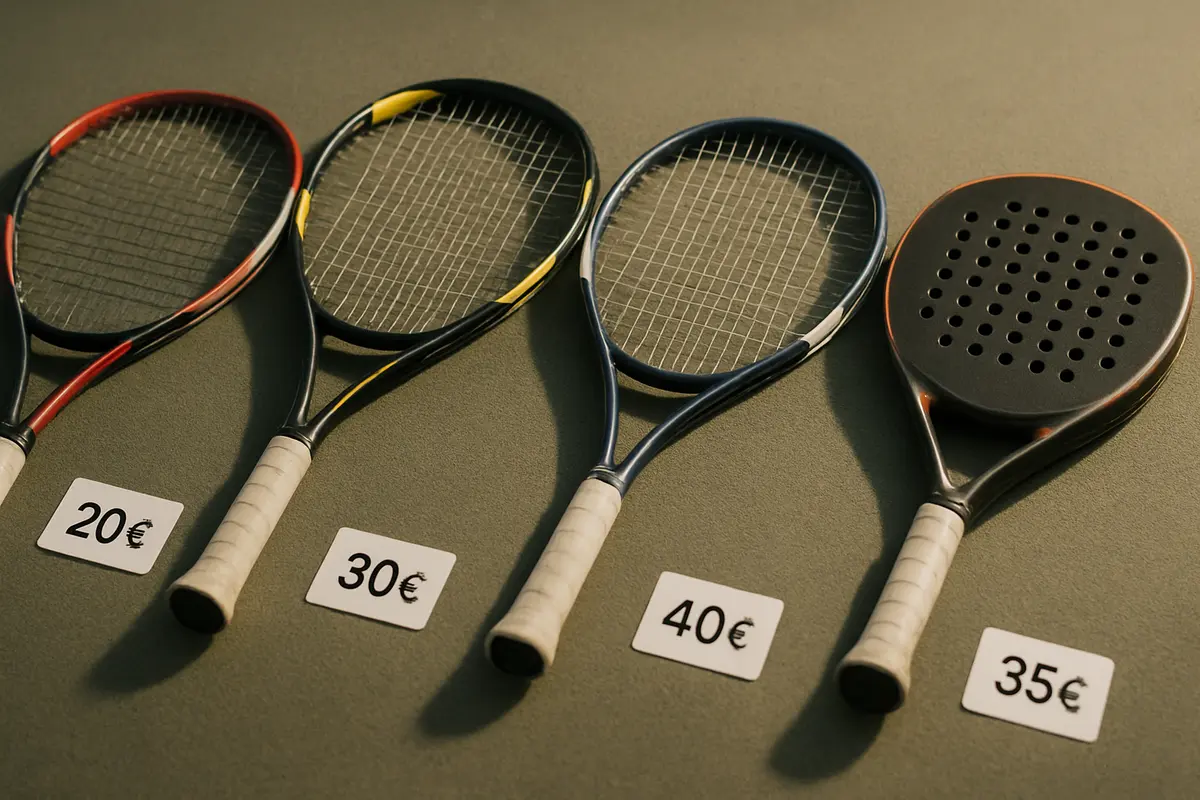
A 40 EUR racket bought new from a sports supermarket is almost certainly made from aluminium or low-grade alloy, weighs somewhere around 300 g strung, and has a flex that borders on noodle. A 40 EUR pre-owned racket could be a graphite intermediate frame that retailed at 120 EUR two years ago. The difference in what you actually feel when you hit is not marginal.
That gap matters more at the beginner stage than at any other. When you are still building your swing, the gear you practise with shapes your technique. A frame that damps vibration properly and gives you honest feedback from the sweet spot teaches you something. A dead alloy frame teaches you to compensate. Spending 30 to 50 EUR on a pre-owned intermediate racket is about getting the right tool for the job at a price that makes sense before you know exactly what you want long-term.
What "intermediate frame" actually means at this price point#
Manufacturers segment their ranges roughly like this: beginner frames are designed to be forgiving and cheap to produce, intermediate frames are designed for players developing consistent strokes, and advanced frames are optimised for players who already have those strokes. The jump from beginner to intermediate usually means a switch from aluminium or cheap alloy to graphite composite, a more considered weight distribution, and better vibration dampening built into the frame itself rather than relying on a thick bumper guard to absorb everything.
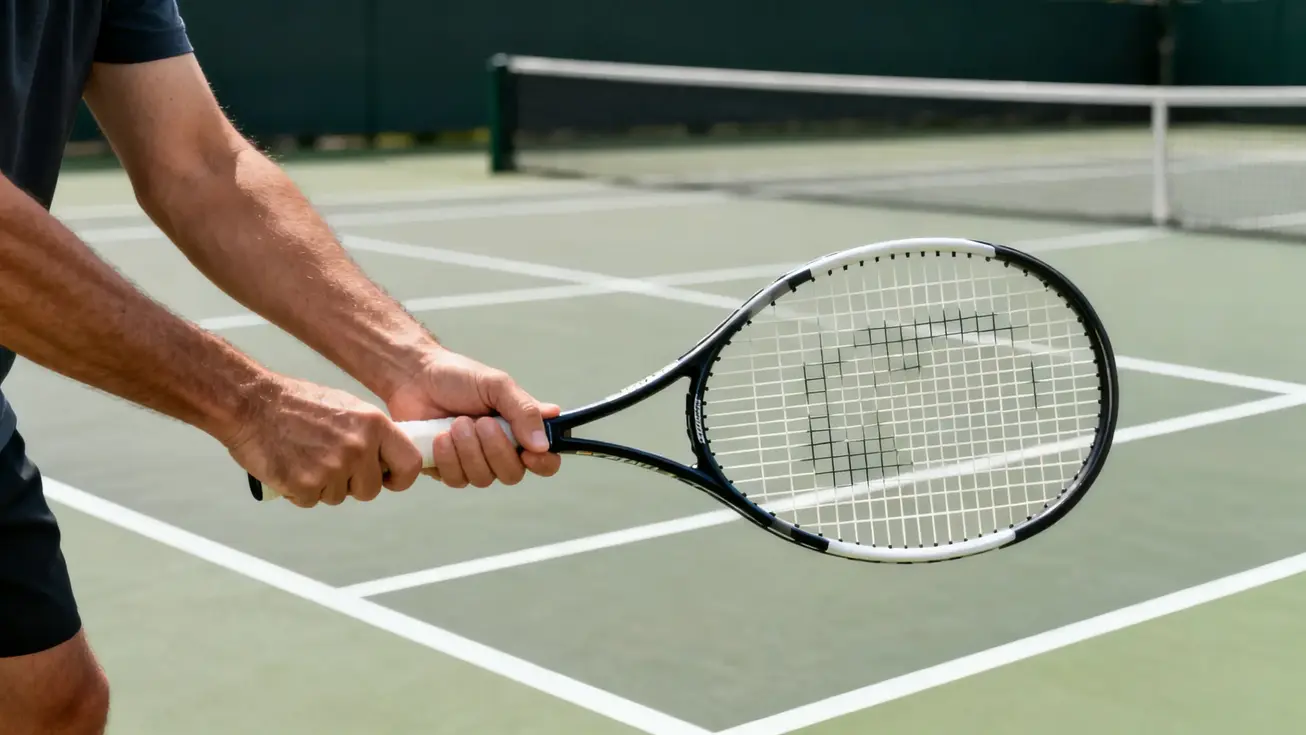
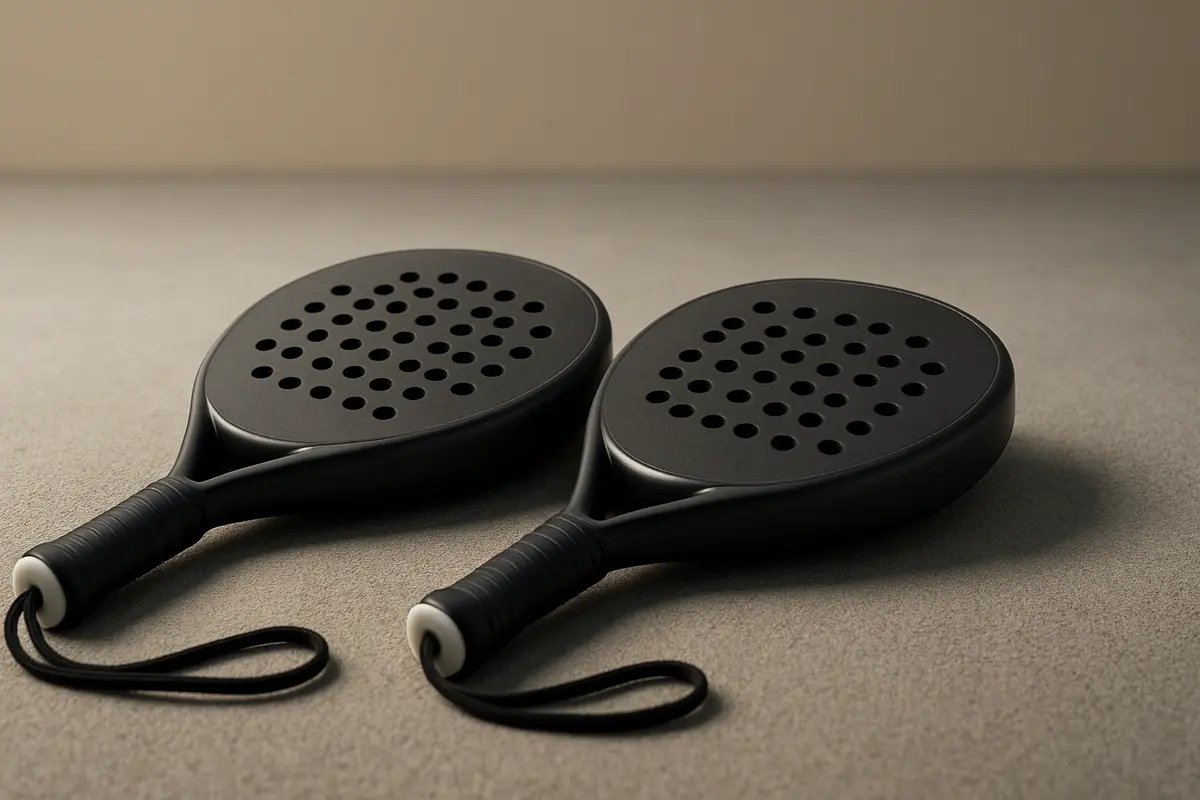
In tennis, an intermediate frame from a reputable brand typically weighs between 270 g and 295 g unstrung, has a head size between 100 and 107 square inches, and is made with at least some graphite in the layup. In padel, an intermediate frame usually has a carbon fibre face (rather than fibreglass alone), an EVA foam core with a medium density, and a round or teardrop shape suited to players still finding their position on court. None of that is available new at 50 EUR. Pre-owned, it comes up regularly.
Specs to prioritise in tennis at this budget#
At under 50 EUR pre-owned, you are looking for specific things rather than brand names. The frame material is the first filter: graphite or graphite composite beats aluminium every time, and most listings will state this. If a listing does not mention the material, ask before buying.
Weight matters, but not in the direction most beginners assume. Heavier is not harder to play with if the balance is right. A 285 g frame with a slightly head-light balance is more comfortable to swing and generates more natural pace than a 260 g frame that is head-heavy. Check the balance point if the listing includes it; if not, the model name is usually enough to look up the spec.
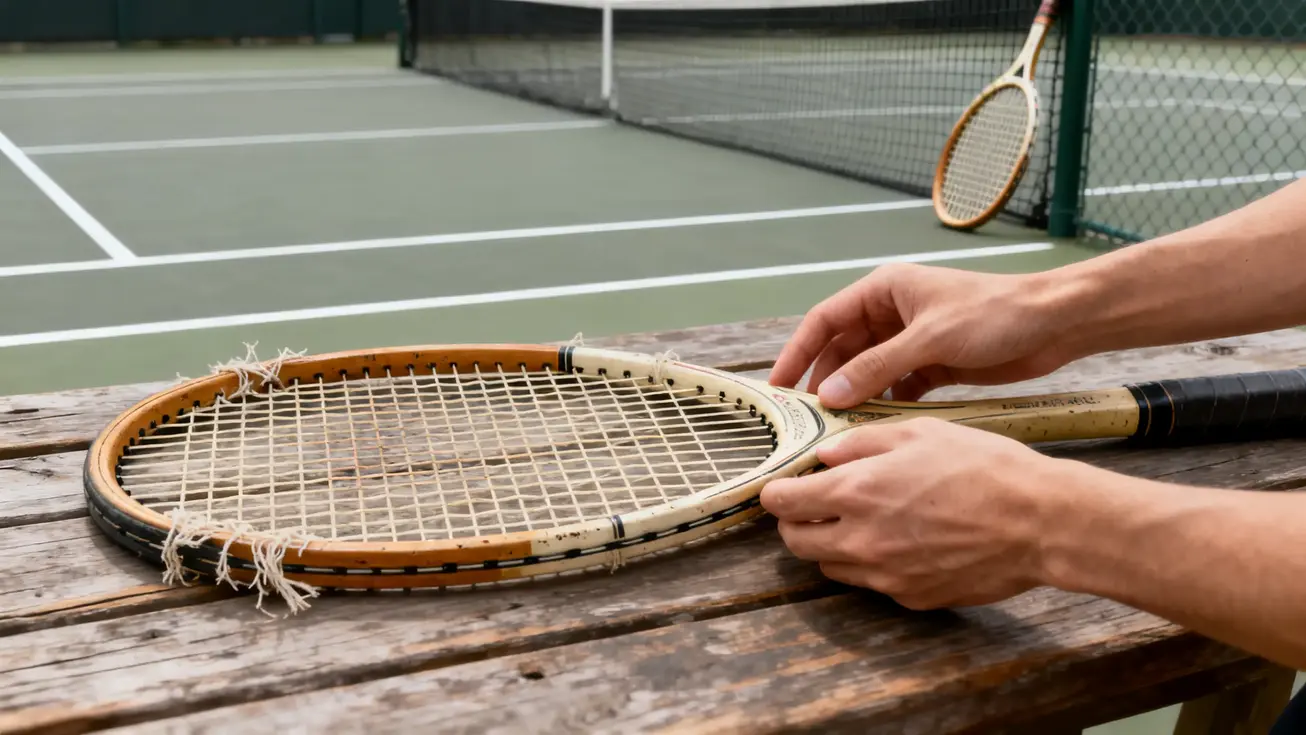
String condition is worth a separate thought. Pre-owned tennis rackets come strung, and strings degrade. A frame in good condition with dead strings is still a good buy because a basic restring costs 15 to 25 EUR and transforms the feel. Do not let worn strings put you off an otherwise sound frame. What you cannot fix cheaply is a cracked frame or a warped hoop, so look at the photos carefully and ask the seller about any impact damage.
Specs to prioritise in padel at this budget#
Padel rackets have no strings. The hitting surface is a perforated carbon or fibreglass face bonded to an EVA foam core, and the condition of that surface is what you are assessing. Look for delamination (the face lifting away from the core at the edges), cracks in the face, or deep dents in the foam visible through the perforations. Minor cosmetic scratches on the face or frame are normal and irrelevant to performance.
Shape is the bigger decision. Round shapes have a larger sweet spot lower in the face and suit players who are still developing consistent contact. Teardrop shapes move the sweet spot higher and reward players who hit with more aggression. At the beginner stage, round is almost always the right call, and round-shaped pre-owned frames from solid brands come up in the 30 to 50 EUR range on the marketplace with reasonable frequency.
Weight for padel sits in a narrower band than tennis: most adult frames are between 355 g and 375 g. Within that range, lighter suits players who want more manoeuvrability at the net, heavier suits players who want more stability on hard-hit balls from the back. For a beginner, the middle of that range (around 360 to 368 g) is a sensible target.
How to avoid the common pitfalls when buying at the lower end#
The main risk at this price point is not fraud. It is buying something that looks fine in photos but has a structural problem the seller may not even know about. A few habits reduce that risk significantly.
Ask for a photo of the throat and the bumper guard specifically. These are the areas that absorb the most impact in normal play and where cracks or chips most often appear. A seller who responds quickly with clear photos is also giving you useful information about how the transaction will go.
Check the grip size. This is the detail beginners most often overlook, and it is the one that is hardest to fix cheaply. In Europe, grip sizes run L0 to L5. L2 (4 1/4 inches) and L3 (4 3/8 inches) are the most common adult sizes and the easiest to adjust with an overgrip. Going one size up with an overgrip is fine; going one size down is not possible without replacing the base grip, which adds cost and complexity.
Read the selling used rackets tips post if you want to understand what a careful seller looks like. The same signals that make a good seller also help you recognise a listing that has been put together honestly.
Quick comparison: new entry-level vs pre-owned intermediate at 40 to 50 EUR#
| New entry-level (40-50 EUR) | Pre-owned intermediate (40-50 EUR) | |
|---|---|---|
| Frame material (tennis) | Aluminium or low-grade alloy | Graphite composite |
| Face material (padel) | Fibreglass only | Carbon or carbon/fibreglass mix |
| Original retail price | 40-50 EUR | 90-150 EUR |
| Vibration dampening | Minimal | Built into layup |
| Sweet spot quality | Small, inconsistent | Larger, more forgiving |
| Resale value after 12 months | Near zero | Retains some value |
| Risk | Low (returns policy) | Low if you check condition |
The resale point is worth holding onto. If you buy a pre-owned intermediate frame for 45 EUR, play with it for a year, and decide you want something different, you can list it again and recover 25 to 35 EUR. A 45 EUR new entry-level frame is worth almost nothing to anyone after a year of use.
Where to go from here#
If you are shopping for tennis, the tennis rackets listings on the marketplace are filterable by condition, and several frames in the 30 to 50 EUR range are currently available. For padel, the padel rackets section has round-shape intermediate frames listed by players who have moved up to more advanced gear and want their old frame to find a home rather than sit in a cupboard.
If you are not sure whether padel or tennis is the right sport to invest in first, the padel vs tennis fitness post covers the physical demands of both in a way that might help you decide. And if you end up with a frame you want to move on, how to sell on the marketplace takes about five minutes to set up.
Good gear should be played with. At 30 to 50 EUR, there is genuinely no reason to settle for something that will hold your game back.