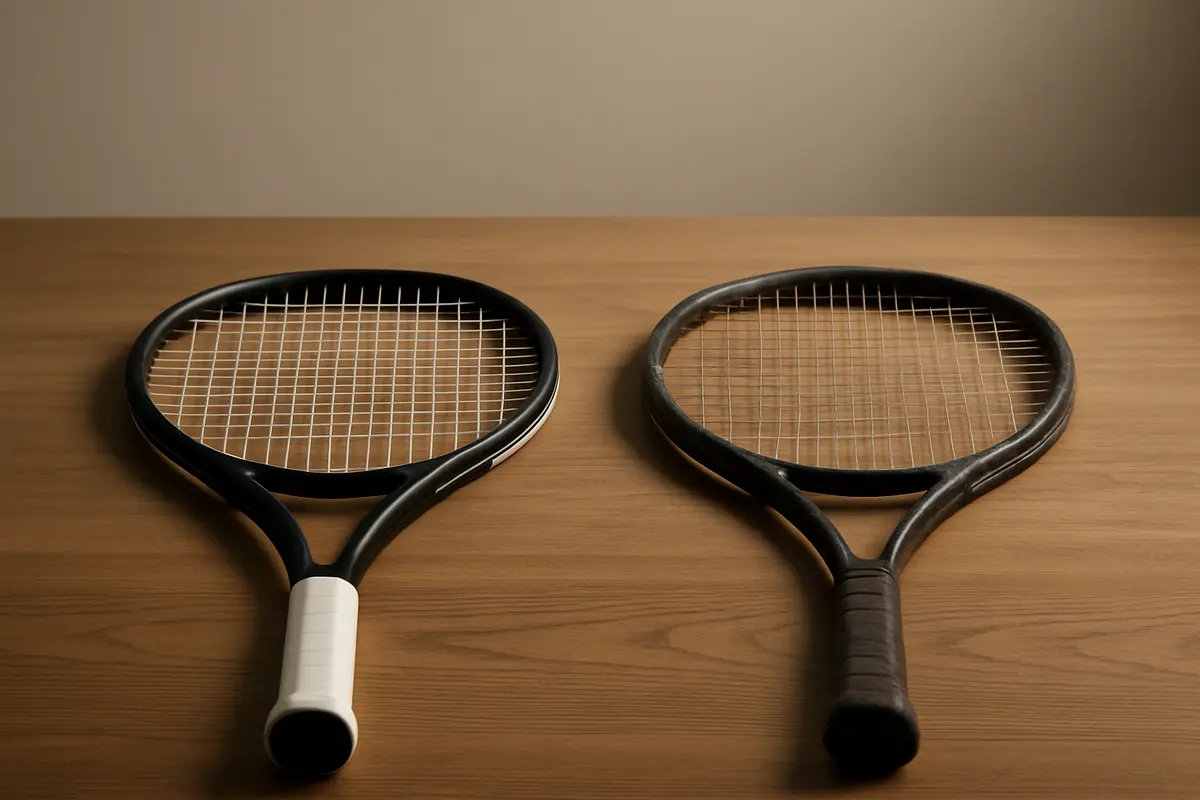
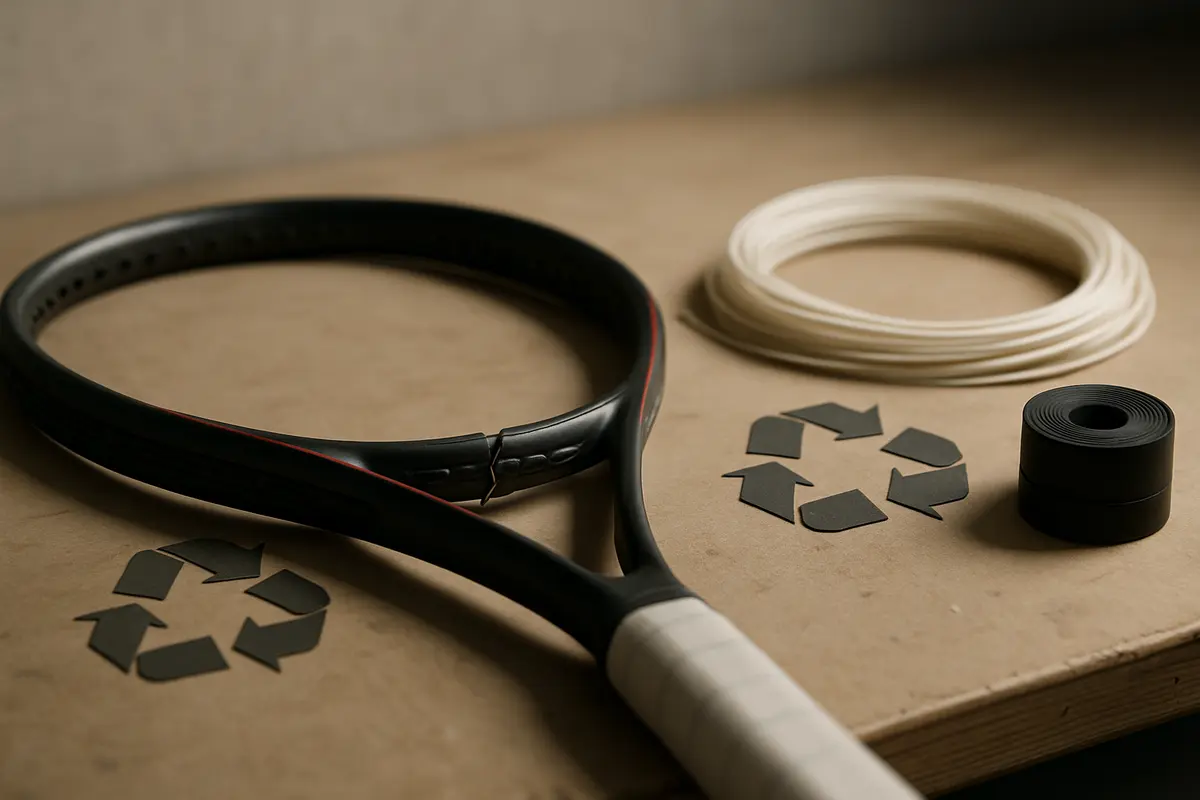
A cracked frame does not automatically mean landfill. I have seen players throw away rackets that needed a regrip and a restring, and I have also seen players spend good money trying to save a frame that was genuinely beyond rescue. The gap between those two outcomes is mostly just knowing which category you are dealing with.
This matters to you as a player because rackets are not cheap, and the materials inside them (carbon fibre, fibreglass, EVA foam, high-tensile string) are not trivial to produce. Every frame that gets fixed or repurposed instead of binned is a small but real win. It also matters because the pre-owned market depends on players being honest about condition, and understanding what is repairable versus what is structural damage helps you describe gear accurately when you sell on the marketplace or buy from someone else. The sustainability case for pre-owned gear is something we have written about in more depth in the second-hand gear sustainability post, but this post is the practical side: what actually happens to a racket at the end of its life.
What can genuinely be repaired#
The honest answer is: more than most players assume, but less than most repair shops will tell you.
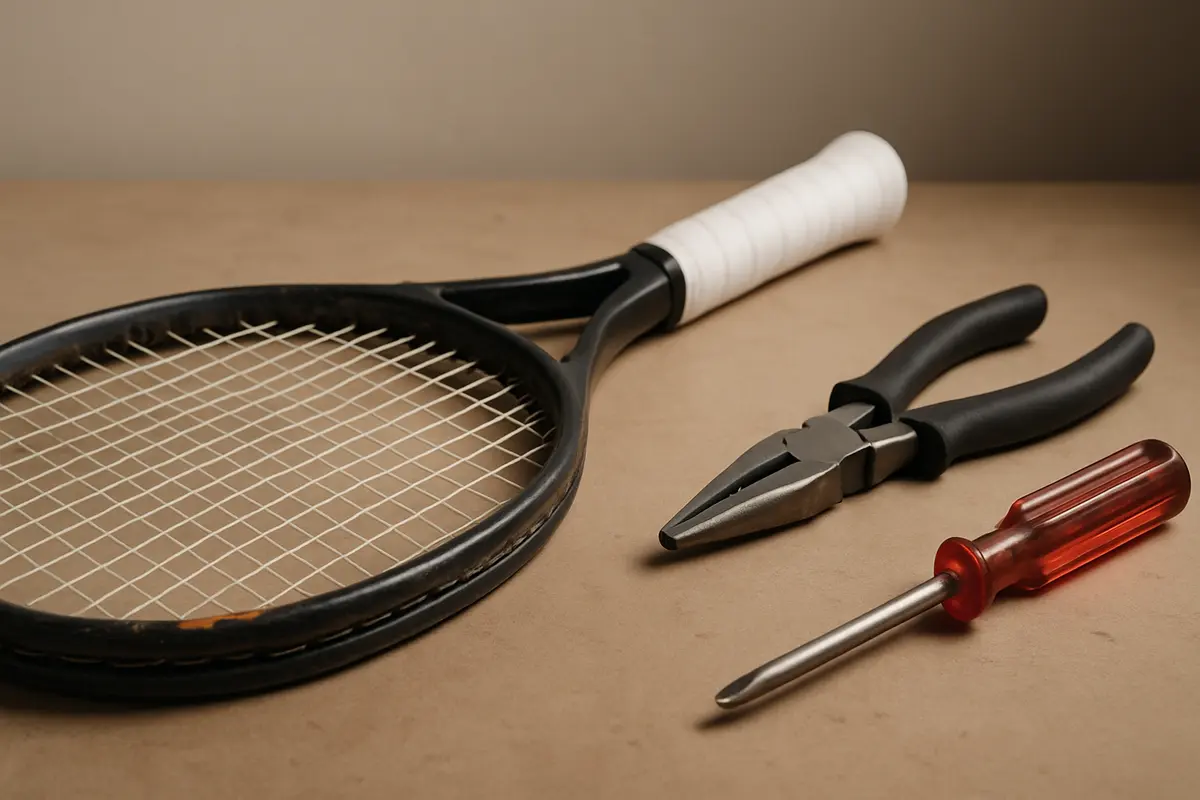
Strings are the obvious one. A broken string is not a broken racket. Any decent stringer can replace a full set in under an hour, and the cost is low enough that restringing a frame you like is almost always worth it. If you are unsure how string choice and tension affect play, the tennis string tension guide covers that in detail. The only reason not to restring is if the frame itself is compromised, because high string tension puts real load on the throat and hoop, and a cracked frame will not hold it safely.
Grips and overgrips wear out faster than anything else on a racket. A replacement grip takes ten minutes to fit and costs very little. If the only reason a racket is sitting unused is a slippery or shredded grip, that is a straightforward fix. I would go further and say that buying a pre-owned racket and immediately fitting a fresh grip is standard practice, not a compromise.
Cracked throat on a tennis racket is where it gets more nuanced. A hairline crack in the throat (the Y-shaped section connecting the handle to the hoop) can sometimes be stabilised with epoxy resin, but I would only play with it again at reduced string tension, and I would inspect it before every session. A crack that has spread, or one that has any flex in it when you apply pressure with your hands, is not safe to string at full tension. The frame has lost structural integrity and the repair is cosmetic at best.
Bumper guards take the most punishment on any court surface and they are replaceable on most tennis frames. You can buy generic bumper guards or brand-specific ones, and fitting them yourself with a bit of patience and the right adhesive is entirely viable. This is one of the most underrated repairs because a worn bumper guard makes a perfectly good frame look wrecked.
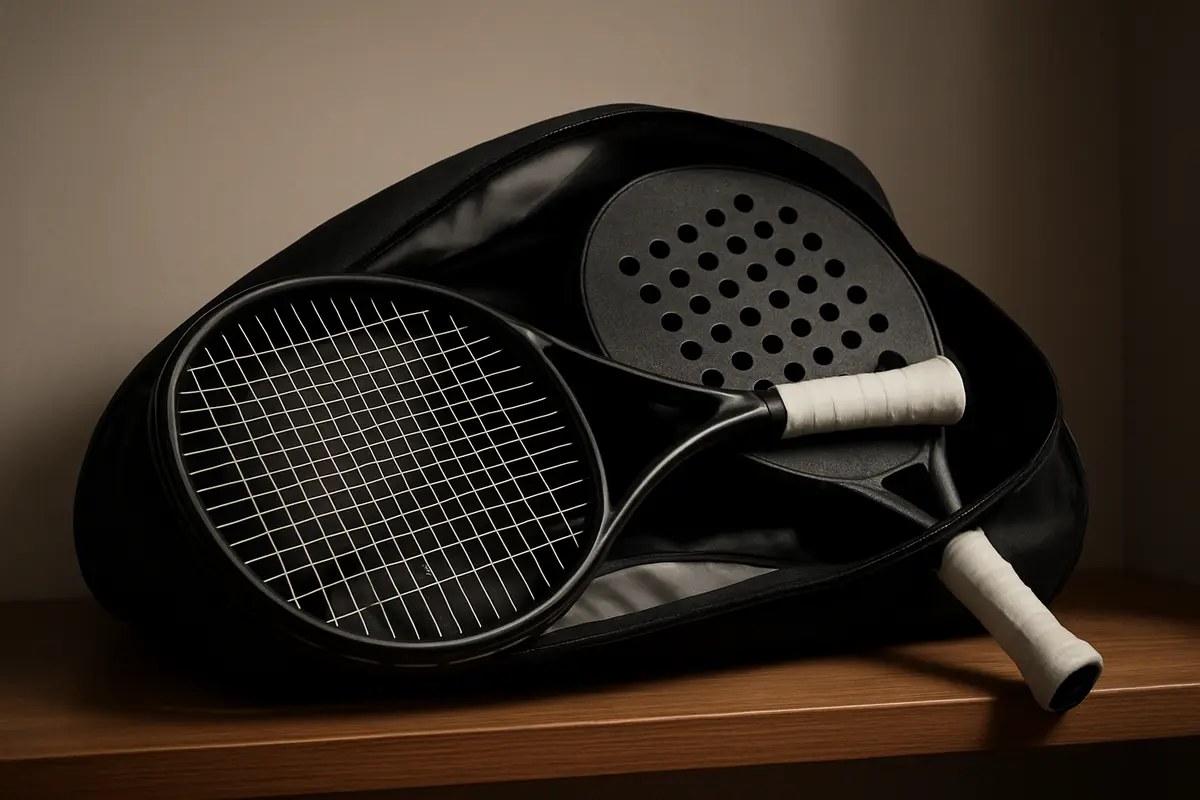
Padel racket face damage is trickier. Padel rackets have no strings: the hitting surface is a perforated carbon or fibreglass face bonded to an EVA foam core. A small surface chip or scratch does not affect play. A crack that runs through the face into the core, or any delamination where the face is lifting away from the foam, changes the way the ball responds and cannot be reliably fixed. Those frames are at end of life.
What can be stripped and reused#
Even a frame that cannot be played with again has parts worth salvaging.
Strings can be removed from a dead tennis frame and, if they are not broken, used as a short set for a hybrid restring or kept as a backup. Grip tape, if it still has life in it, transfers to another frame. Vibration dampeners, lead tape, and overgrips are all reusable.
For padel rackets, the wrist strap and grip wrap are worth keeping. Some players also remove the protective frame tape that runs around the edge of the racket, as it is often still intact even when the frame is not.
If you play regularly, keeping a small box of stripped components makes sense. It is not a significant saving in money terms, but it is a habit that reflects how you think about gear.
Where carbon fibre recycling actually stands in the UK#
This is the part where I have to be straight with you, because the situation is not as good as it should be.
Carbon fibre is theoretically recyclable. The fibres themselves can be reclaimed through pyrolysis (burning off the resin in a controlled environment) or solvolysis (dissolving the resin chemically), and reclaimed carbon fibre does find its way into lower-grade applications like automotive parts and construction materials. The problem is access. There is no kerbside collection for carbon fibre composite waste in the UK. The specialist recyclers that do exist (a handful of companies mostly serving aerospace and automotive industries) are not set up to take individual consumer items like racket frames.
In practice, a carbon fibre tennis or padel racket frame that cannot be repaired or repurposed currently goes to general waste in most cases. Some players have had success contacting local recycling centres directly, and it is worth a phone call, but do not expect a consistent answer. The infrastructure simply is not there yet for consumer-scale carbon composite recycling.
Fibreglass frames (common in entry-level padel rackets and older tennis frames) face a similar problem. Fibreglass composite is even harder to recycle than carbon fibre, and the same lack of accessible infrastructure applies.
The honest position here is that the best thing you can do for a carbon frame is extend its life as long as possible. Every extra year of play is a year it is not in general waste.
Repair, repurpose, or move on: a decision guide#
| Situation | Recommended action |
|---|---|
| Broken string, frame intact | Restring. No question. |
| Worn grip, frame intact | Replace grip. Ten-minute job. |
| Worn bumper guard, frame intact | Replace bumper. Widely available. |
| Hairline crack in throat, no flex | Stabilise with epoxy, reduce string tension, inspect regularly. |
| Crack with flex, or spread crack | Do not restring. Strip usable parts. |
| Padel face chip or surface scratch | Continue playing. Monitor. |
| Padel face crack into core, or delamination | End of play life. Strip grip and strap. |
| Any dead frame, carbon or fibreglass | Check local recycling centre. If not accepted, general waste (current UK reality). |
What to do next#
If a racket is repairable, repair it. If it is pre-owned and in honest condition, list it so someone else can play with it rather than letting it gather dust. The marketplace has pre-owned tennis rackets and pre-owned padel rackets from players who have assessed condition carefully, and if you are selling, the tips on writing an accurate listing will help you describe wear and repairs in a way that builds trust rather than raising doubts.
The bin is always there as a last resort. It should be the last resort, not the default.