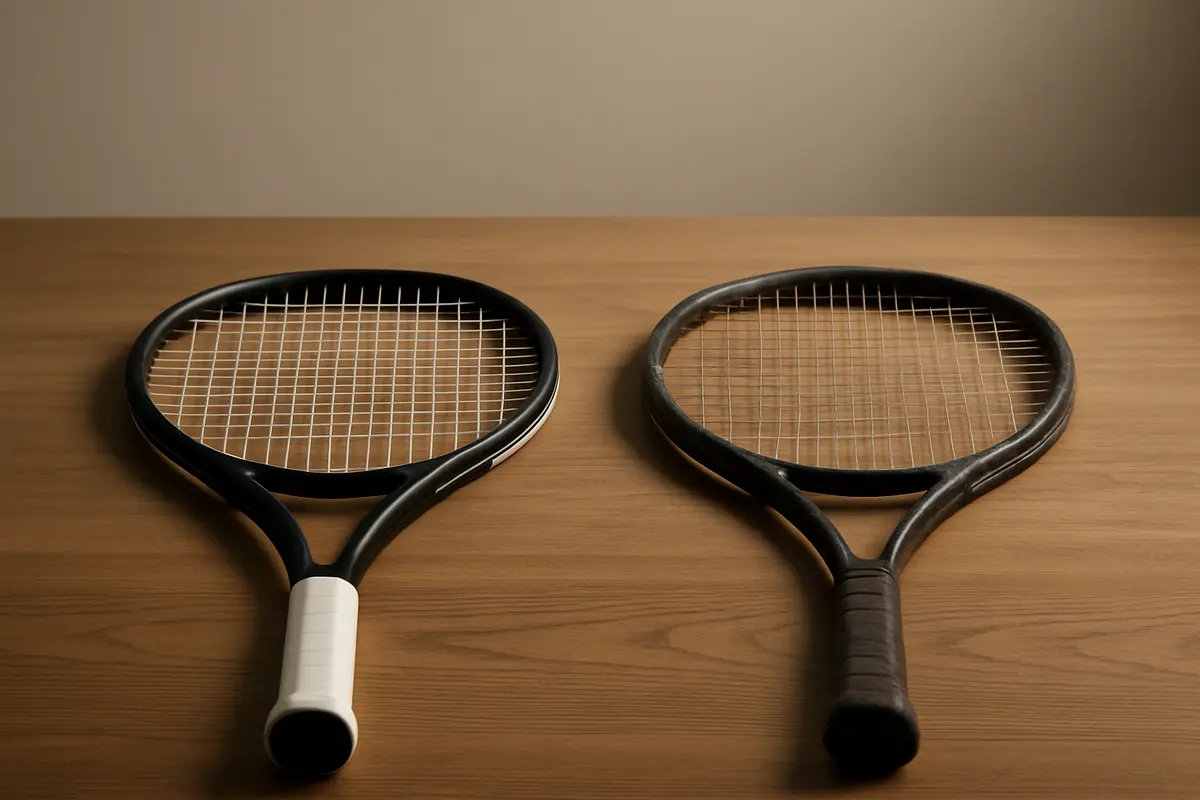
Every time a new frame rolls off a production line, raw materials have been mined, processed, woven, moulded, painted, packaged, and shipped across at least two continents before it reaches a shop shelf. Most players never think about that chain. I did not either, until I started looking at where the gear in our marketplace actually comes from and what it cost the planet to make.
If you are the kind of player who upgrades every season, or who is weighing up a new frame against a pre-owned one, the carbon story is worth knowing. Not because you should feel guilty about buying gear, but because the numbers are concrete enough to change how you think about the decision.
What goes into making a new racket frame#
A modern tennis racket frame is roughly 70 to 80 per cent carbon fibre by weight, with the remainder split between fibreglass, resin, and finishing materials. Carbon fibre is energy-intensive to produce: the precursor material (usually polyacrylonitrile, or PAN) has to be carbonised at temperatures above 1,000 degrees Celsius in an inert atmosphere. A 2021 lifecycle assessment published in the Journal of Cleaner Production estimated that producing one kilogram of carbon fibre generates between 20 and 30 kg of CO2-equivalent emissions. A finished tennis frame weighs around 280 to 340 g unstrung, so the carbon fibre alone in one racket accounts for roughly 6 to 10 kg CO2e before anything else happens.
Add resin processing, the fibreglass layers, paint and lacquer, grip tape, and the plastic or cardboard packaging, and a conservative full-frame manufacturing estimate sits somewhere in the range of 10 to 15 kg CO2e per racket. That is before it leaves the factory.
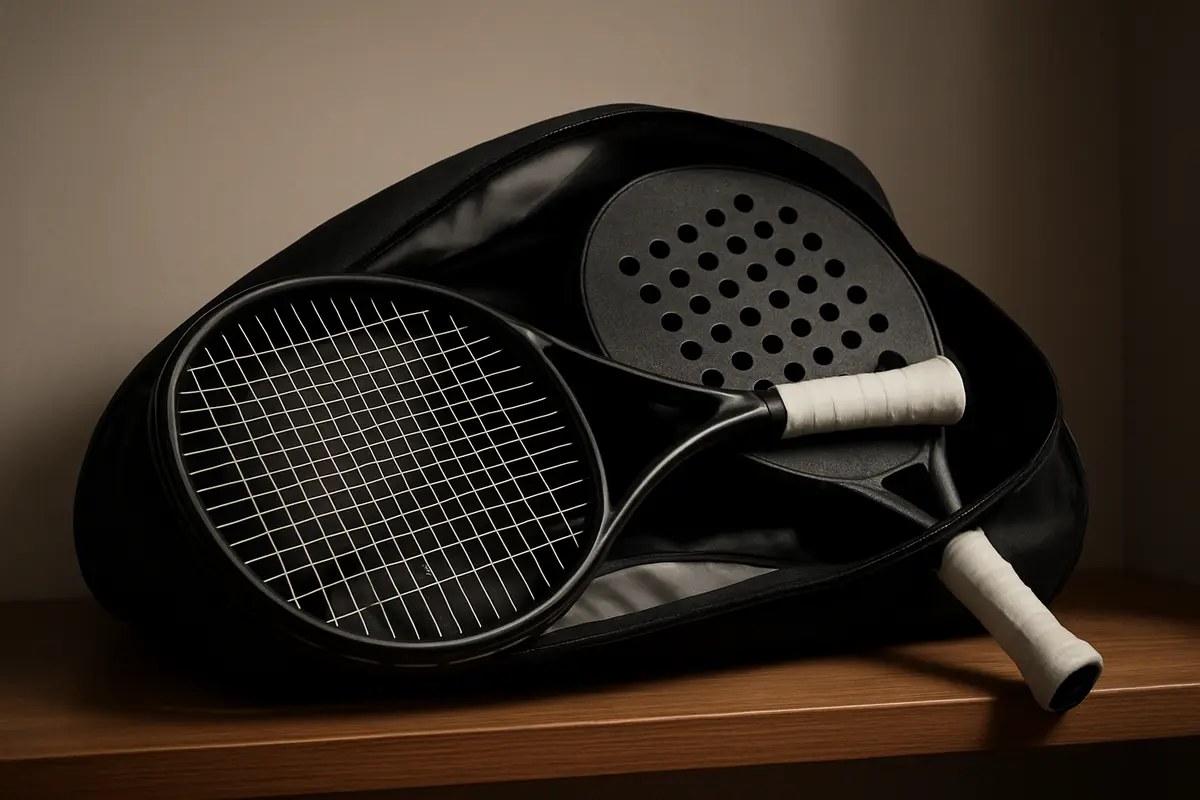
Padel rackets use a similar carbon or fibreglass face construction over an EVA foam core. The foam adds bulk and weight (most padel frames run 350 to 380 g) but the core materials are less energy-intensive than carbon fibre. A padel frame's manufacturing footprint is likely slightly lower, perhaps 8 to 12 kg CO2e, though no published figure specific to padel exists and I am not going to invent one.
Shipping adds more than most people assume#
The majority of racket frames are manufactured in China, Taiwan, or South Korea, then shipped to distribution centres in Europe or the US before reaching retailers. A standard 20-foot shipping container carrying roughly 25,000 kg of goods from Shanghai to Rotterdam produces around 1,500 kg CO2e for the voyage, according to the Clean Cargo Working Group's average emission factors. Per kilogram of cargo, that is about 0.06 kg CO2e. For a 300 g frame, ocean freight alone adds roughly 18 g CO2e.
That sounds small, and for the ocean leg it is. The bigger hit comes from last-mile delivery: a van delivering individual parcels in urban areas can produce 0.5 to 1 kg CO2e per delivery depending on the vehicle and route. Air freight, used for fast-turnaround product launches, is around 50 times more carbon-intensive per tonne-kilometre than sea freight. When a brand rushes a new model to market by air, the shipping footprint of that frame can exceed the manufacturing footprint.
A realistic total for a new frame, from raw material to your doorstep, is somewhere in the range of 12 to 20 kg CO2e. Think of it as roughly equivalent to driving a petrol car 60 to 100 kilometres.
What buying pre-owned actually avoids#
When you buy a pre-owned frame through a marketplace, the manufacturing and long-haul shipping emissions have already happened. They are sunk. What you are doing is extending the useful life of an object that already exists, which means one fewer new frame needs to be produced to meet demand.
The marginal carbon cost of a pre-owned transaction is the last-mile delivery in both directions (seller to marketplace or buyer, depending on the model), plus any cleaning or minor refurbishment. In a peer-to-peer sale with local collection, that cost is close to zero. Even with courier delivery, you are looking at 1 to 2 kg CO2e for the transaction, against 12 to 20 kg CO2e for a new equivalent.
That is not a marginal saving. It is a reduction of roughly 85 to 95 per cent of the carbon associated with putting a frame in your hands.
New vs pre-owned: a carbon snapshot#
| Stage | New frame (estimate) | Pre-owned frame (estimate) |
|---|---|---|
| Raw materials and manufacturing | 10 to 15 kg CO2e | 0 (already sunk) |
| Long-haul freight (sea) | 0.02 to 0.05 kg CO2e | 0 (already sunk) |
| Last-mile delivery | 0.5 to 1 kg CO2e | 0.5 to 2 kg CO2e |
| Packaging (new) | 0.5 to 1 kg CO2e | Minimal (reused or none) |
| Total (approximate) | 12 to 20 kg CO2e | 0.5 to 2 kg CO2e |
Figures are estimates based on published lifecycle data for carbon fibre composites and freight emission factors. Individual products will vary. The point is the order of magnitude, not the decimal place.
The greenwashing problem and how to read brand claims#
Several major racket brands now publish sustainability commitments. Some are substantive: Babolat has published lifecycle assessment data for select frames, and Wilson has committed to reducing virgin plastic in packaging. These are real steps.
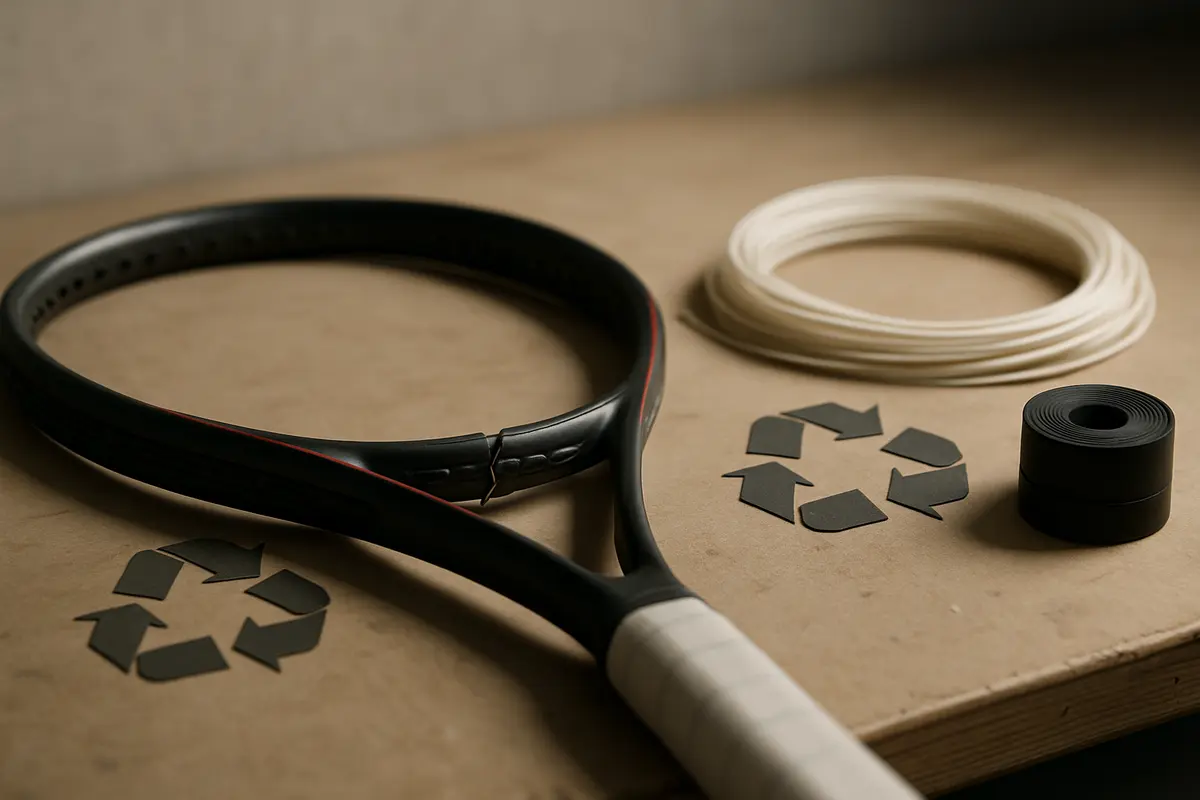
Others are vaguer. "Sustainable materials" on a marketing page, without a percentage, a certification, or a published lifecycle assessment, is not a claim you can evaluate. Recycled content in the grip or packaging is genuine but marginal when the frame itself is still virgin carbon fibre. Those efforts are not worthless, but they do not change the order-of-magnitude difference between making a new frame and not making one.
The most honest thing a brand can do for sustainability is make frames that last long enough to be worth buying pre-owned. Durability is the original circular economy. A frame that plays well for ten years and passes through three or four players' hands has a carbon cost per player that looks very different from a frame replaced annually.
If you want to read more about how pre-owned gear fits into a broader sustainability picture, the post on second-hand gear and sustainability goes into the wider lifecycle argument.
What to do next#
If you are in the market for a frame, start with the pre-owned options. The tennis rackets and padel rackets sections of the marketplace are where players list frames they have genuinely used and know. You will often find gear in excellent condition from players who upgraded or changed style, not because anything was wrong with the frame.
If you have frames sitting in a bag that you have not touched in six months, listing them is the single most direct thing you can do to keep good gear in play and out of landfill. The guide on selling pre-owned rackets covers how to price and describe a frame so it actually sells.
The carbon numbers are not going to make or break your next purchase decision on their own. But they are real, and they point in a clear direction. Buying pre-owned is the smarter call.