Premier Padel and the International Padel Federation have set out a batch of rule changes for the 2027 season, framed around player welfare and the money worries of tournament promoters. The headline numbers: the count of events feeding the official FIP Ranking drops from 22 to 21, early-round points at Majors, P1s and P2s go up, and the top names get shut out of the smaller CUPRA FIP Tour draws.
We sell second-hand frames to players in Portugal and Spain, so we read tour admin through one lens: what ends up in the second-hand racket pool, and when. This one quietly nudges both.
What actually changed#
The FIP confirmed the package after the Premier Padel Steering Committees met in Rome alongside the Italy Major. A few things matter for us, the rest is plumbing.
| Change (from 2027) | The detail | Why a buyer cares |
|---|---|---|
| Ranking-counting events | Cut from 22 to 21 | Slightly shorter grind, a touch more recovery between pro launches |
| Early-round points | More points in opening rounds of Majors, P1, P2 | Mid-tier and qualifier-level pros get rewarded, so they hold sponsor frames longer |
| CUPRA FIP Tour limits | Top players blocked from Gold, Silver and Bronze draws | Fewer elite names slumming it in feeder events, more room for emerging players |
| Same-week double-dipping | Two FIP events in a week only with the same partner, points averaged | Fewer messy split-partner weeks, steadier pro-stamp gear cycles |
The point tweaks are real, not cosmetic. The FIP set the new system so that, for example, a Major winner still earns 2,000 points while a first-round (R64) showing climbs from 35 to 50. That rewards the players grinding through draws rather than only the pairs lifting trophies.
Why this matters for the pre-owned pool#
Pro gear turnover is the engine of the high-end second-hand market. When a top player signs a new deal or a brand pushes a fresh signature frame, last year's pro-stock and player-issue rackets filter down to the rest of us, often barely used.
The new CUPRA FIP Tour rules change who is holding what. Top-ranked players being blocked from Gold, Silver and Bronze draws means those events become the proving ground for lower-ranked and emerging players. That is where the next signature deals get made, and where this year's "almost made it" frames get sold on. If you like buying the racket a rising player used last season before the world catches on, the feeder tours are about to get more interesting.
The shorter ranking calendar also matters in a smaller way. One fewer counting event nudges the season towards a cleaner rhythm, and pro launches tend to track the calendar. A slightly tidier schedule usually means slightly more predictable drops of last-gen pro frames onto the used market.
The Spain and Portugal angle#
Spain carries six Premier Padel stops in 2026, more than anywhere else, so Spanish and Portuguese players already live closest to the pro supply chain. When Coello sticks with Head, when Tapia stays on his Nox, when Bullpadel kits out half the locker room, the previous-year versions of those exact frames are what flood the Iberian second-hand listings first.
Here is the practical read for our shoppers:
- Watch for last-gen pro signature frames around season turns. The Head Coello, Nox AT10 and Bullpadel Hack lines all have strong recent versions that hold up superbly second-hand.
- Do not pay 2027-launch money for a 2025 frame just because a pro waved it about. A padel racket is a carbon face over an EVA or foam core, and a year-old top-tier core still plays like a year-old top-tier core, which is to say excellent.
- Emerging-player frames from the CUPRA FIP Tour are the value sweet spot. Less hype, same construction tier, lower asking price.
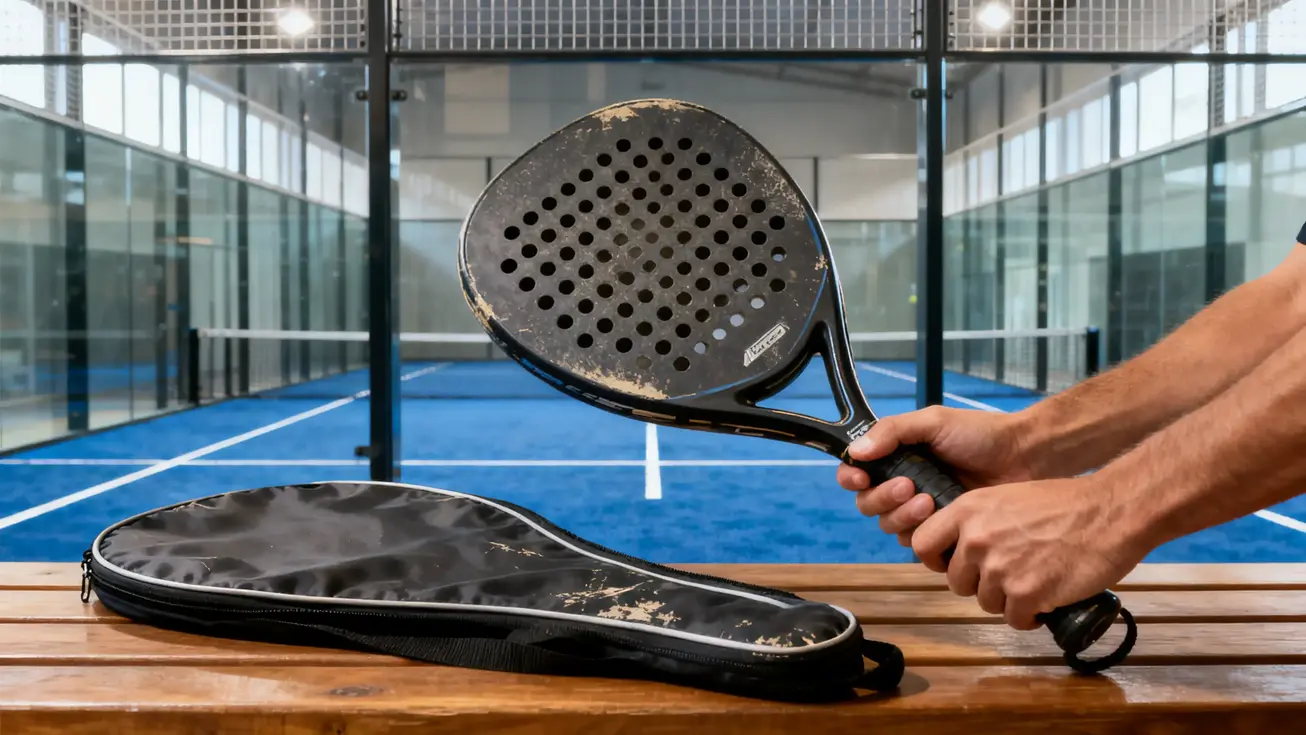
- Check the bridge and frame edges before you buy. Cracks there, not graphics, decide whether a used frame is worth it.
None of this changes how the ball comes off the strings, because padel rackets do not have strings. It changes timing and supply, which is exactly the bit a marketplace pays attention to.
The takeaway#
This is governance news, not a product launch, and it lands in 2027. But the chain is real: tour rules shape pro gear turnover, and pro gear turnover fills the pre-owned shelves. Fewer counting events, reshuffled points and a cleaner feeder-tour ladder all point to a slightly more orderly flow of high-end used frames.
If you have been sitting on an upgrade, this is your cue to keep an eye on the listings around the next pro launches. Browse what is already here on our padel rackets page, and if your current frame is about to be last-gen, sell it while the demand is still there.
Read the full FIP announcement here.